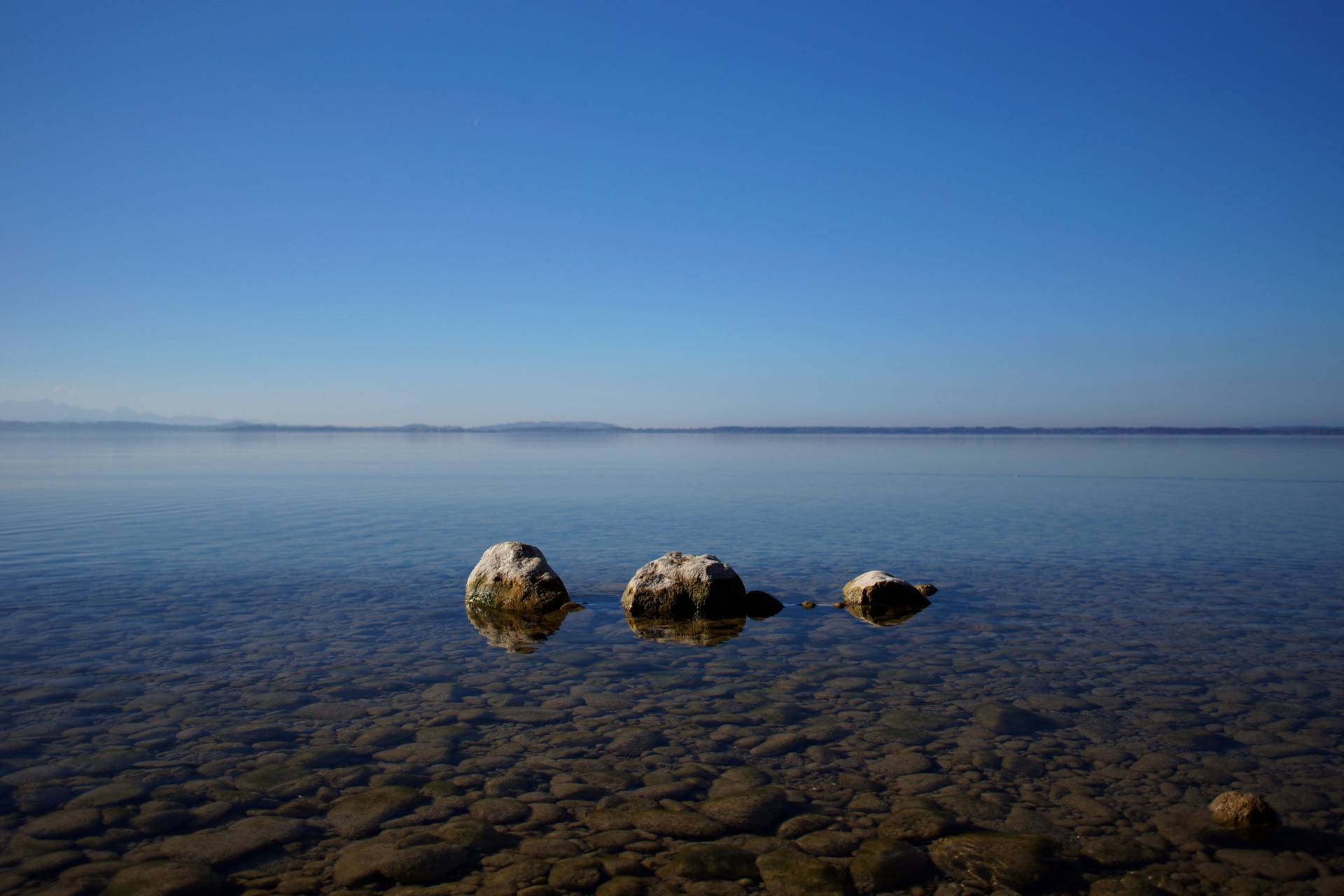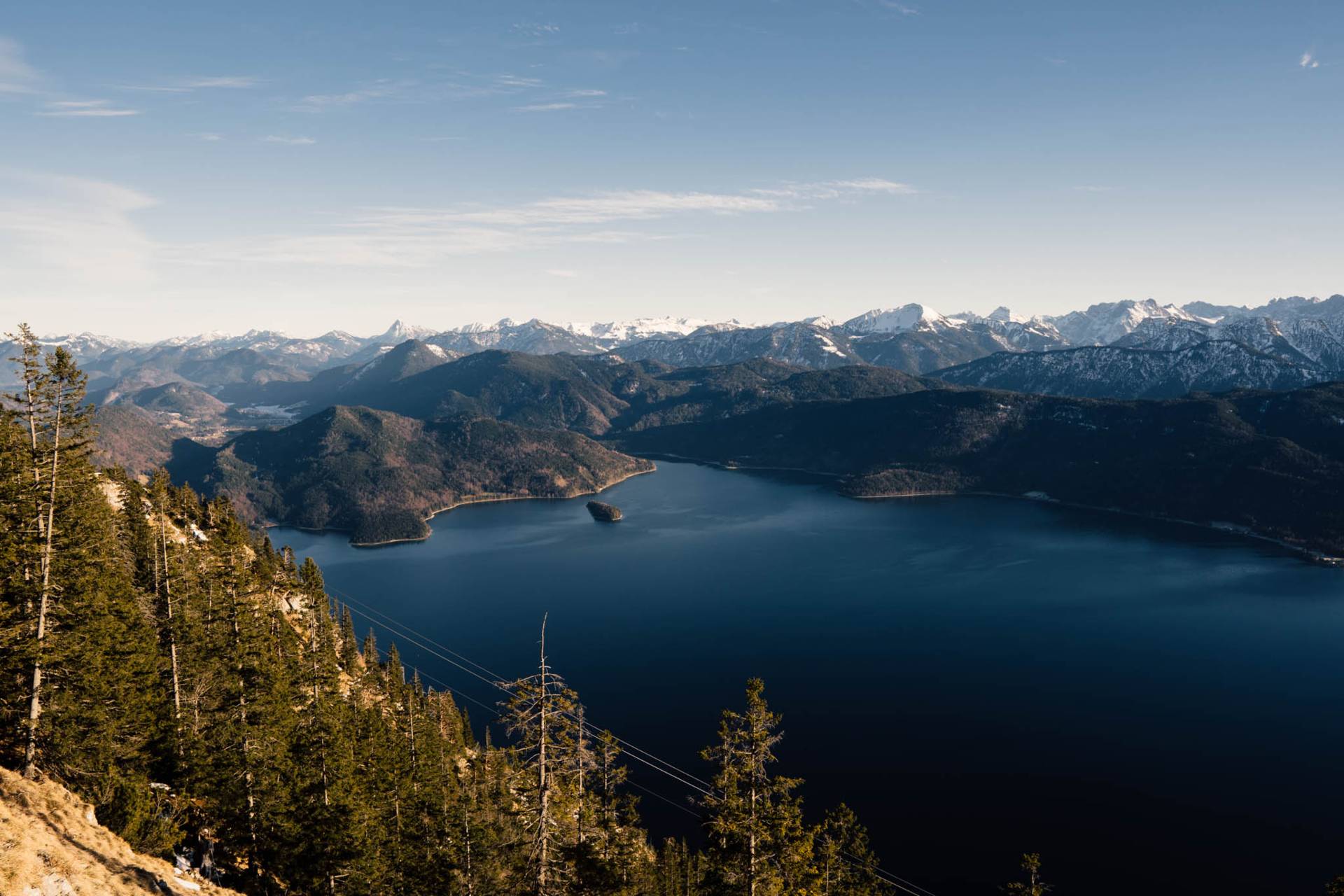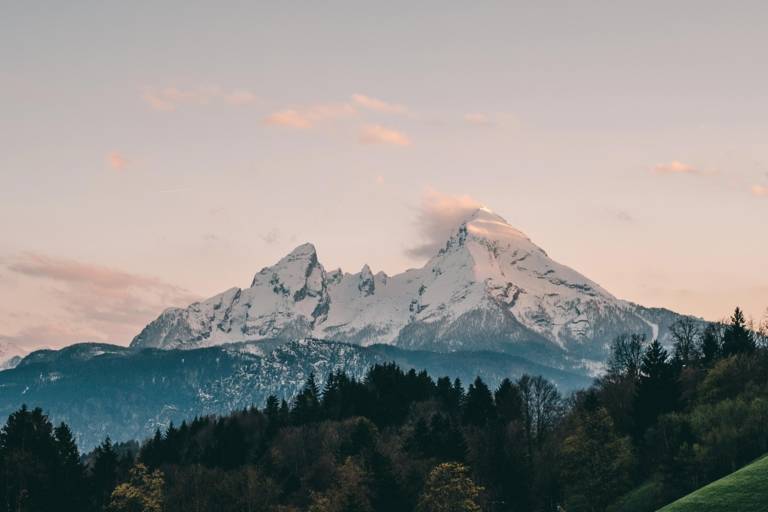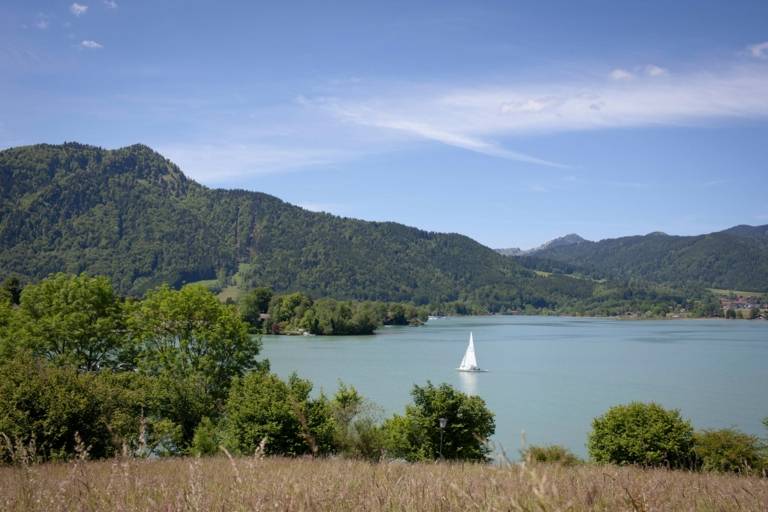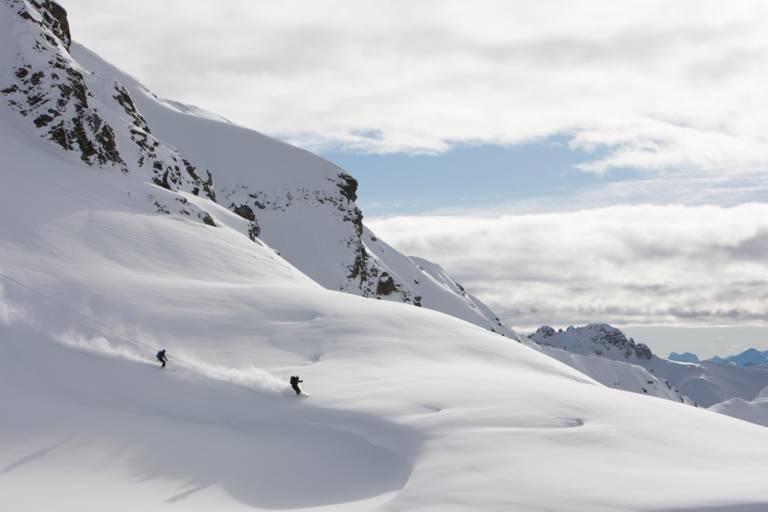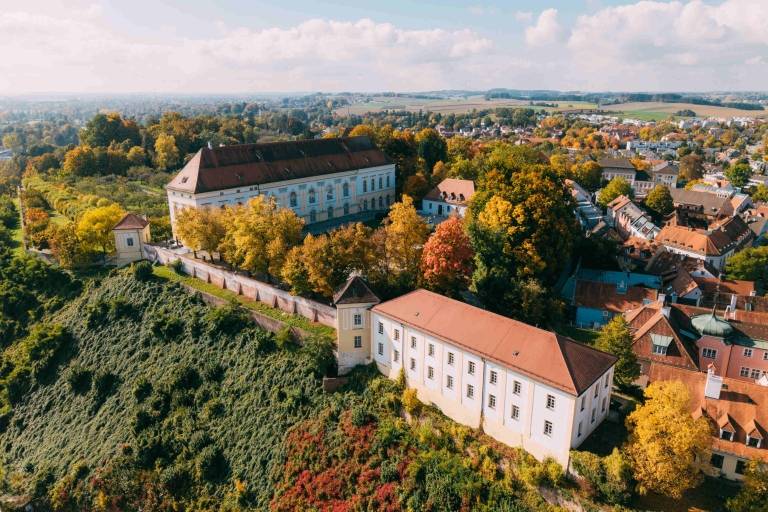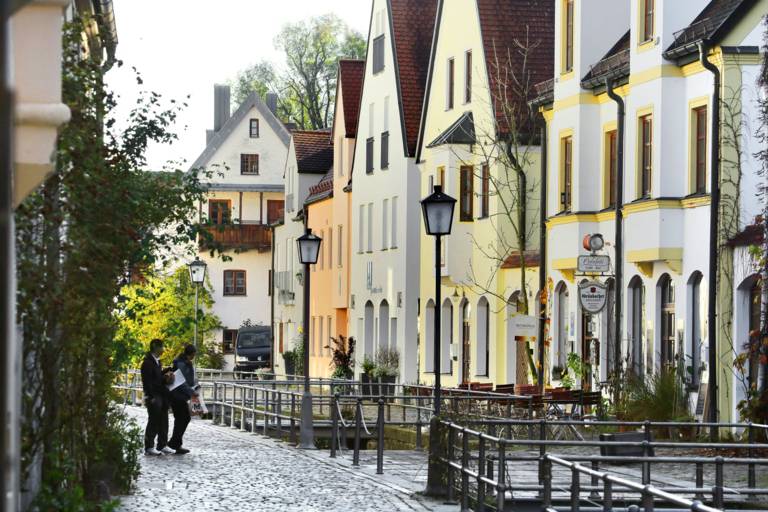
There are so many beautiful lakes around Munich that visitors can easily lose track of them all. Which lakes are particularly good for sports, cultural experiences or relaxing in a beer garden? Our guide to Bavarian lakes sets the record straight with a touch of humour – from Starnberger See to Königsse.
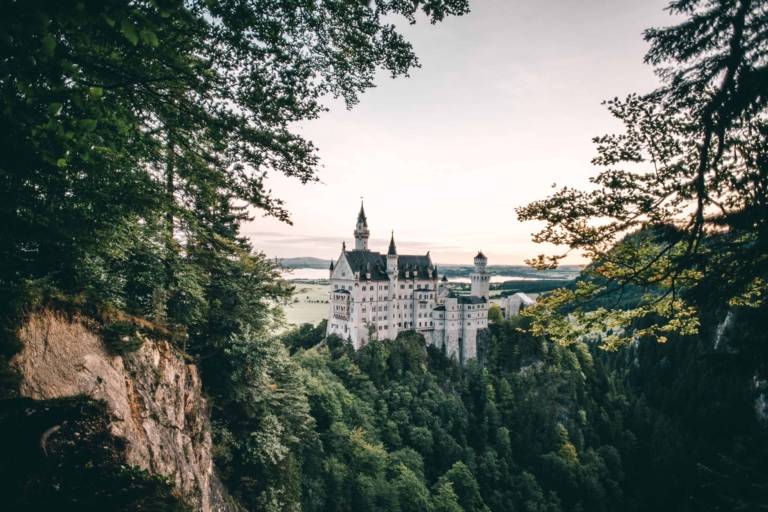
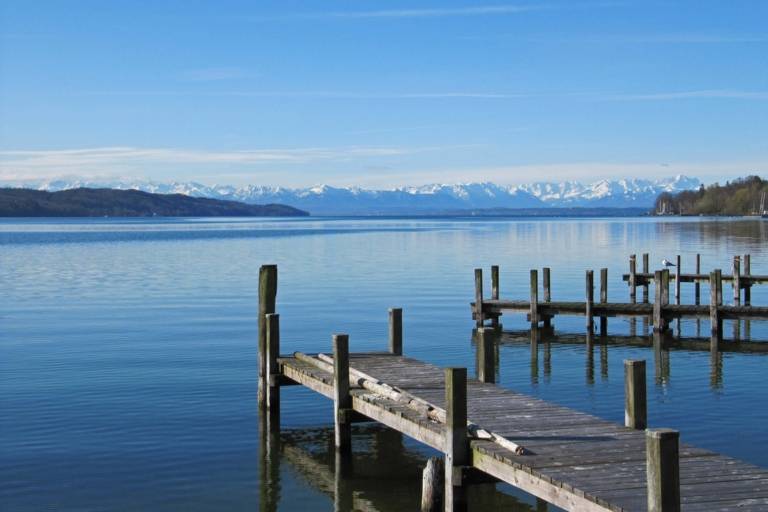
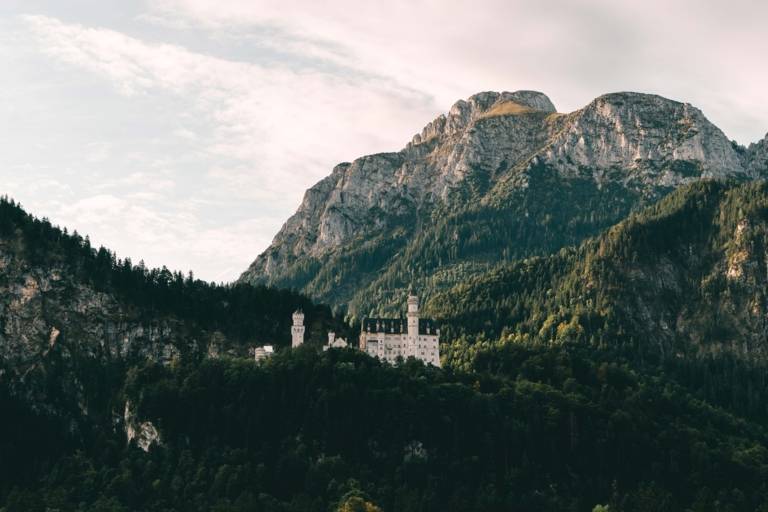
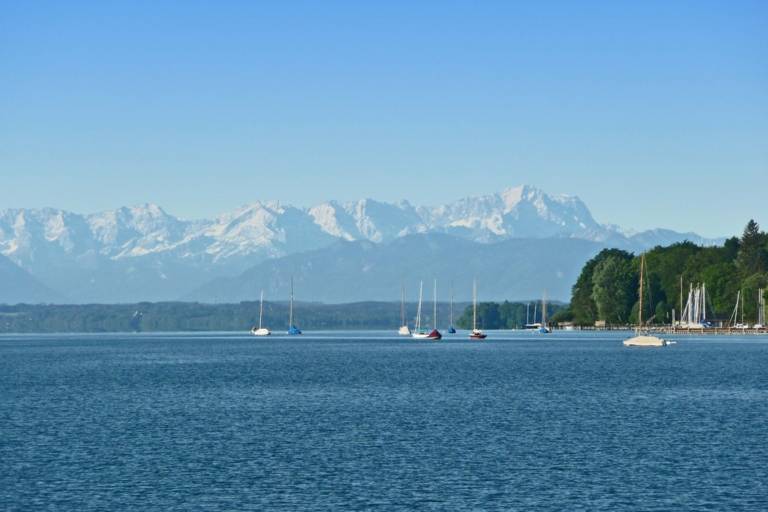
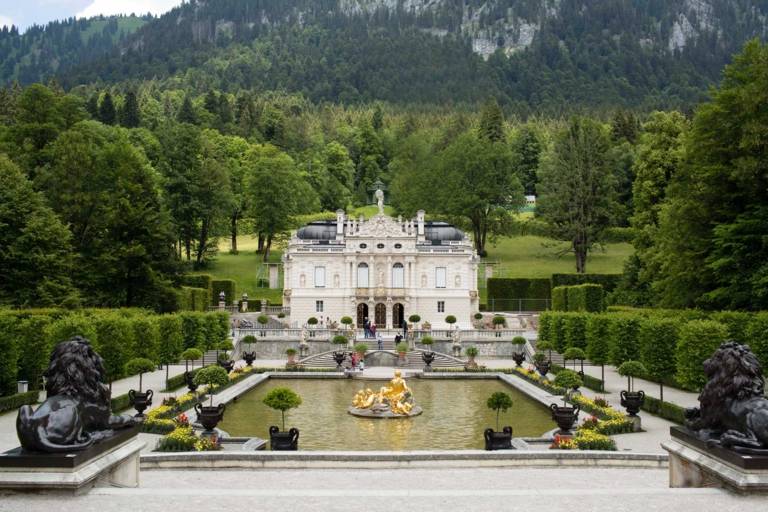
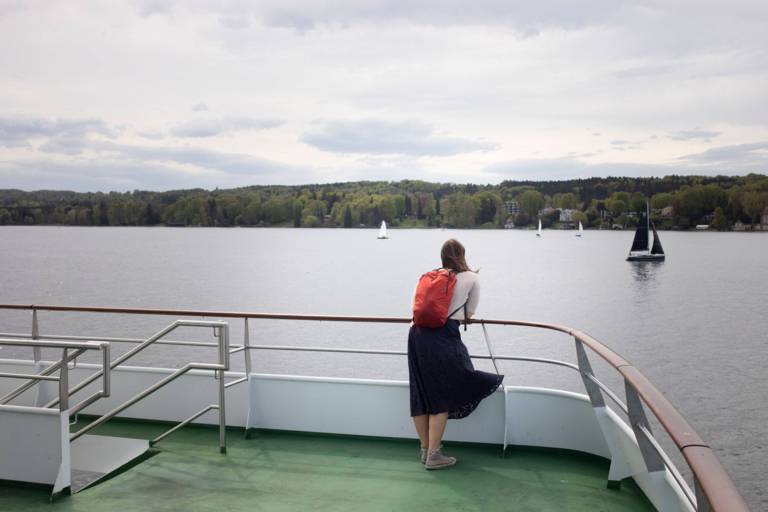
Starnberger See is the second-largest and one of the most popular lakes in Bavaria. Its fame is down to Empress Sisi and King Ludwig II, as well as the celebrities who spend time there. The people of Munich love their ‘Starni’ because it's so beautifully clean and easy to get to – it takes less than half an hour to get there from the city. Anyone standing on the shore and gazing at the Alps suddenly realises why everyone wants to live here.
You can spot the newcomers: by their aviator sunglasses, their polo shirts and their parents' Porsche 911s
Typical phrase: “This is where King Ludwig died!”
What people drink: Officially, beer from the Starnberg Brewery, but secretly, it's actually more likely to be Tegernseer!
Popular sports: golf, tennis and comparing property prices
How to get there from Munich: Take the S6 towards Tutzing or the regional train towards Kochel or Weilheim. You can also reach Starnberg by car in under 30 minutes.
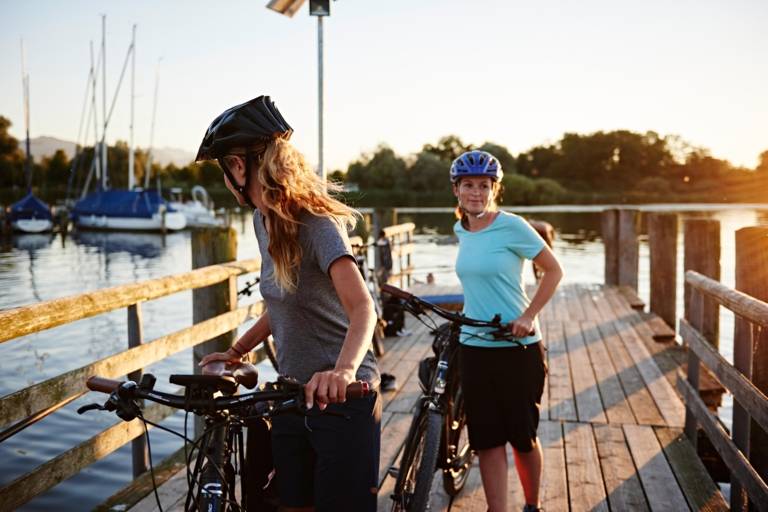
Things to do: visit exhibitions at the Buchheim Museum, take a ferry to Roseninsel, hire an electric boat, take a trip across the lake on a sightseeing steamer, go for a walk on the Ilkahöhe, hire a stand-up paddleboard, learn to sail, cycle round the lake
And here are some places to stop for a bite to eat: Gasthaus Schauer in Possenhofen, Zum Fischmeister in Münsing, Forsthaus Ilkahöhe in Tutzing, Wirtshaus im Tutzinger Hof and the gourmet restaurant Aubergine in Starnberg
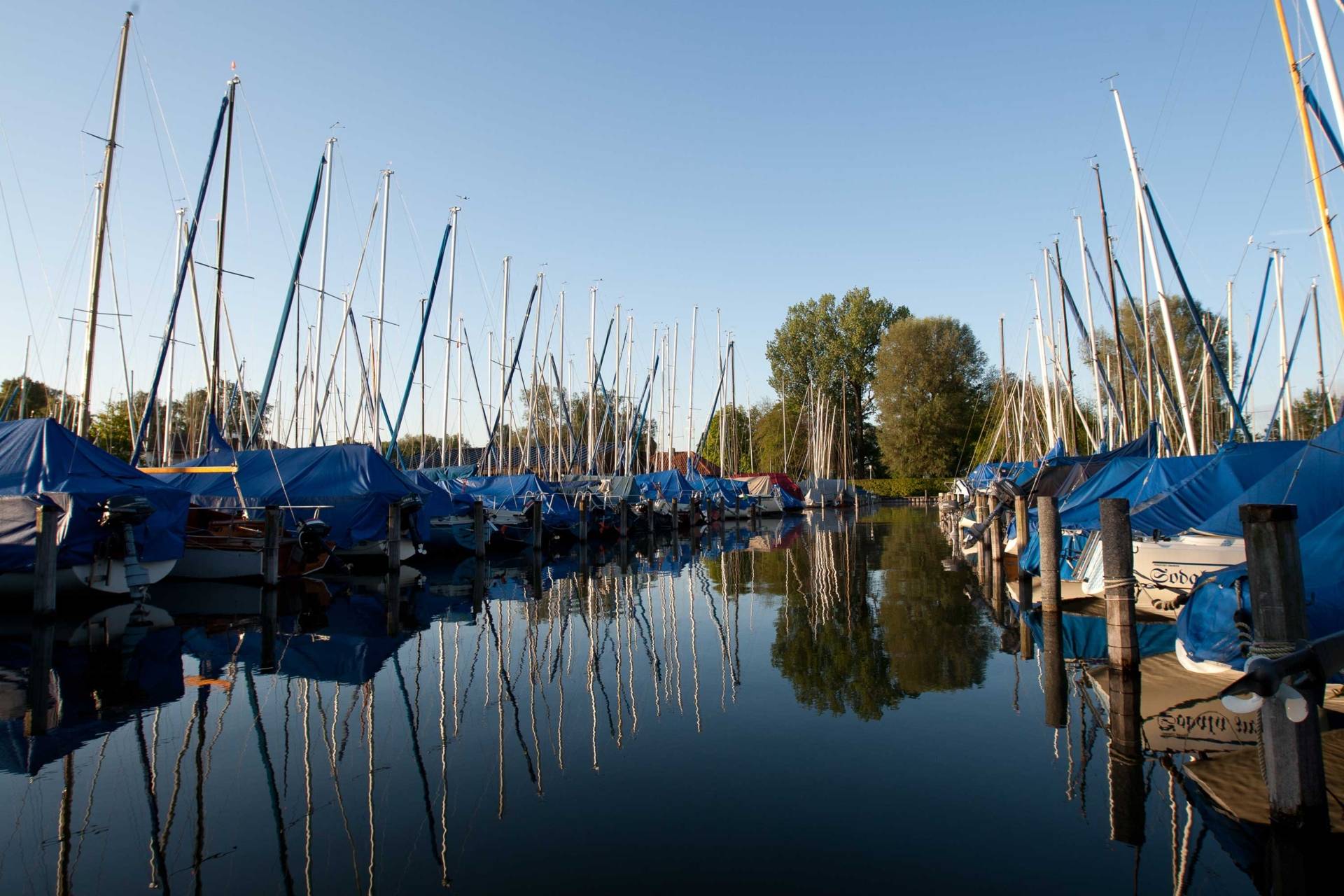
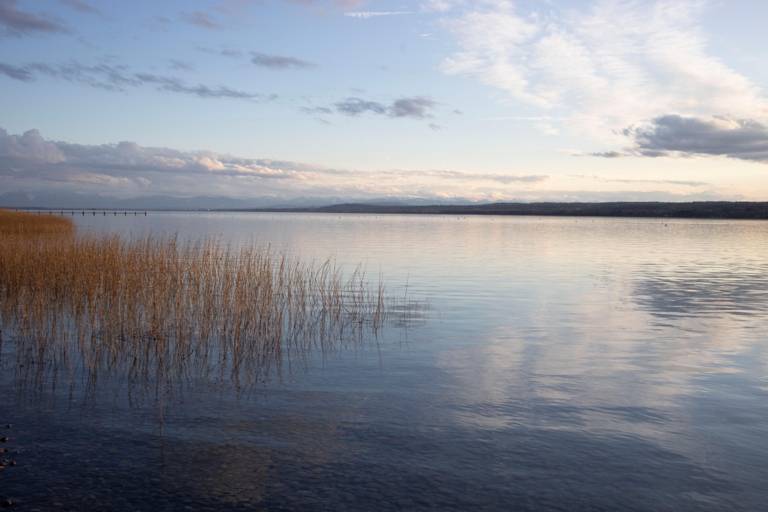
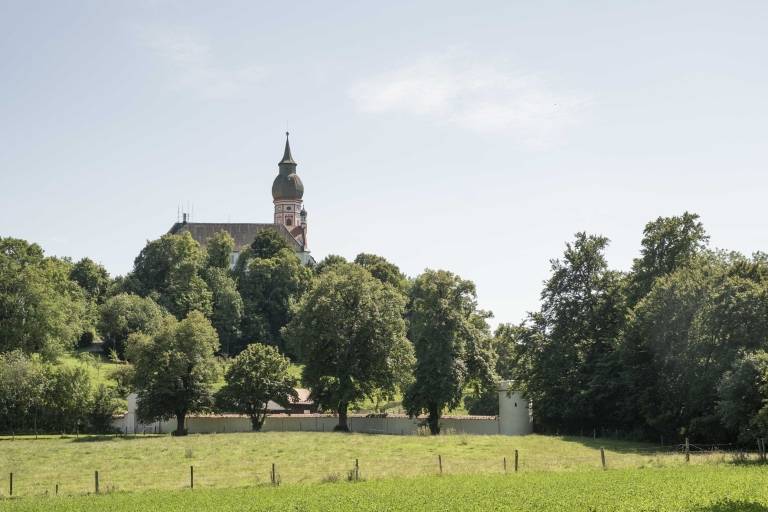
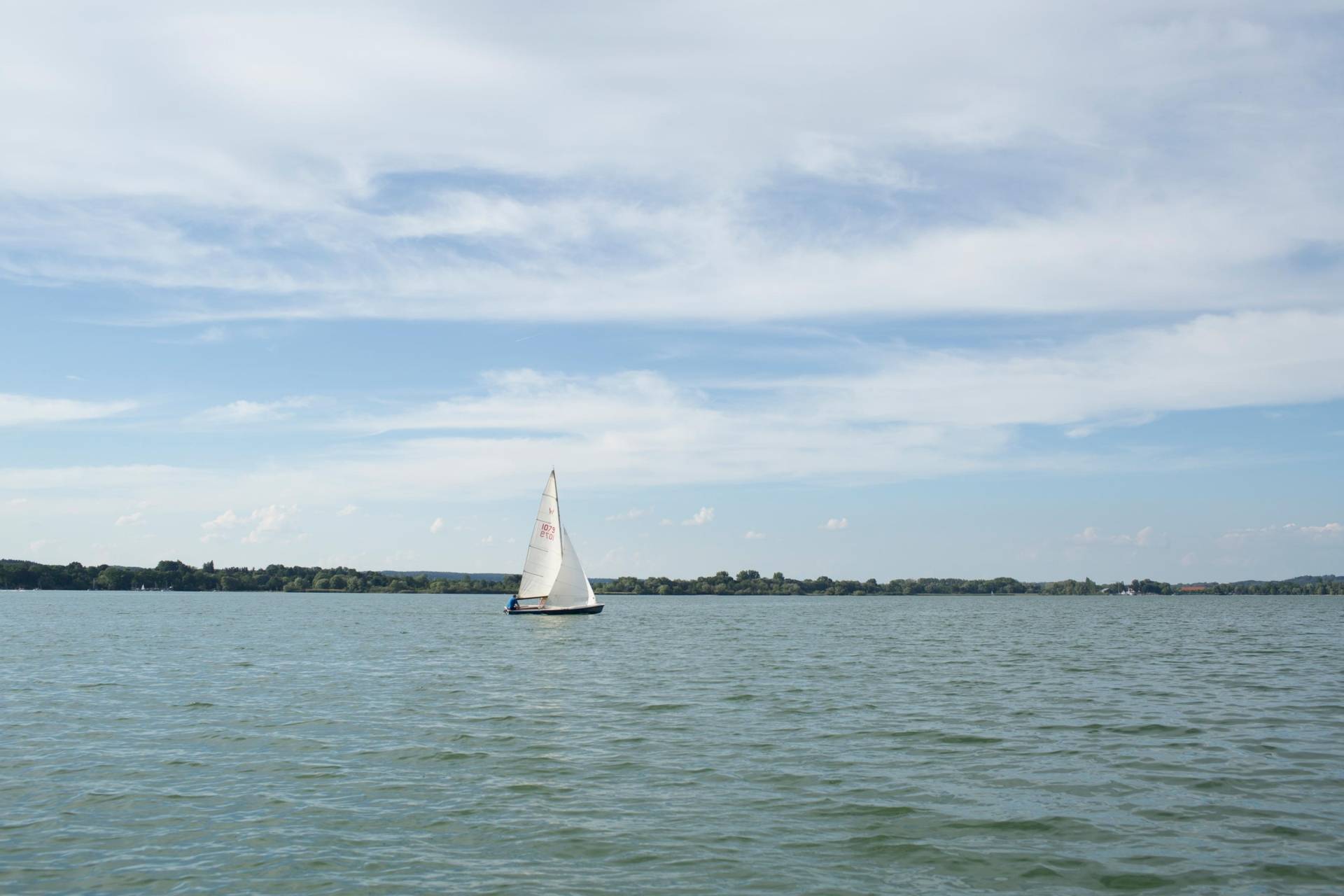
If Starnberger See is a bit too upmarket for your taste, head to Lake Ammersee – it's right next door and much more down-to-earth. This is mainly down to the region's artistic heritage: the landscapes around Ammersee have been immortalised by painters such as Carl Spitzweg and Fritz Winter. Thanks to the region's long-established wealth, today's main pastimes include sailing, windsurfing and relaxing at the lido. Once a year, the Dießen Pottery Market and the Herrsching Castle Gardens Festival also take place.
You can spot the newcomers: by the fact that they come to the lido on the latest cargo bike rather than in an SUV.
Typical phrase: “You can see all the way to the Zugspitze today!”
What people drink: homemade quince spritzer made with fruit from our own garden
Popular sports: Sailing, of course!
How to get there from Munich: The S8 train takes 50 minutes to get to Herrsching from the main station. If you're heading to Dießen, take the regional train and change at either Weilheim or Geltendorf. By car, the journey takes about an hour.
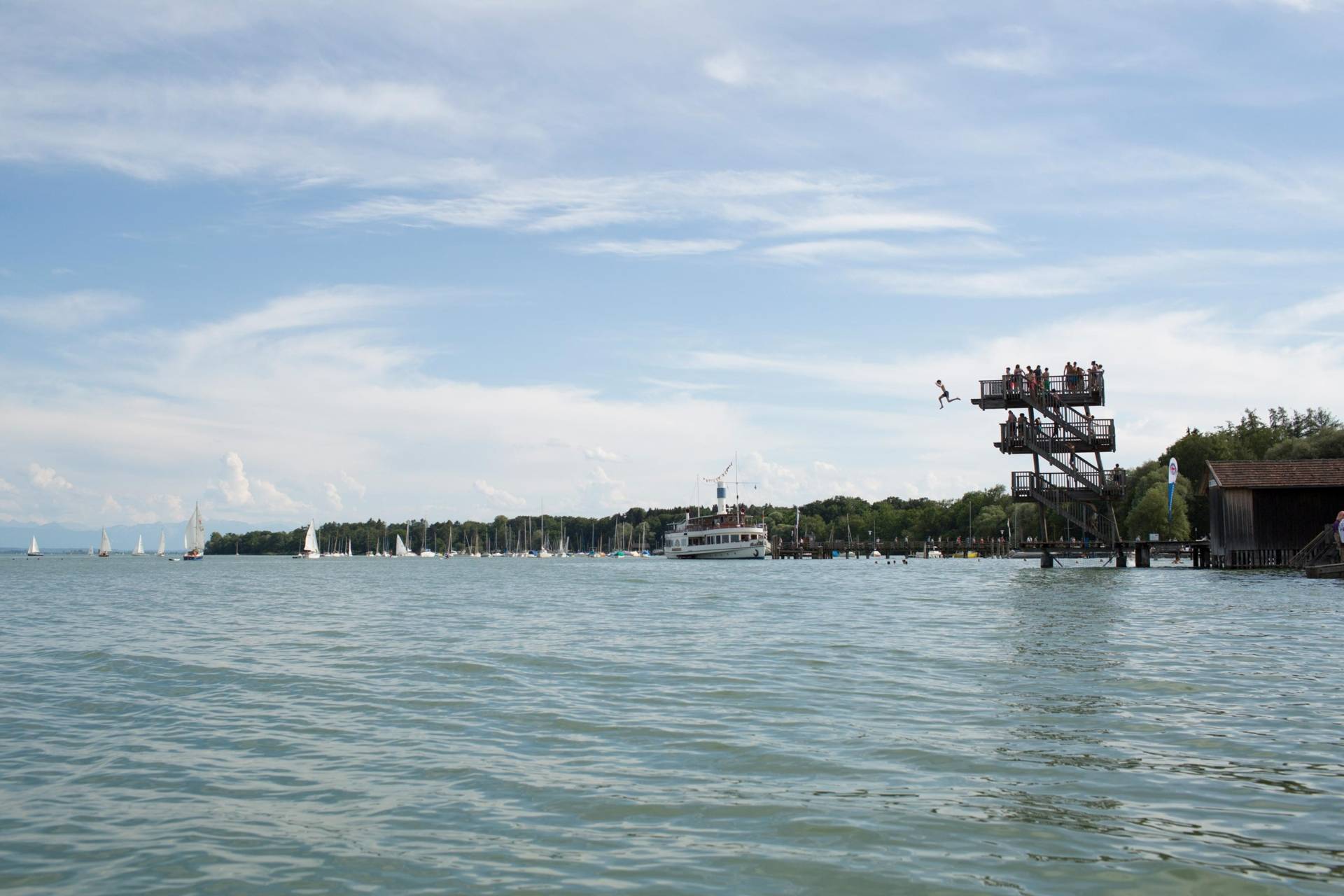
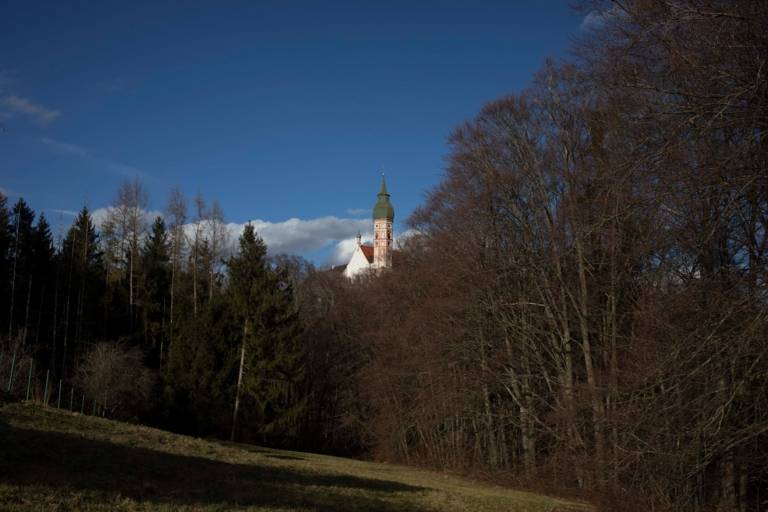
Things to do: Hike to Andechs Abbey, marvel at the Marienmünster, jump from the ten-metre tower at Utting lido, take a stroll through Kurpark Herrsching, visit the Bauernhofmuseum Jexhof
And here are some places to stop for a bite to eat: Lenas am See in Utting, Seerestaurant St. Alban in Dießen, Steg 32 in Herrsching, Restaurant Fischer in Stegen, Andechser Bräustüberl and Klostergasthof Andechs
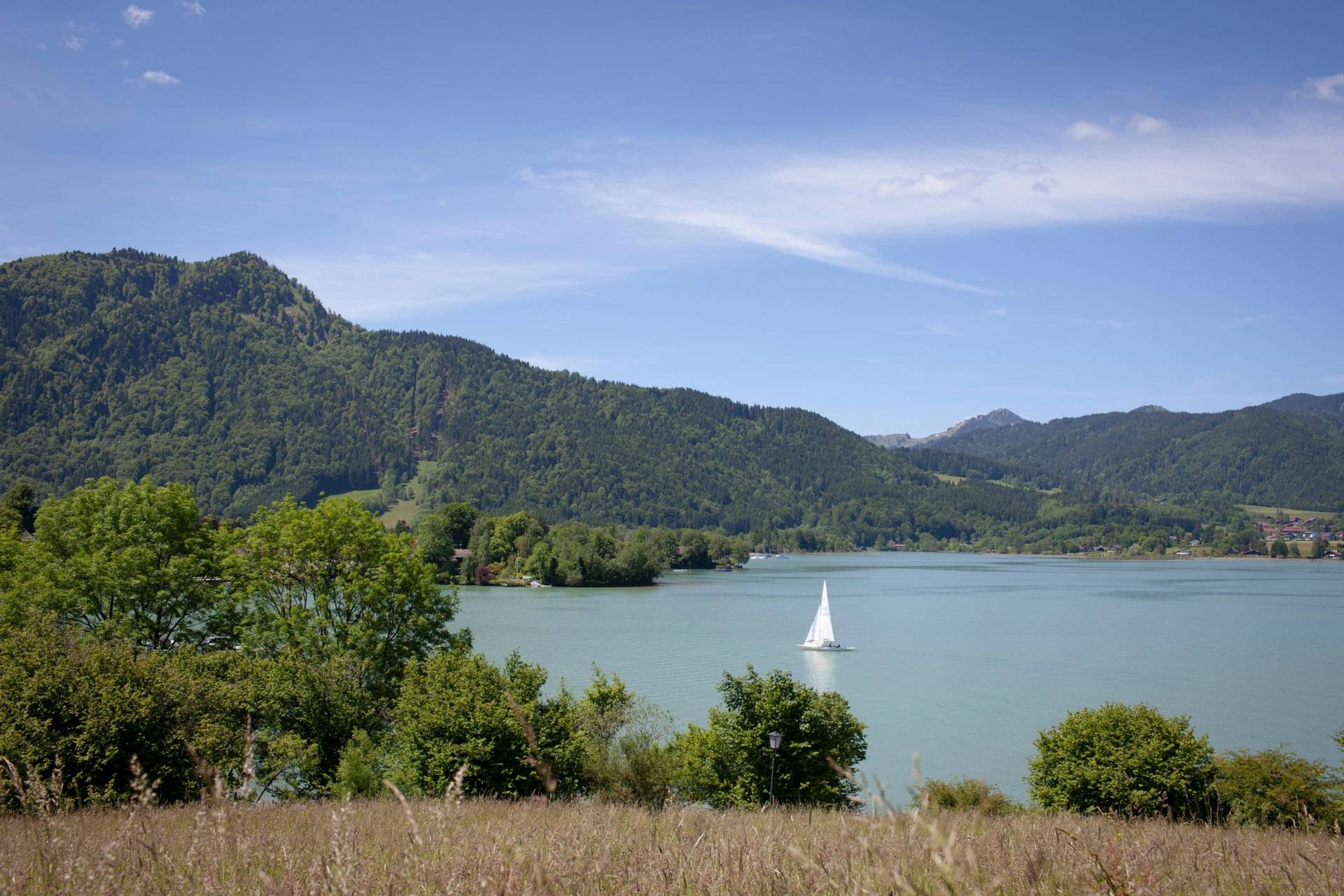
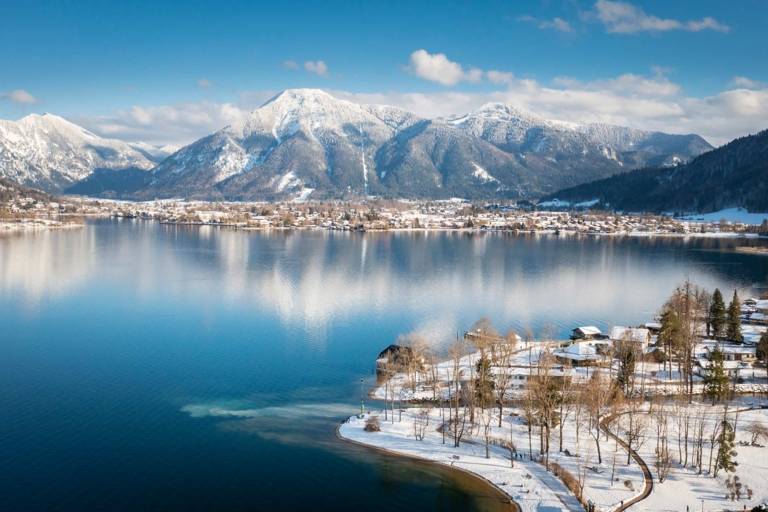
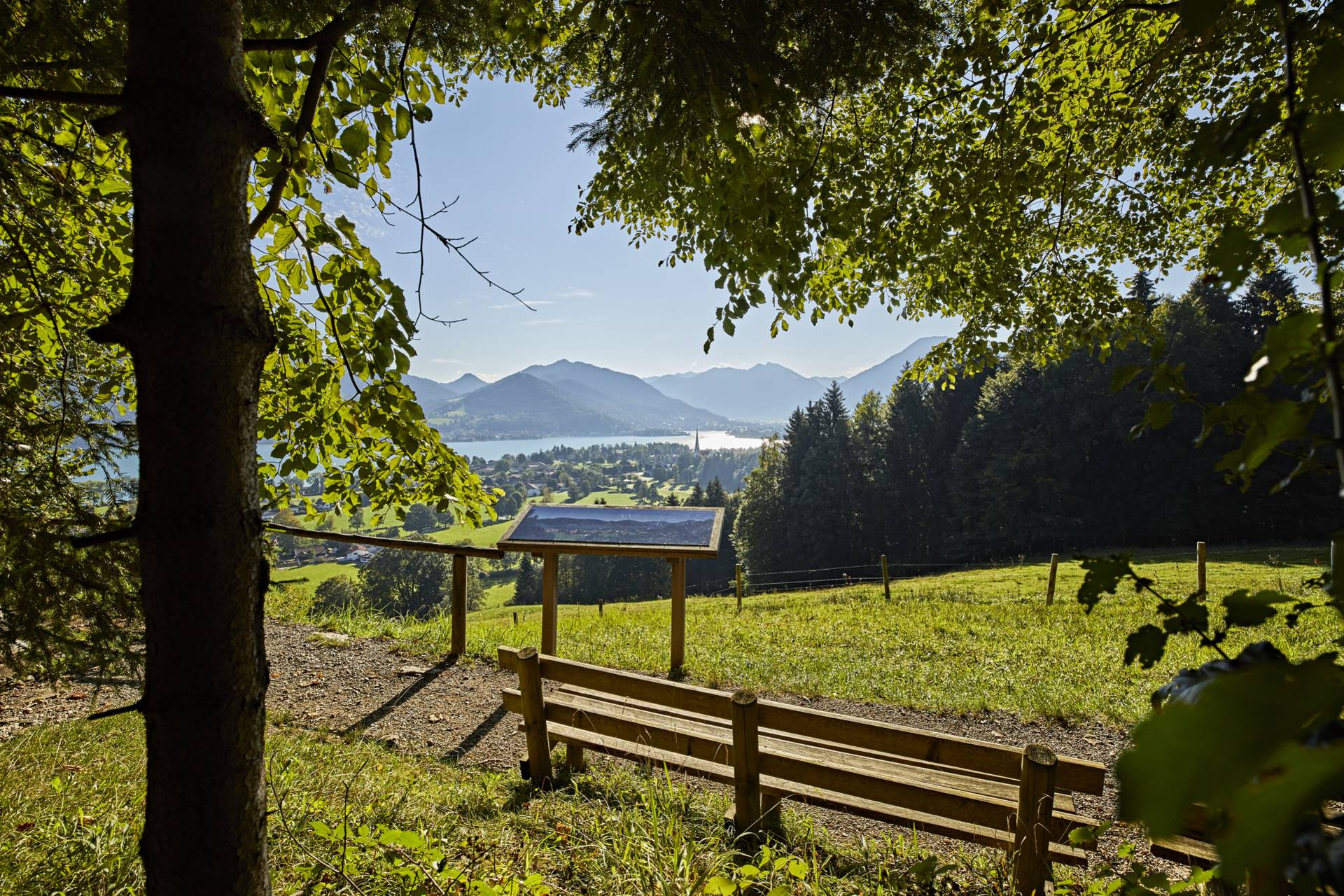
Tegernsee thrives on its contrasts: towering peaks and deep-green waters, Bavarian tradition and the snobbish jet set, old traditional beer halls and new Michelin-starred restaurants. It feels as though more Bayern Munich players live here than in Munich itself, and rents are almost as high as on Sylt. But amidst all this wealth, Bavarian customs are still very much alive – as seen at the numerous forest festivals, where locals and people from Munich alike celebrate exuberantly in traditional dress every summer.
You can spot the newcomers: by their outrageously expensive traditional jacket paired with designer jeans
Typical phrase: “Manuel Neuer lives over there!”
What people drink: Möet during the week, and sometimes Dom Pérignon at the weekend
Popular sports: a quick paragliding flight off the Wallberg before work
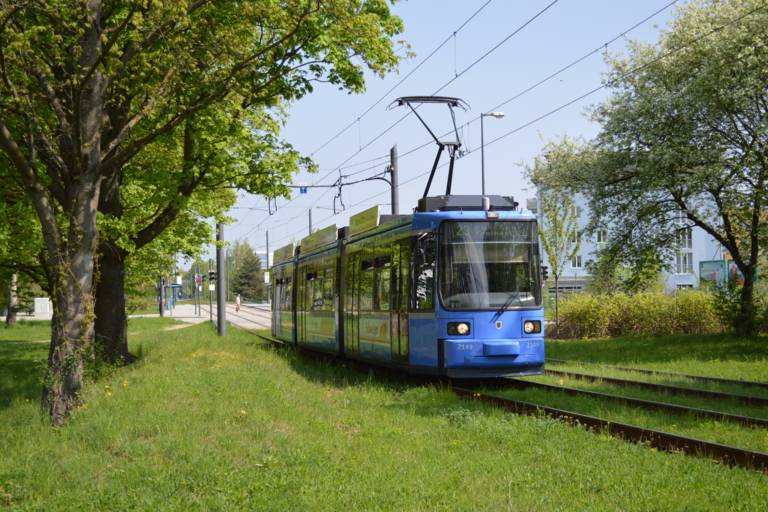
How to get there from Munich: It takes about an hour to reach Lake Tegernsee, whether by train or by car. The regional train (RB57) stops at Gmund and Tegernsee.
Things to do: visit the Olaf Gulbransson Museum, take a guided tour of the Papierfabrik Gmund, enjoy a sauna at Monte Mare, sample cheese at the Naturkäserei TegernseerLand, sweat it out in the Jod-Schwefelbad, take a ride on the Wallbergbahn cable car, hike along the Tegernsee High Trail, and explore the lake on a boat trip
And here are some places to stop for a bite to eat: Bräustüberl Tegernsee, Schlosswirtschaft Tegernsee, Berggasthof Neureuth and Café Aran in Tegernsee, Käfer Gut Kaltenbrunn and Amsel Restaurant in Gmund, Voitlhof 1532, Haubentaucher and Mesner Gütl in Rottach-Egern, Freihaus Brenner in Bad Wiessee
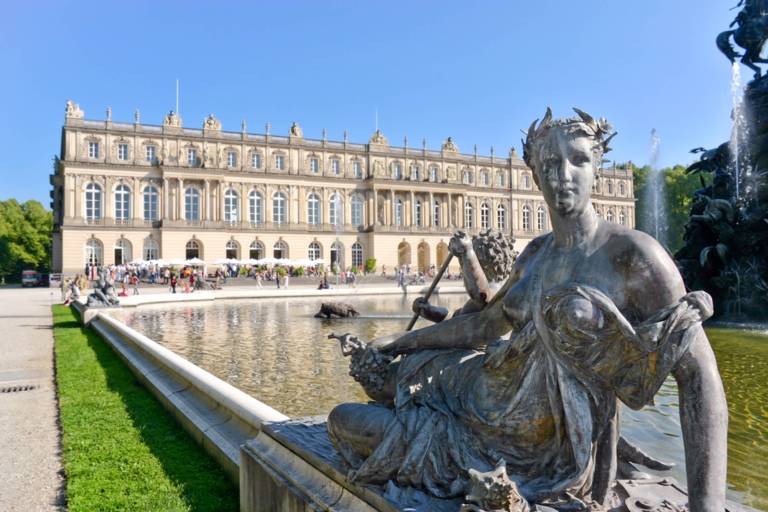
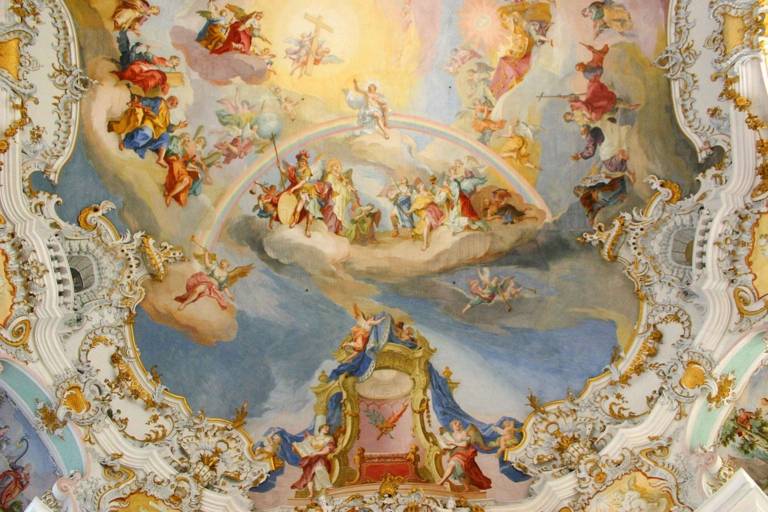
Chiemsee is also known as the ‘Bavarian Sea’ because, at around 80 km², it is the largest lake in Bavaria. What makes this area special is not only the landscape of the Chiemgau Alps, featuring the famous Kampenwand, but also its rich cultural heritage. And whilst visitors explore Herrenchiemsee Palace or Fraueninsel, home to Germany’s oldest nunnery, the locals let off steam by taking part in sports – both in the mountains and on the water.
You can spot the newcomers: by the collection of SUPs in their garage
Typical phrase: “I just couldn't live in a big city any more!”
What people drink: energy gels during the day whilst gravel biking, and non-alcoholic wheat beer in your own garden in the evening
Popular sports: Compare your best times on the Komoot app
How to get there from Munich: Visitors can reach Prien in around an hour, either by car or by train. From there, you can then take a boat to Herreninsel.
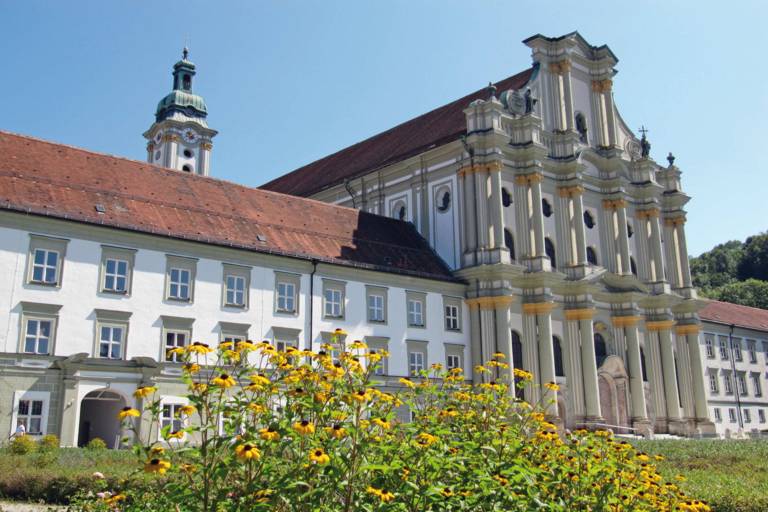
Things to do: visit Herrenchiemsee Palace, explore Frauenwörth Abbey on Fraueninsel, stay overnight at Kloster Seeon (monastery), cycle round the lake, go hiking on the Kampenwand, hire a stand-up paddleboard, take a ride on the Chiemsee Railway, and relax at the Beach Bar in Übersee
And here are some places to stop for a bite to eat: Restaurant Fischerei Minholz in Bernau, Zum Fischer am See in Prien, Steghouse am Chiemsee and Seehäusl in Gstadt, Schlosswirtschaft Herrenchiemsee, Chiemseer Wirtshaus in Chieming
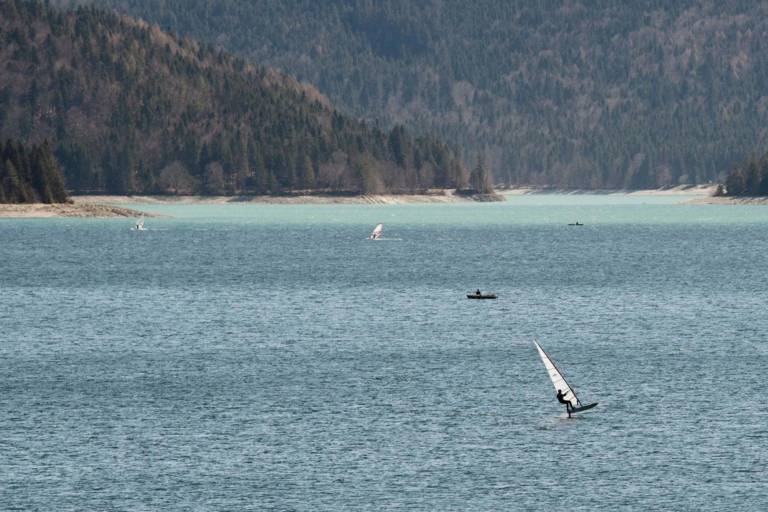
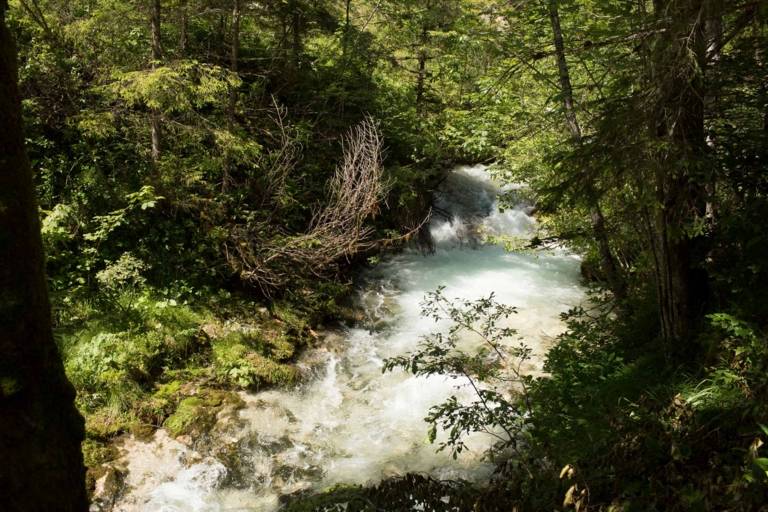
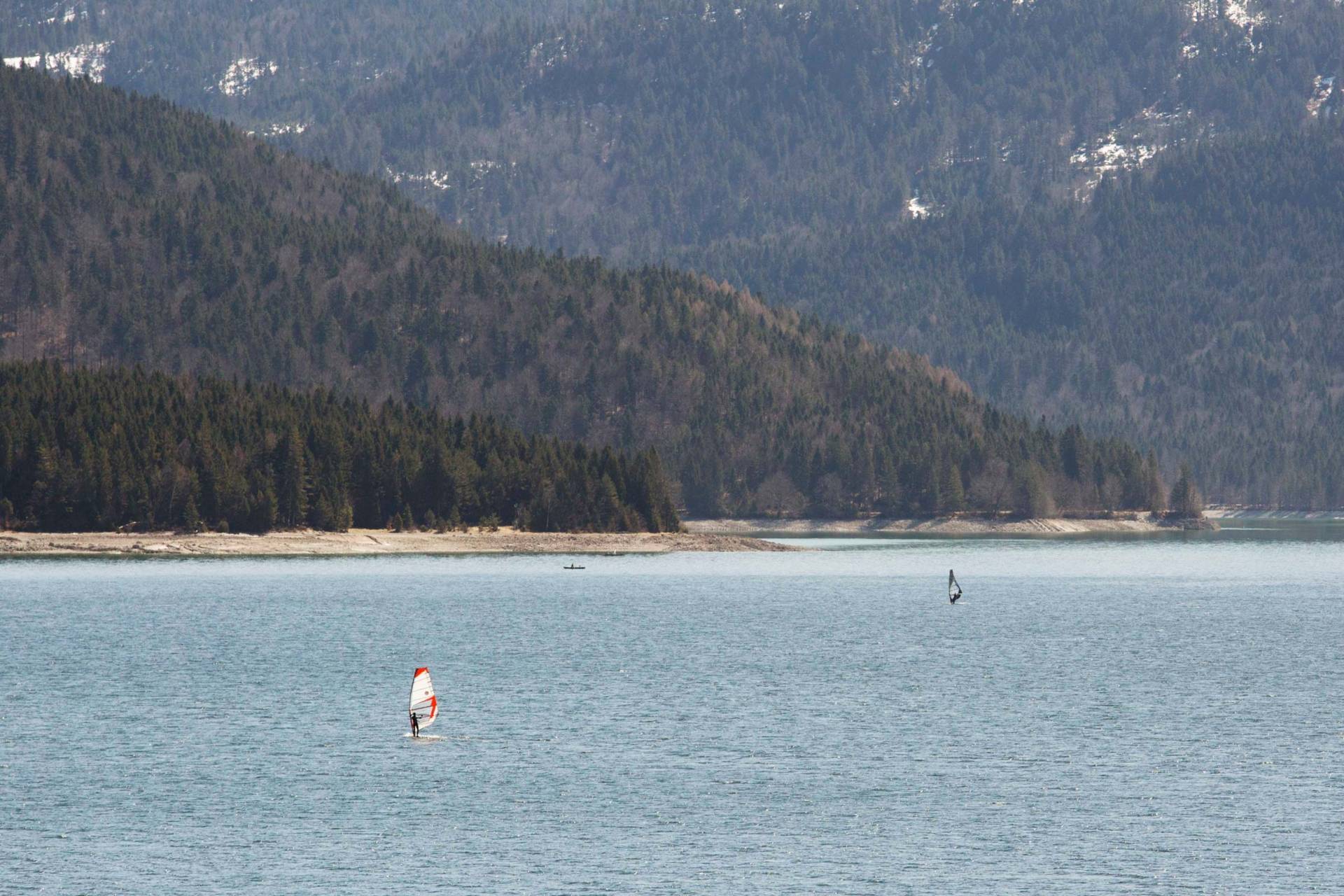
Walchensee is often compared to the Caribbean because the water of this cool mountain lake shimmers turquoise. Thanks to its unique thermal conditions, the lake is a popular spot for windsurfing and kitesurfing. It is also one of Bavaria's oldest lakes; the atmosphere here is just as time-honoured – with traditional pubs, cafés for day-trippers and guesthouses where time seems to stand still.
You can recognise the locals: by their work dirndls, aprons and Bavarian dialect
Typical phrase: “Get lost, you can't park there!” (in the Bavarian dialect)
What people drink: dark beer
Popular sports: counting Munich number plates
Here's how to get there from Munich: by car via the A95 towards Garmisch-Partenkirchen, or by train and bus via Kochel am See. The journey from Munich takes about 1 to 1.5 hours. It's worth arriving early – especially for those travelling by car, as parking spaces are limited.
Things to do: take the mountain railway up to the Herzogstand, go on a hike up the Jochberg, stay overnight at the Walchensee campsite, go windsurfing, go for a swim, go cycling
And here are some places to stop for a bite to eat: Wallerei Walchensee, Waldschänke Niedernach, Berggasthof Herzogstand, Jocheralm, Strandcafé Bucherer
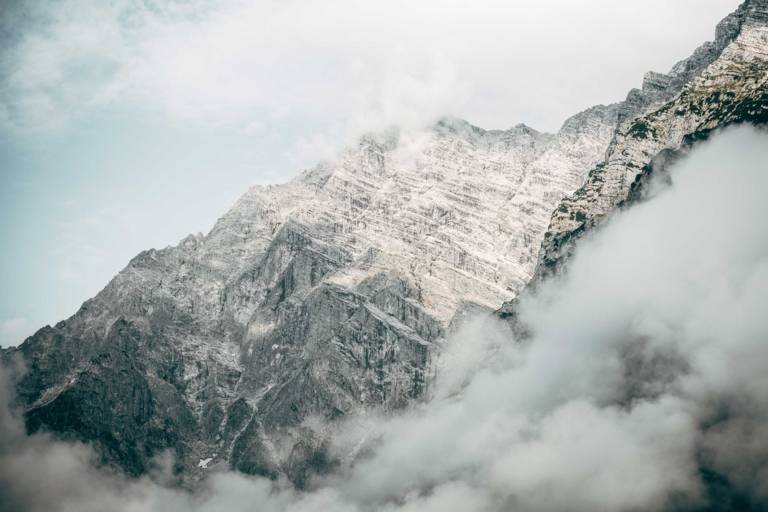
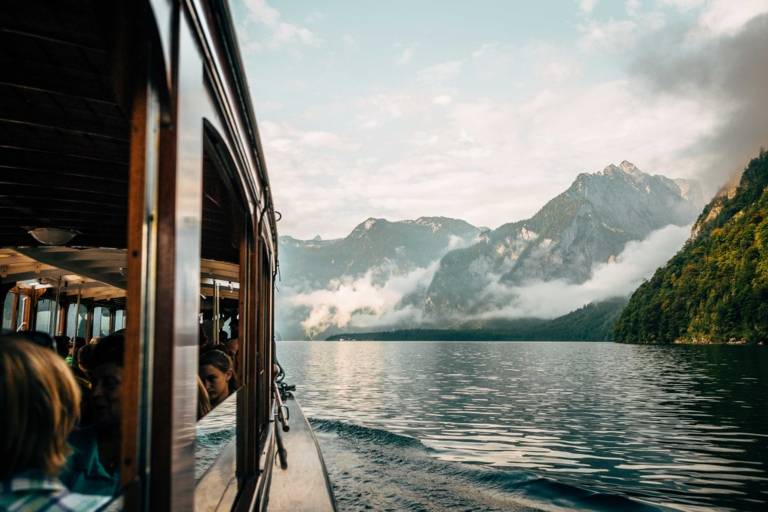
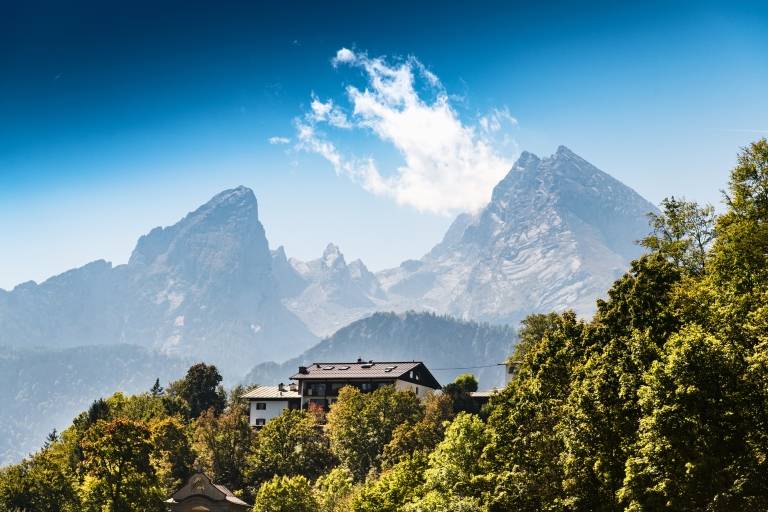
There is something mystical about Königssee – this is certainly due, in part, to its depth, as at 192 metres it is the deepest lake in Bavaria. It is also down to the towering peaks surrounding it, such as the Watzmann, Jenner and Hohen Göll, whose shapes are reminiscent of a reclining witch or devil's horns. The boat trip to St Bartholomä is also magical when the boatman plays his trumpet at the Echo Wall! Then you realise why half the world visits this lake, which, with its emerald-green waters, ranks among the most beautiful in the whole of Germany.
You can spot the locals: by their walking boots, checked shirts and traditional hats
Typical phrase: “It's lovely here – that's why everyone's here.” (in the Bavarian dialect)
What people drink: fresh buttermilk at the alpine hut

Popular sports: Getting annoyed at the tourists who risk their lives for an Instagram photo at the waterfalls.
Here's how to get there from Munich: by car via the A8 towards Salzburg in 2.5 hours, and by train and bus via Berchtesgaden to Schönau in about three hours.
Things to do: Take the electric boat to St. Bartholomä or the Saletalm, take a dip in the Obersee, go for a hike to the Fischunkelalm, take the Jenner cable car, hire a rowing boat, take a photo from the Malerwinkl
And here are some places to stop for a bite to eat: Echostüberl, Fischerei St. Bartholomä, Seealm Königssee, Königsbachalm, Jenneralm, Fischunkelalm, Mooskaser Saletalm