A bust of King Ludwig II. on the Cornelius Bridge in Munich

King Ludwig II of Bavaria

The tragic monarch

Although Ludwig II (1845 – 1886) was born in Munich and is also buried here, he really was no fan of the city during his lifetime. Indeed, the Fairytale King much preferred the isolation of his castles in the Alpine foothills.

In a letter to the Earl of Dürckheim, he even described his royal seat as a “hated, unlucky city”. He had little time for the citizens of Munich either, describing his subjects as “idlers and philistines”; the idea of having the common touch was a foreign concept to him.

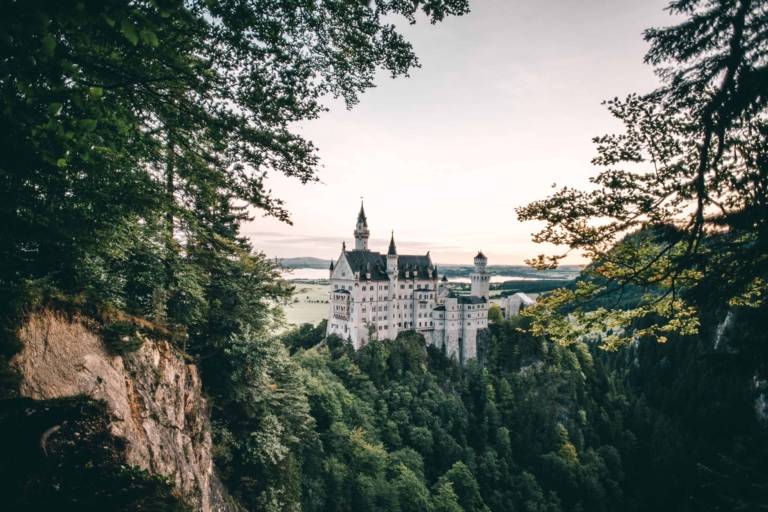
Equally his people did not hold him in high regard, mocking their reclusive king, who, with his Linderhof, Neuschwanstein and Herrenchiemsee castles, had created a dream world in the foothills of the Alps, into which he withdrew at every opportunity.  Today, Ludwig II is world-famous for these magnificent buildings in particular, his renown extending far beyond the city.

However, in spite of the deep disdain that the King and the city once held each other in, Ludwig now enjoys astonishing popularity in Munich, evidenced by the many busts and monuments honouring him in the city. Those wishing to walk the paths once taken by the Fairytale King should begin at Schloss Nymphenburg (Nymphenburg castle), where Ludwig II was born in 1845. A bust of the crown prince as a boy now stands in the room in which he was born. His magnificent carriages and sleighs are exhibited in the Marstallmusem (Carriage Museum) in Schloss Nymphenburg, along with a collection of paintings of his favourite horses.
As an adult, Ludwig occupied an apartment on the third floor of the northwest pavilion in the Residenz palace, the city palace of the Wittelsbach family in the heart of Munich. From here, it was a short walk to the Cuvilliés and National Theatre, where he enjoyed numerous private performances between 1872 and 1885.

Following the discovery of Ludwig’s body in Starnberger See (Lake Starnberg) on 13 June 1886, much was made of the fairytale-like air created by his secretive ways, his unusual preferences and the enigmatic details of his death itself.

The King was laid to rest in the crypt of St Michael’s Church in what is now the pedestrian zone of the city. The circumstances surrounding his death remain unclear, which has given rise to much speculation and numerous conspiracy theories. Requests to open his sarcophagus in the royal vault to search for traces of bullet holes in the body have always been denied due to objections by the Wittelsbach family.

Just in time for the 140th anniversary of King Ludwig II’s death, a new monument to the “Fairy-Tale King” was unveiled in a ceremony on 13 June 2026 on the bastion of the Cornelius Bridge in Munich. It pays homage to the original Ludwig monument from 1910, which was destroyed during the Second World War, and reimagines the site as a ‘romantic ruin’ featuring a bronze bust, historical stone fragments, roses and seating by the River Isar. The monument is situated at the southern end of Museum Island – between the Deutsches Museum, the River Isar and the Gärtnerplatz district.



Photos: Frank Stolle
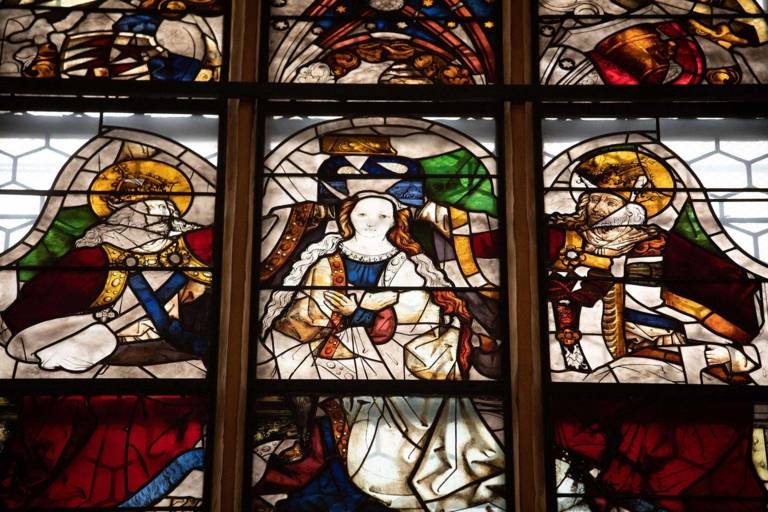
A church window in the Salvatorkirche in Munich

Munich's church windows

The most beautiful windows of the city

Michael Mayer of Mayer’sche Hofkunstanstalt presents the most spectacular church windows.

Fascinating people for centuries: Michael Mayer of Mayer’sche Hofkunstanstalt presents the most spectacular church windows the city has to offer.

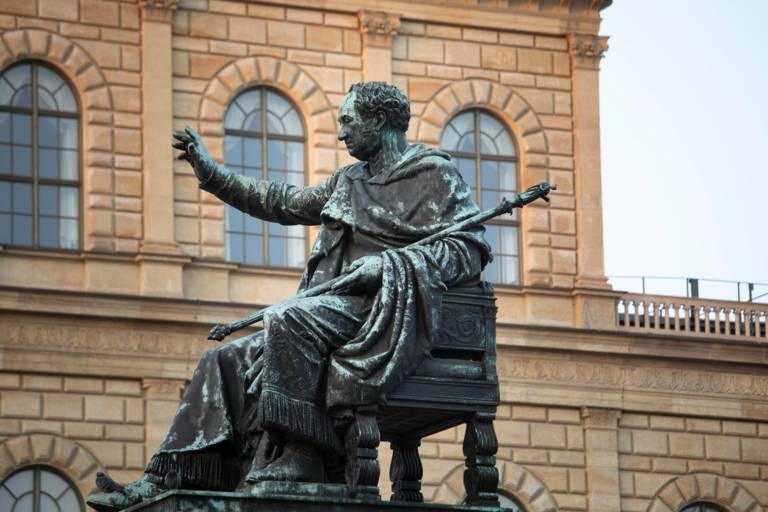
The monument to Max I. Joseph in front of the Residenz

Munich's royal monuments

Four kings and a prince regent

In Munich there are fantastic monuments to admire. Where they are and what makes them so special.

In Munich there are several fantastic monuments to admire. Where they are and what makes them so special: an overview.

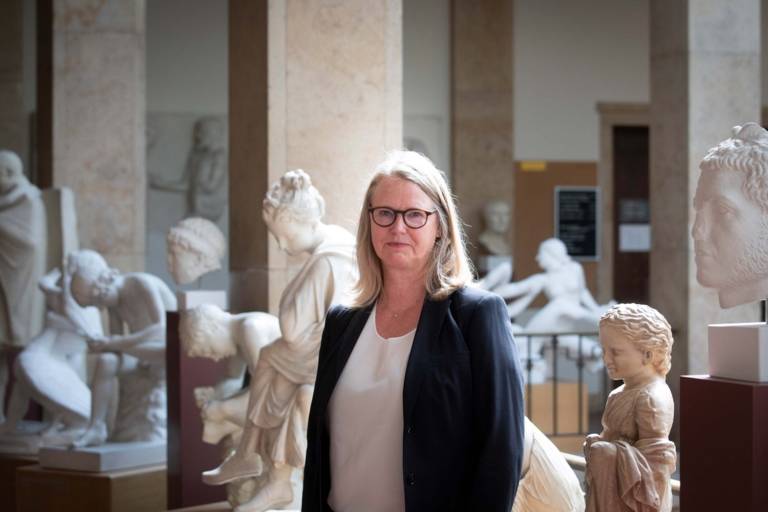
The tour guide Alvestad-Aschenbrenner stands in the Museum for Abgüsse Klassischer Bildwerke Munich

Ludwig I of Bavaria

When Munich became an „Athens on the Isar“

Ludwig I of Bavaria converted Munich into his "„Athens on the Isar“, many buildings still remind us of this today. An interview.

Ludwig I of Bavaria converted Munich into his "„Athens on the Isar“, many buildings still remind us of this today. An interview with a tour guide.

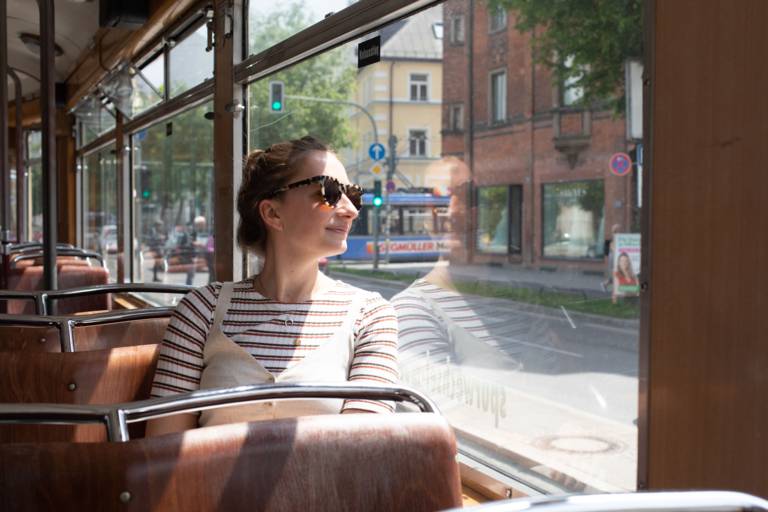
Young woman sitting at a window in a tram in Munich.

Column

A vacation in my own city

Our author used to be a travel blogger. Now she has started to explore her own city: Munich!

Our author used to be a travel blogger. Now she has started to explore her own city: Munich!

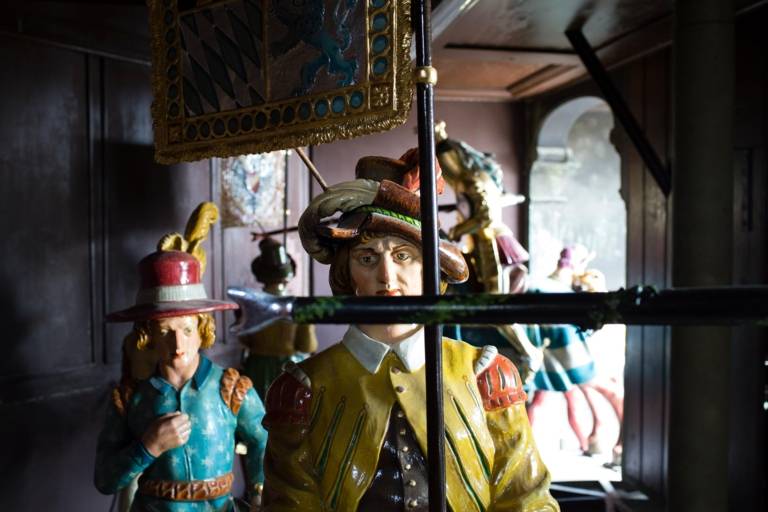
View from the inside of a figure of the carillon in the New Town Hall in Munich.

New Town Hall

The Glockenspiel in ten pictures

An exclusive look behind the scenes.

The Glockenspiel on Marienplatz has been enchanting visitors and locals for over 100 years. An exclusive look behind the scenes.

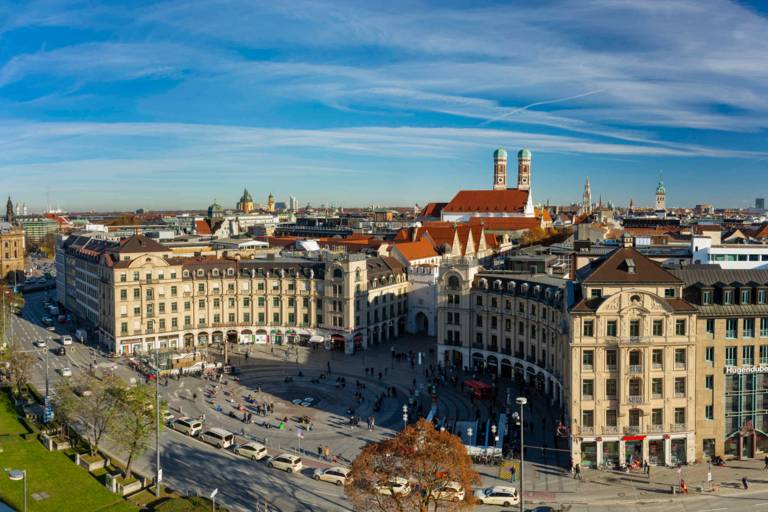
Panoramic view of Karlsplatz / Stachus in Munich with the Frauenkirche in the background photographed from the air.

Munich's city centre

Classical and curiosities

Numerous Munich stories can be told along the roughly one-kilometer-long route between Karlsplatz-Stachus and Marienplatz square. A city walk.

Numerous interesting Munich stories can be told along the roughly one-kilometer-long route between Karlsplatz-Stachus and Marienplatz square. A city walk.

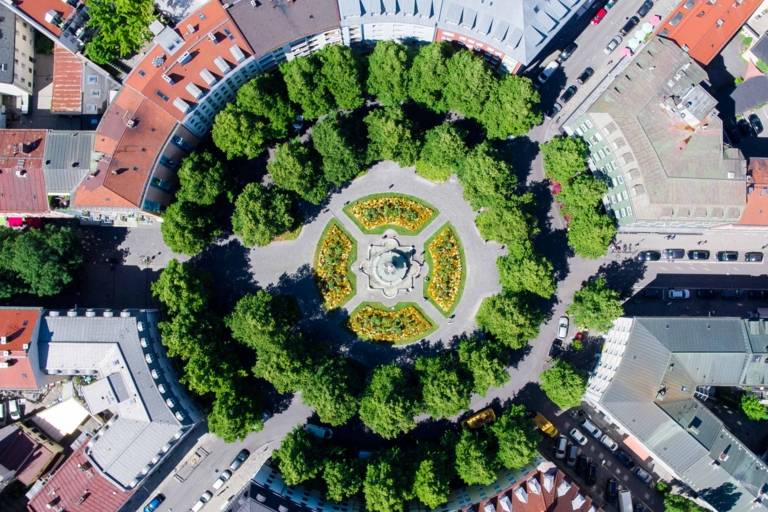
Weissenburger Platz in Munich photographed from above with a drone.

Haidhausen and Au

A village in the city

Haidhausen and Au have developed from working-class quarters into popular residential areas.

When strolling along the narrow streets of the districts Haidhausen and Au with small shops and green courtyards, it almost feels like being in a village in the middle of the city.

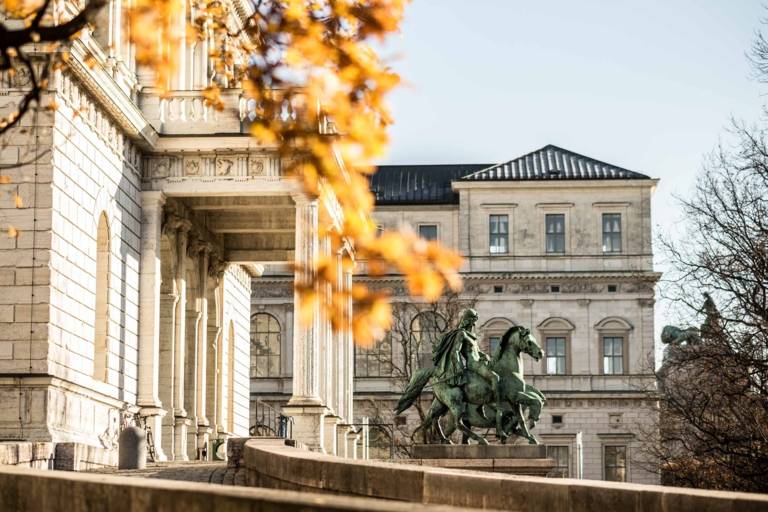
The Academy of Fine Arts in Munich in autumn.

Schwabing

From artists and writers

Around 1900, it was the artists and writers who settled around the university and the art academy and shaped the spirit of Schwabing.

In the heyday of the Schwabinger Bohème around 1900, it was the artists and writers who settled around the university and the art academy and shaped the spirit of Schwabing.

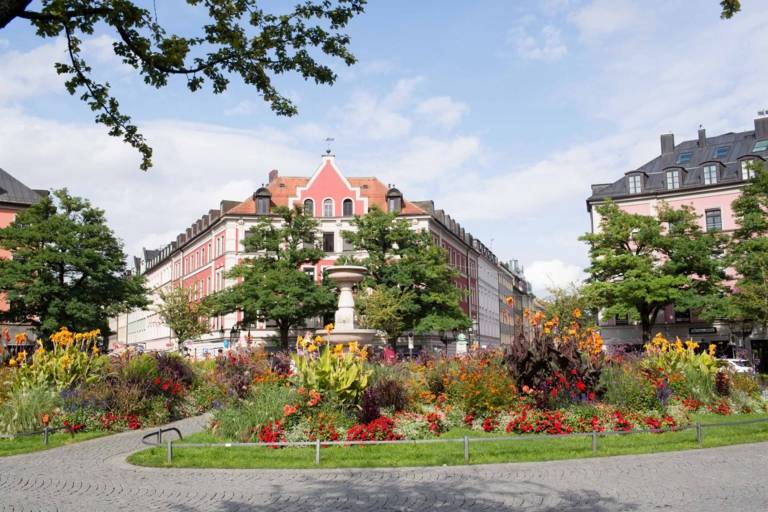
View of flowerbeds at Gärtnerplatz in Munich.

Gärtnerplatz and Glockenbach

Where the night begins

Independent labels, hip bars, pubs and cool inns attract the young and the young-at-heart.
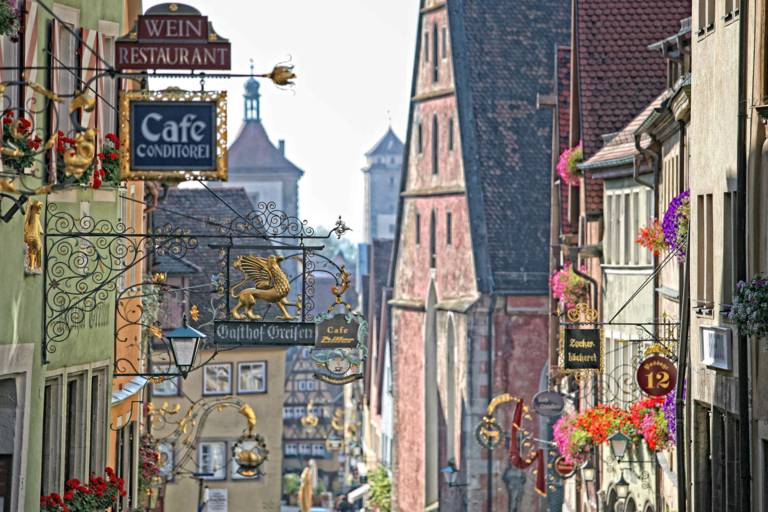
The Gärtnerplatz and Glockenbach neighbourhoods are known as trendy quarters. Their independent labels, hip bars, pubs, cool inns and calm backyards attract the young and the young-at-heart.