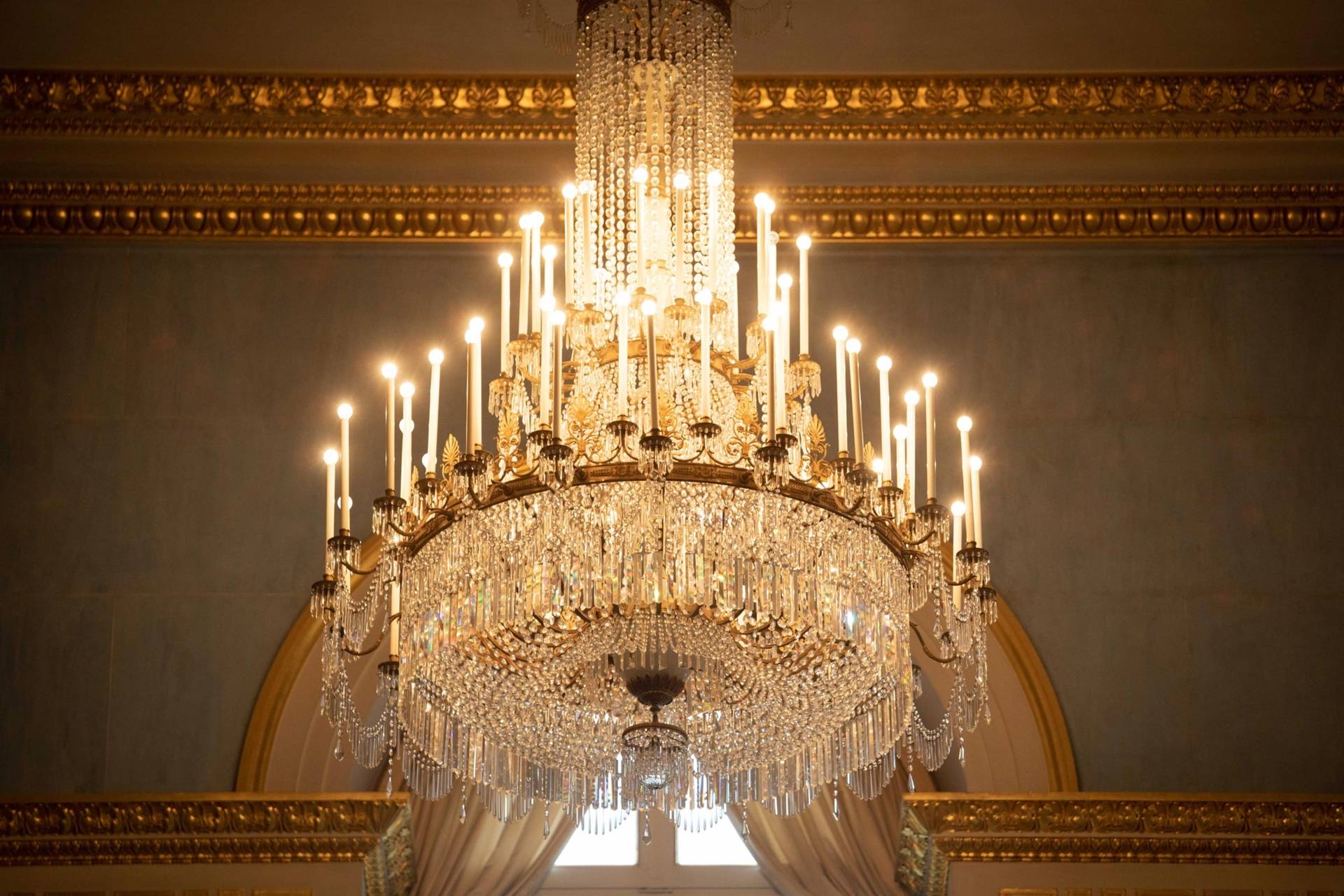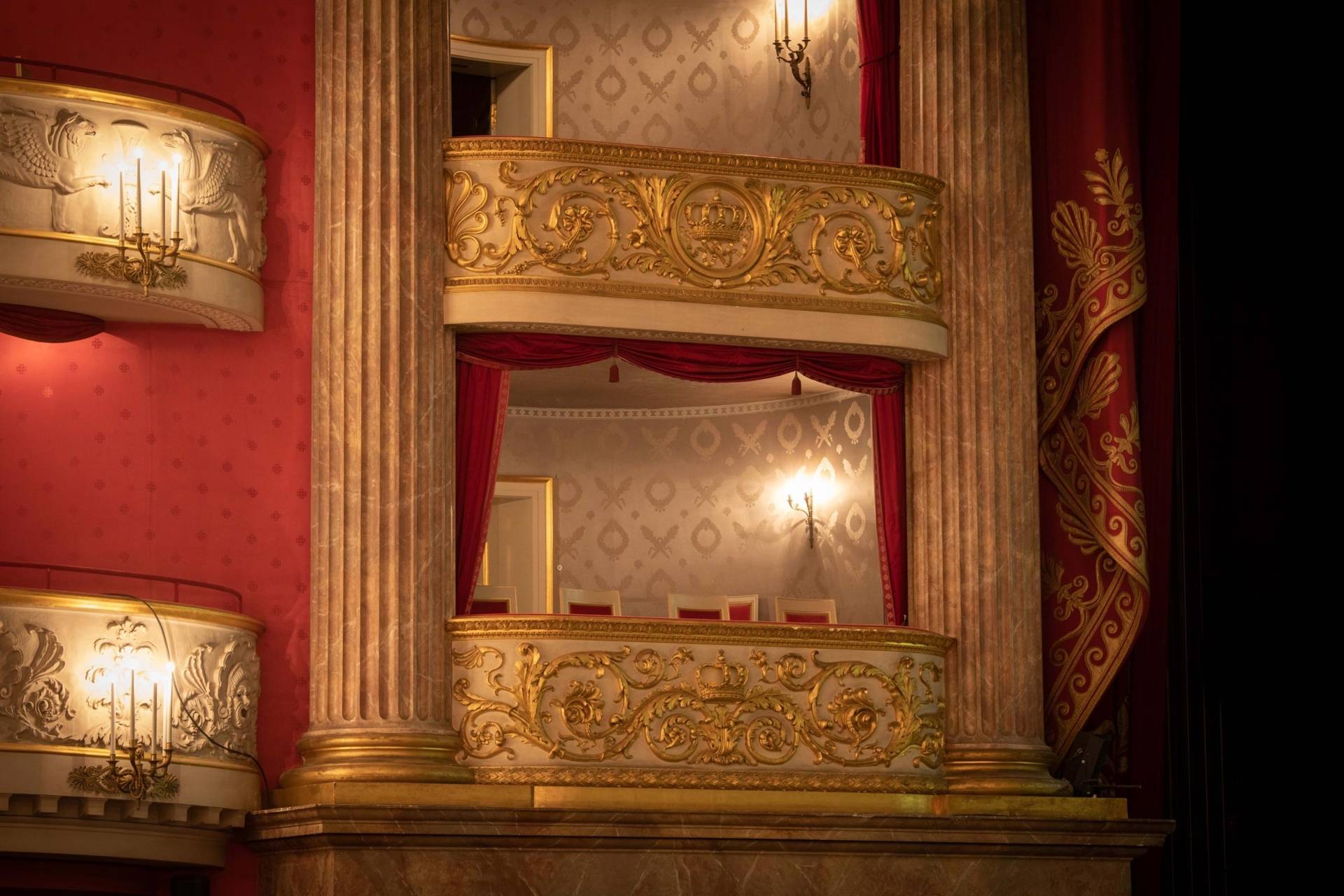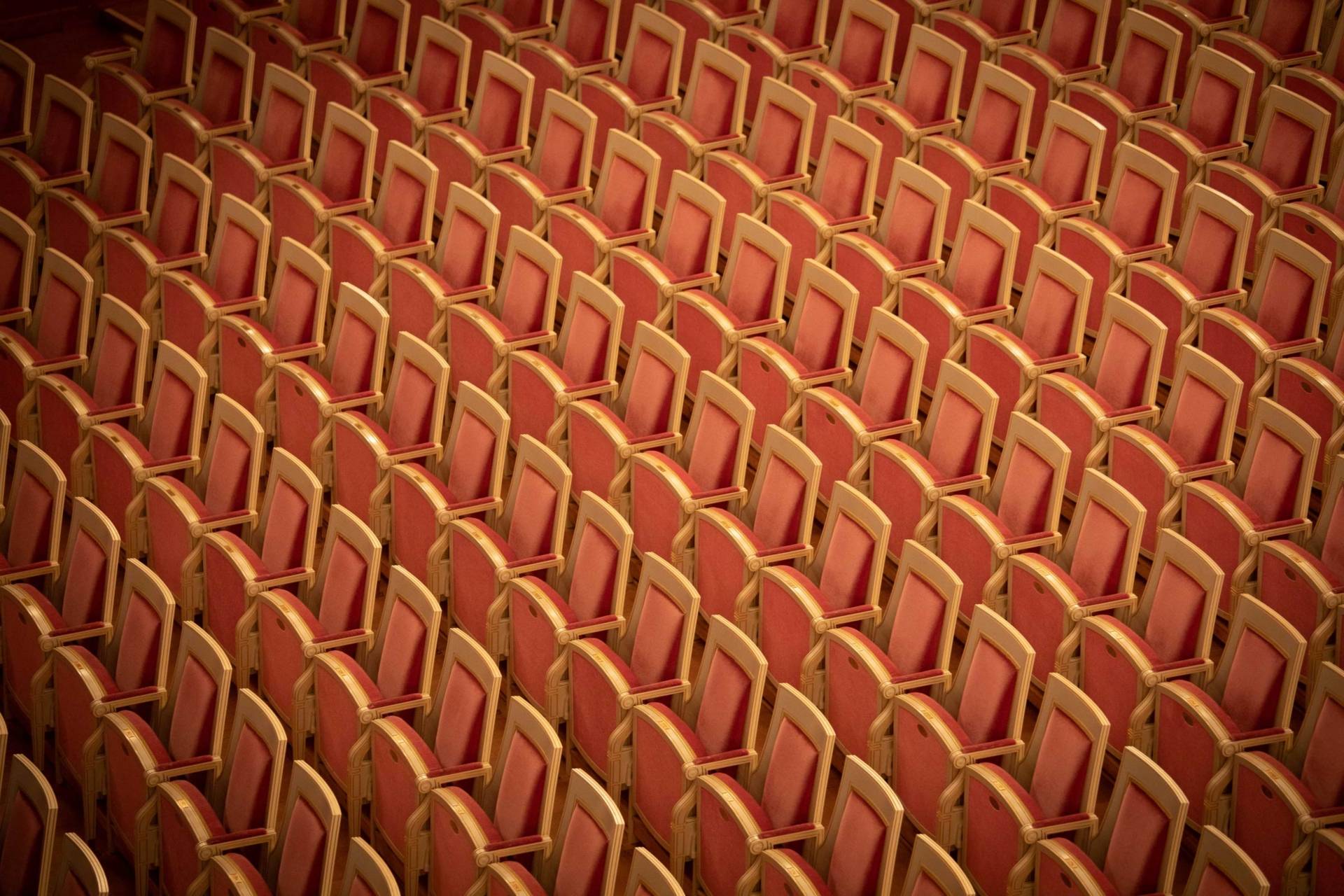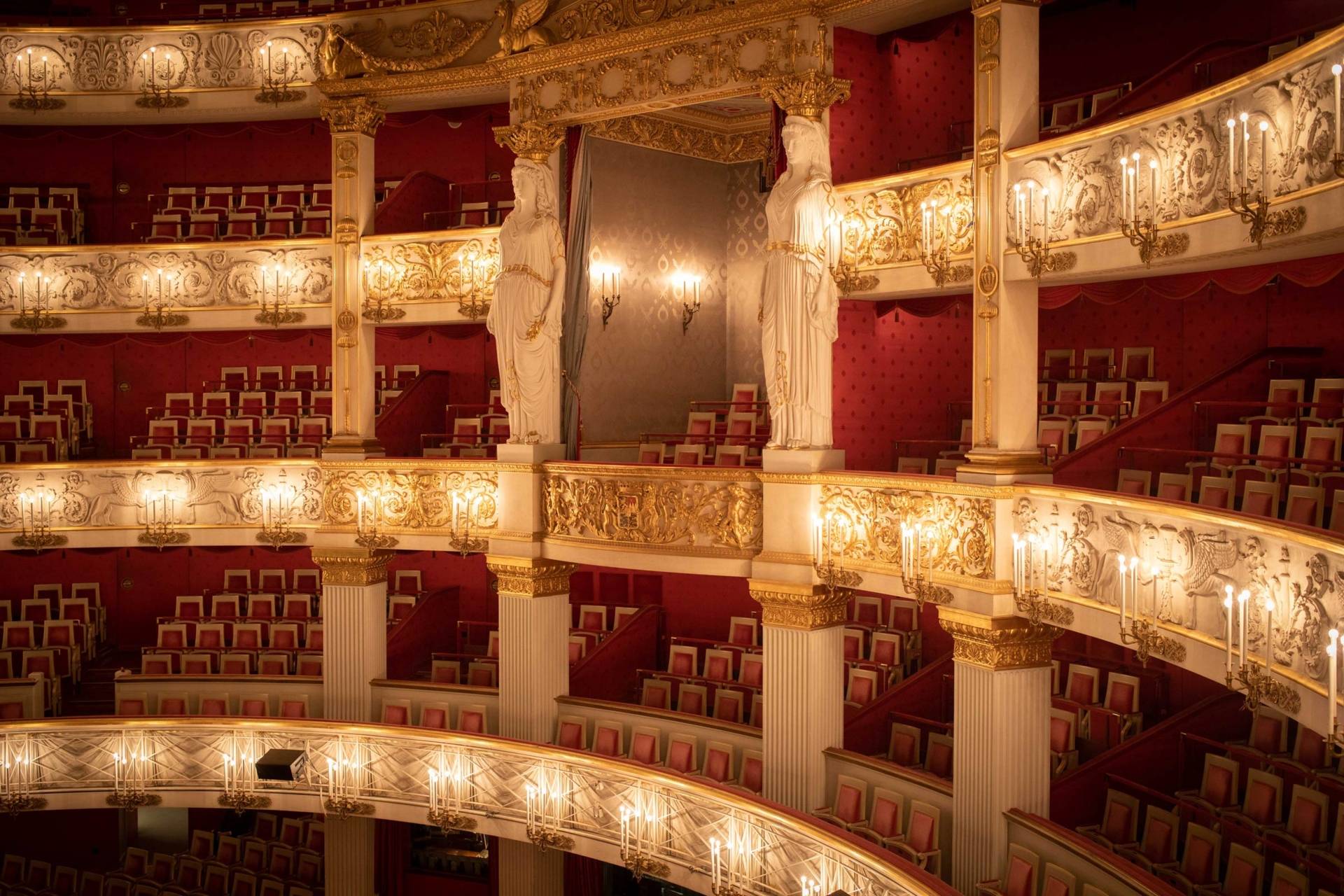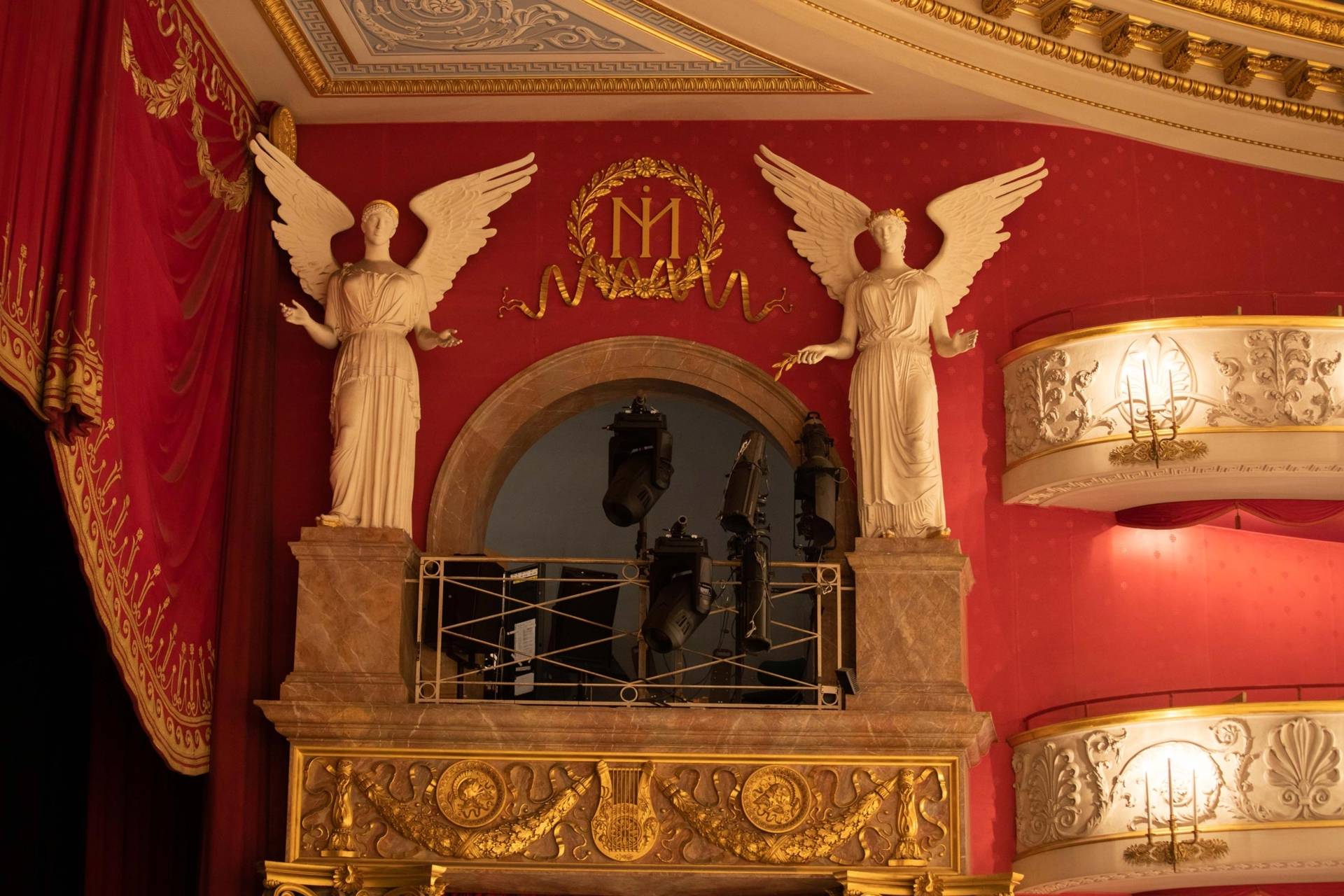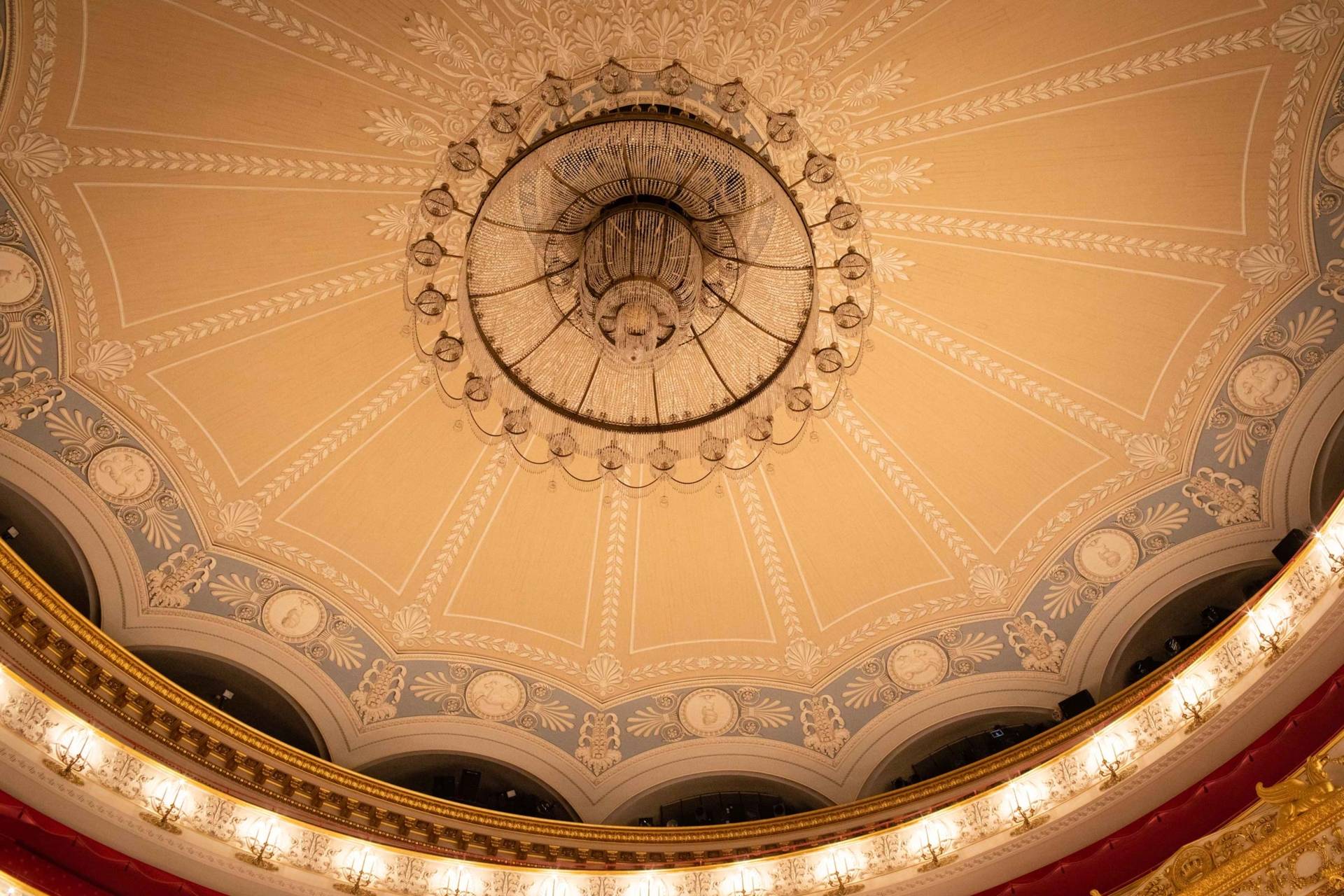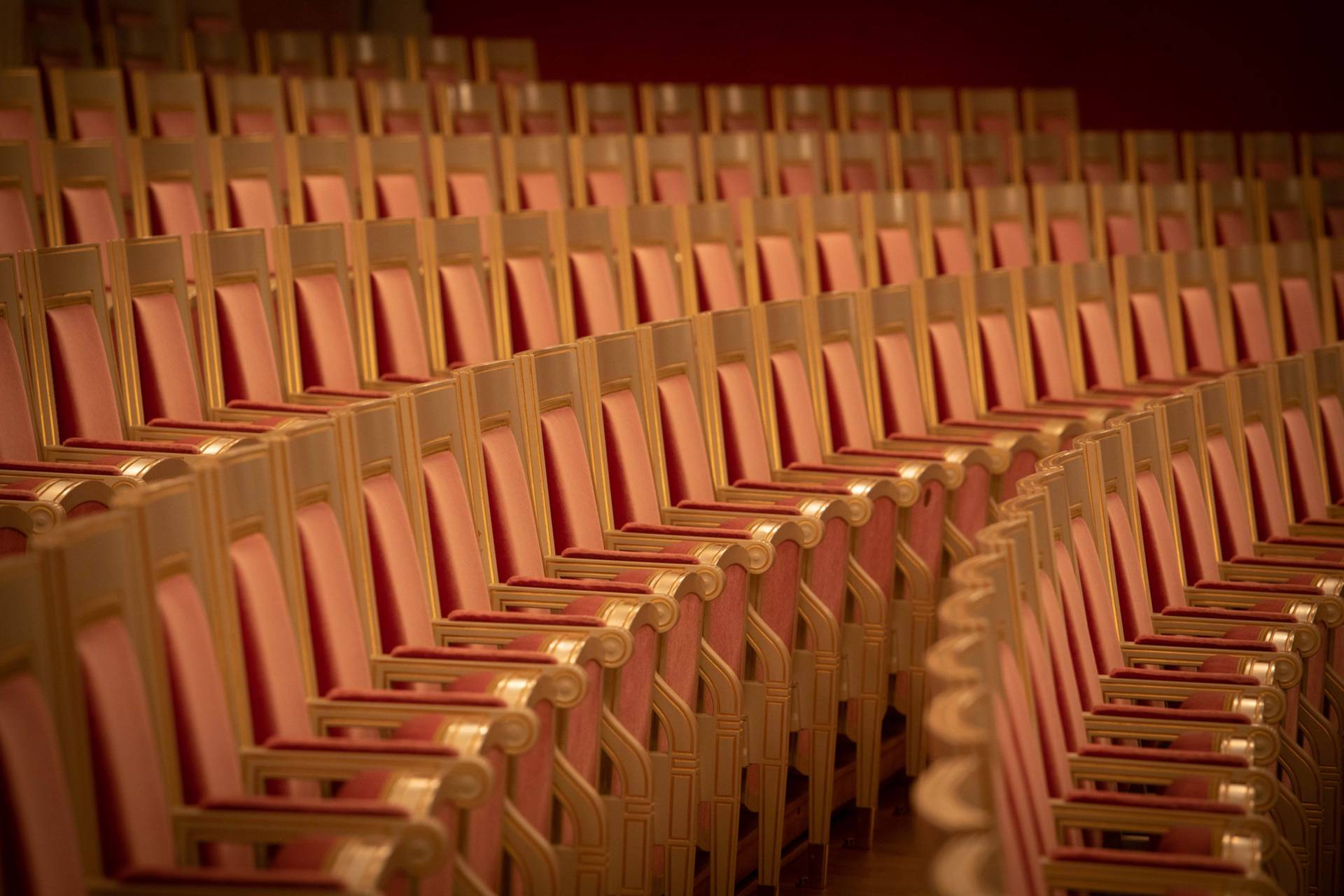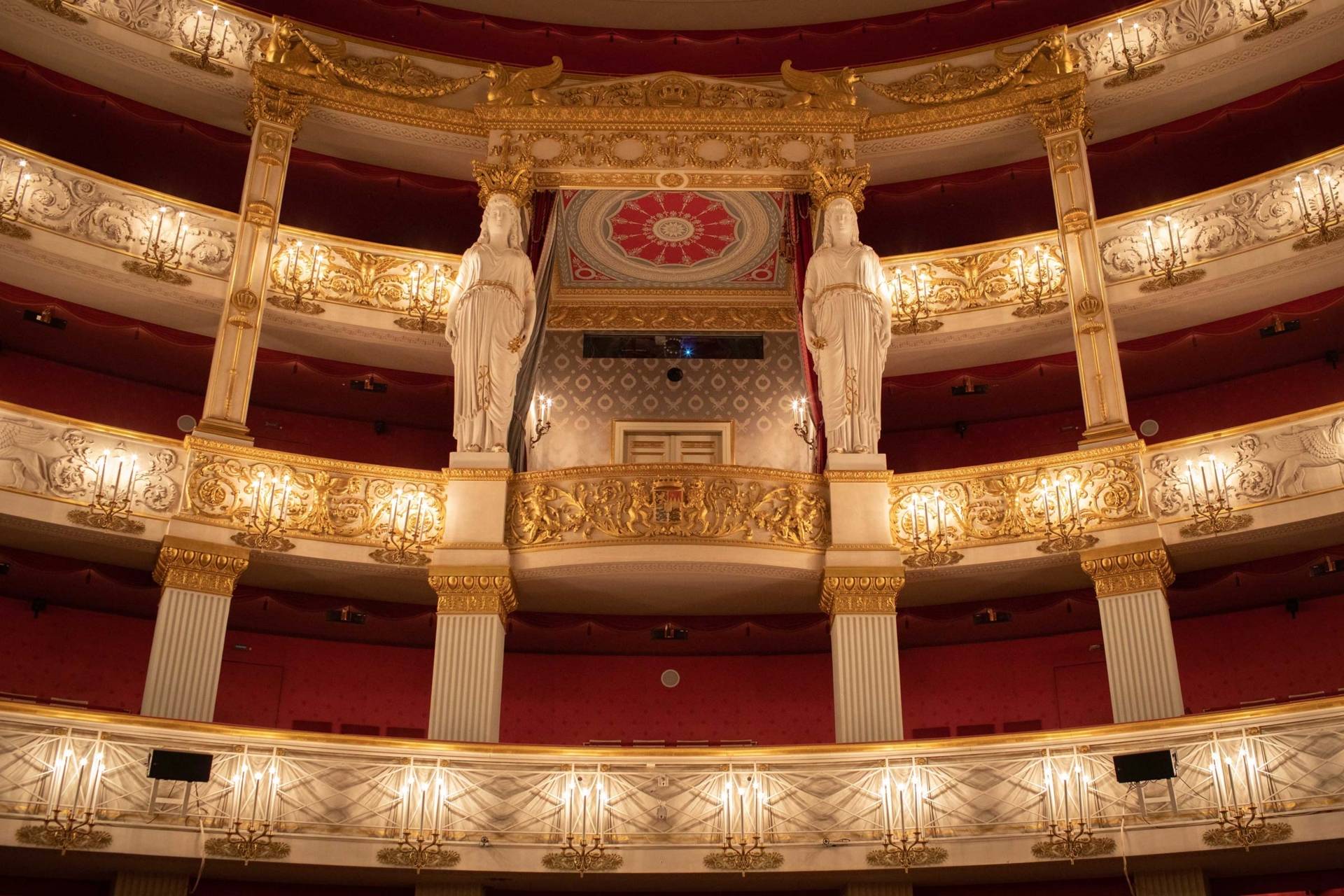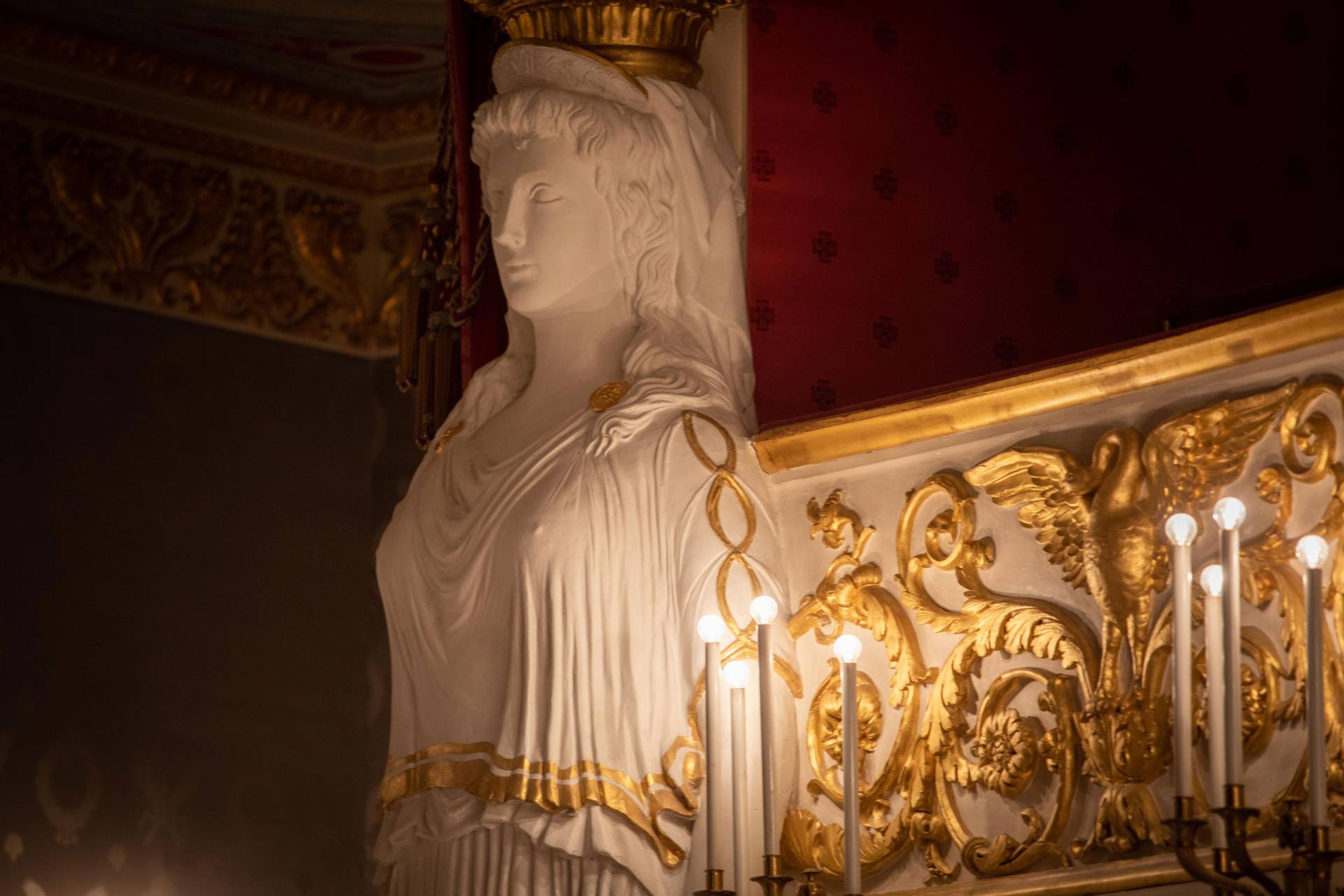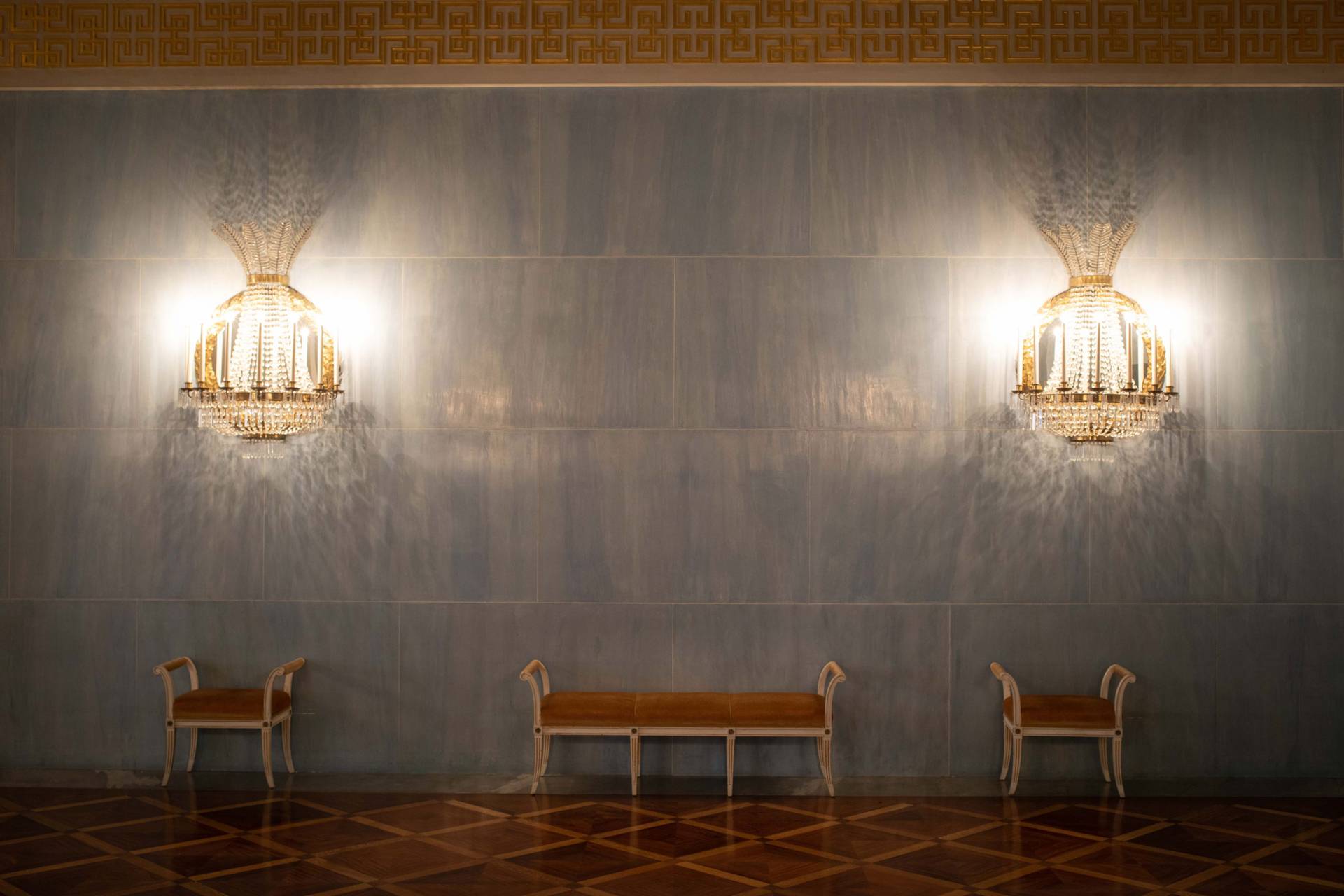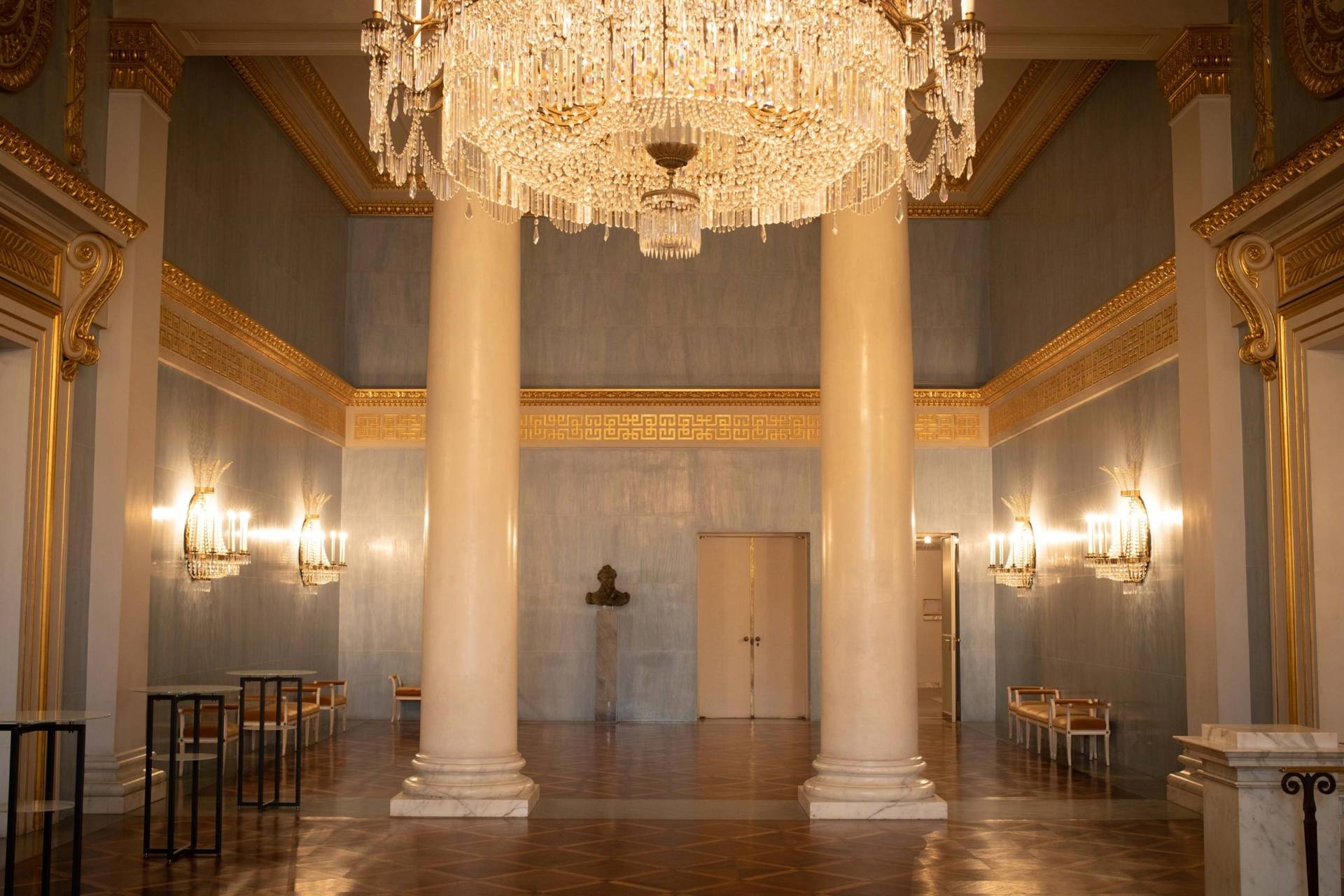
Bavaria’s state opera and ballet companies – the Bayerische Staatsoper and the Bayerisches Staatsballett – showcase their talents here at the Nationaltheater, which is home to one of the world’s largest stages for opera.
The Nationaltheater on Max-Joseph-Platz was not Munich’s first opera house. All the way back in the mid-1600s, Elector Ferdinand Maria had a “royal opera house” erected on the square at Salvatorplatz. The Neues Opera Hauß (New Opera House) designed by François Cuvilliés followed in 1753. With just 560 seats, it soon became too small to serve such large crowds. After the building on Salvatorplatz had to be closed down in 1795, King Maximilian I Joseph commissioned the architect Karl von Fischer to plan a new royal and national theatre.
The foundation stone was laid in October 1811, but it took a further seven years before the opera house was complete. Work on the building was even suspended completely in 1813 after costs rose higher than expected. A fire in 1817 destroyed a section of the new construction. When the theatre opened in 1818, only a portion of Fischer’s original plans had actually been brought to life.
During a performance on 14 January 1823, a part of the décor caught fire. Unfortunately, nothing could be done to stop the flames spreading, as the water used for extinguishing fires had frozen. (Weather records show that the January of 1823 was one of the coldest winter months of the 19th century).
As it is often the case in Munich, beer also played an important role in the fire that night. It is said that King Maximilian I, Crown Prince Ludwig and master builder Leo von Klenze sat helplessly at the window of the Residenz palace, watching the catastrophe unfold. They allegedly came up with the wonderful idea of putting the fire out using beer from the nearby Hofbräuhaus. In fact, a historic report notes that the “brewers brought cooled beer to the fire”. However, this plan was only moderately successfully – the theatre was ultimately razed to the ground.
Soon after, the City of Munich commissioned the architect Leo von Klenze to rebuild the theatre. For this reincarnation, the theatre was given its hallmark pillars at the front, part of Karl von Fischer’s original design. In terms of architecture, the Nationaltheater is regarded as a masterpiece of European classicism; with its line of Corinthian pillars, it is reminiscent of a Greek temple. The stage was ready to host performances again as soon as 1825.
Later, the Second World War left its mark on the building – after overnight bombing in 1943, the opera house was once again completely destroyed. Construction of a new Nationaltheater began in 1958 with the goal being to recreate Karl von Fischer’s original design.
After five years of building work, the theatre’s ensemble – who had temporarily moved to the Prinzregententheater (Prince Regent’s Theatre) for the interim – returned home in November 1963. An annual highlight takes place every June and July, when the theatre hosts an opera festival featuring stars from the international opera scene.
Guided tours of the Nationaltheater are held several times a week and last about one hour. The theatre also offers regular tours for children, group tours and exclusive tours for individuals.
You can find an overview of the premieres of classical spoken theatre and major music theatres here.