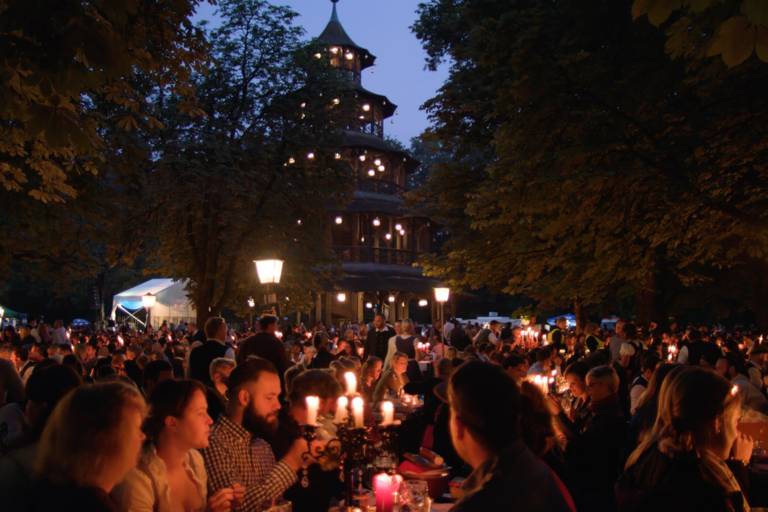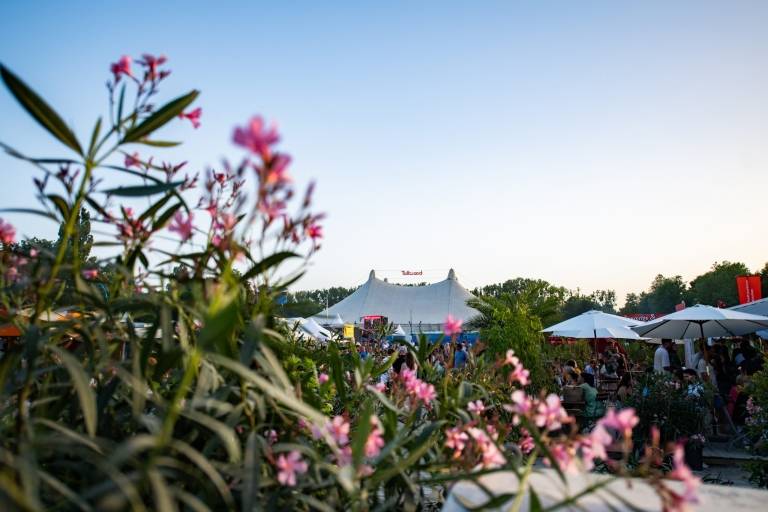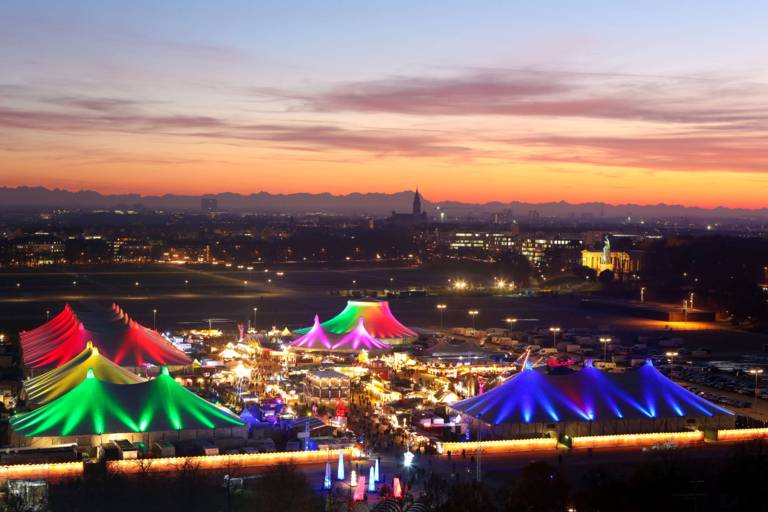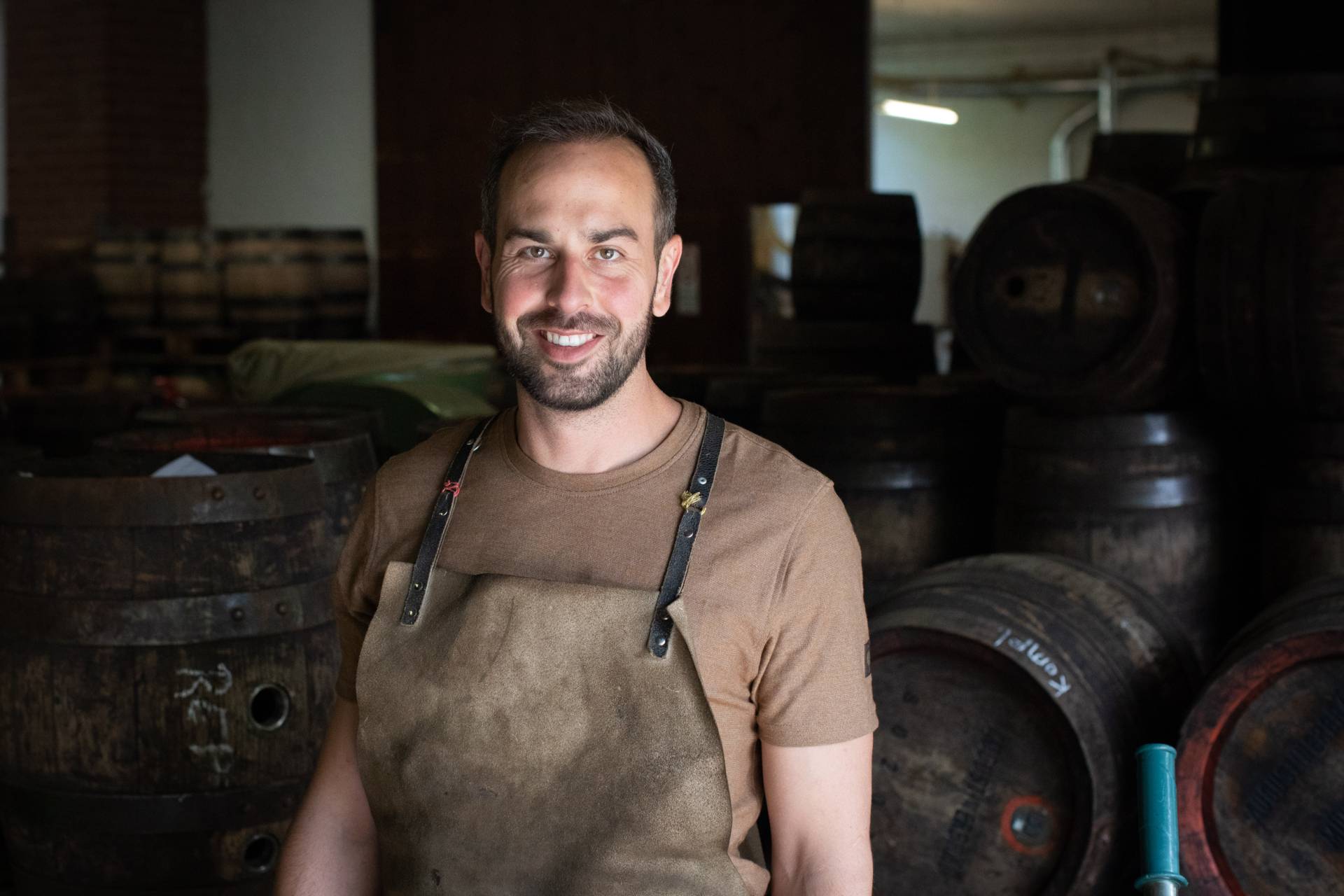
As one of the last remaining artisanal businesses in Germany, Holzfassfabrik Schmid (Schmid cooperage) has been producing high-quality wooden barrels for four generations. Managing director and master cooper Peter Schmid keeps this tradition alive – without it, Munich with its pubs, beer gardens and the Oktoberfest, would be unimaginable. Our author visited the cooper in his workshop.
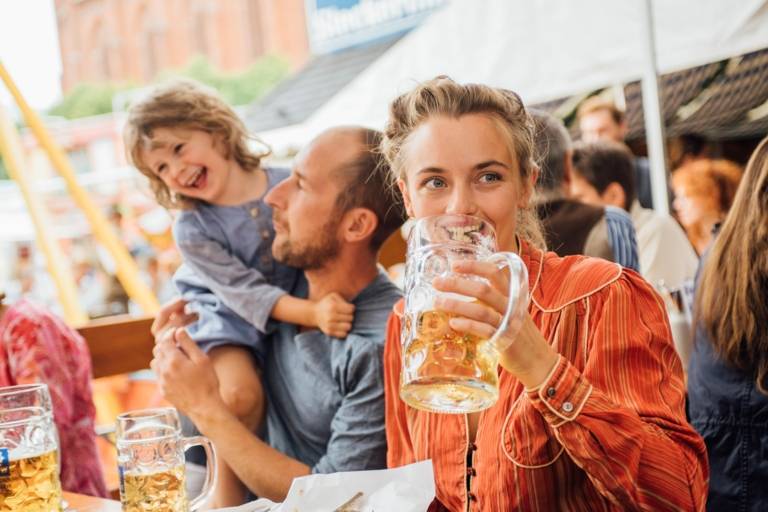
For fans of Munich beer, there is hardly anything more thrilling than the moment of tension when the brass tap is set in place (How many blows will it take? Will it gush? Will it turn into a mess?). Then comes the casual swing with the unusually large wooden mallet. The following movements are so routine that any fear of a foam fiasco instantly fades. The first pour – still far too foamy – shoots into the glass. The bell rings. And finally – whether in a beer garden, pub or at the Oktoberfest – a freshly tapped Halbe (half-litre of beer) or Maß (1 litre of beer) is served, followed by that first deep sip.
What most beer drinkers don't know: The wooden barrel that has just been tapped by a bartender most likely comes from the Schmid cooperage. And: If everything has been done correctly, it should not actually affect the taste of the beer. So, does beer from a wooden barrel taste any different from beer poured from a modern tap or bottle? “Absolutely,” says master cooper and fourth-generation managing director of the cooperage, Peter Schmid, over a coffee in the staff room.
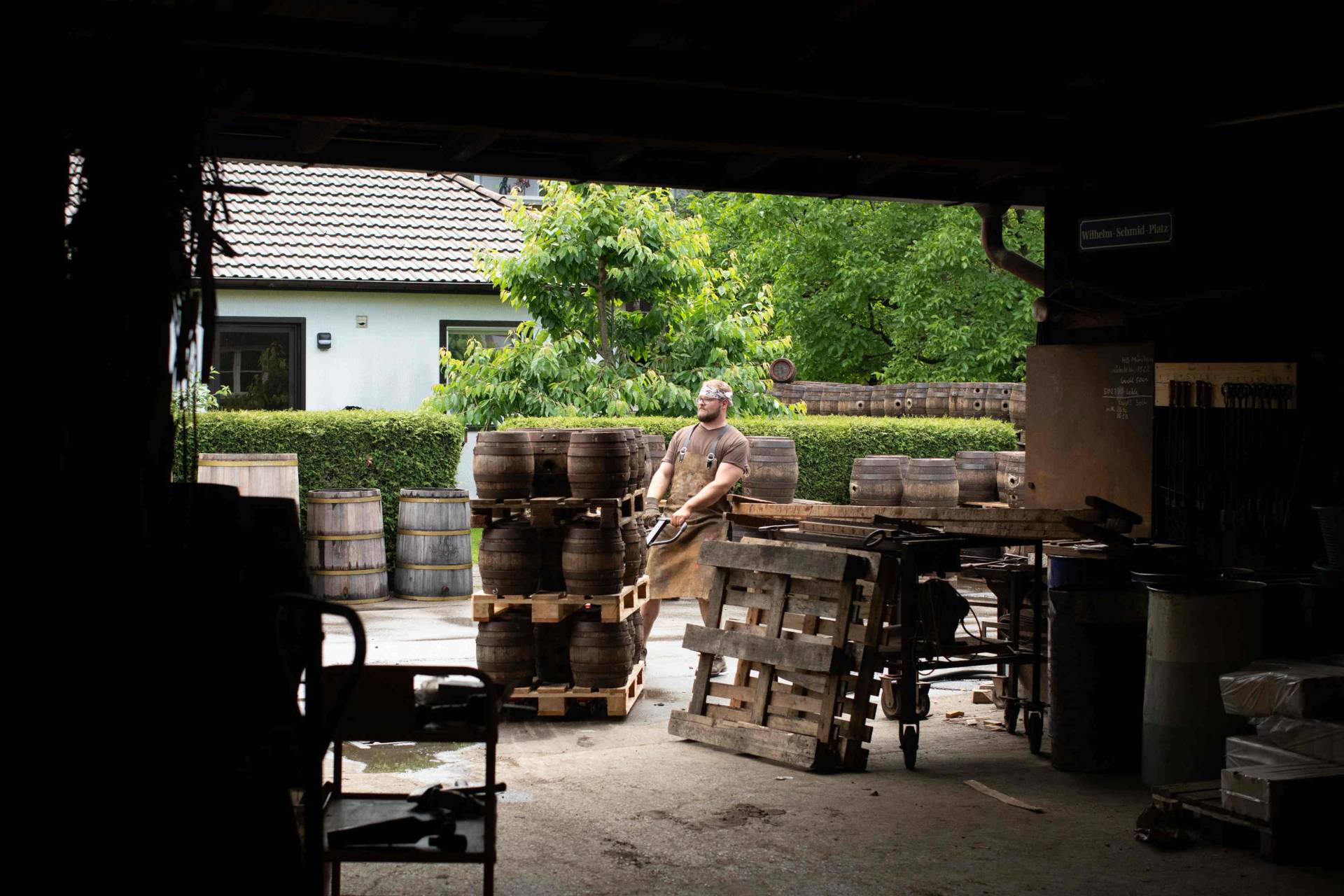
There is a brief pause, as if this apparent contradiction requires no further explanation. In fact, that seems to be the case – at least for the people in the immediate vicinity on this late autumn day. And definitely for the coopers in the workshop below, who are driving steel hoops onto barrels with powerful hammer blows, arranging staves and operating machines.
When you order a beer from a wooden barrel, you receive a colder beer with slightly less carbon dioxide. Schmid sums up this experience as “more drinkable.”
But also for everyone here at the Freiham Foundation's estate in the west of Munich. Since 2014, this estate has belonged to the Edith Haberland Wagner Foundation, which also holds a majority stake in the Augustiner brewery. It has since been carefully restored – entirely in the spirit of beer. There is a pub with a beer garden, a distillery, stables for the mighty brewing horses, and even the manhole covers are decorated with a bishop's crook and the initials J. W. – the logo of the Augustiner brewery, known to virtually everyone in Munich. Peter Schmid could hardly have imagined a more fitting location for his second production site, while the company's headquarters remain in Laim district.
Noticing the puzzled look on the interviewer's face, Schmid begins to explain his statement: “The beer barrels are pitched”, he says. This means that the inside of the barrels is coated with a thin layer of purified pine resin. Only through this process does a barrel become completely tight, creating a stable, smooth and hygienic surface. But above all, pitching prevents what may be desirable in wine or spirits: the beer does not absorb compounds from the wood.
That does not mean, however, that the wood no longer influences the taste. Schmid explains that the beer enters the barrel with its natural carbon dioxide content, the wooden staves cannot retain more. So, the carbon dioxide level is slightly lower than in beer filled into stainless steel kegs or bottles. Because the pitch is liquid-tight but not fully gas-tight, pubs store and serve wooden-barrel beer at lower temperatures. Otherwise, too much carbon dioxide would escape over time. So, when you order a beer from a wooden barrel, you receive a colder beer with slightly less carbon dioxide. Schmid sums up this experience as “more drinkable.”
Even Schmid would likely agree that the greatest influence on the taste of beer from wooden barrels lies in another, almost immeasurable factor: the feeling of connecting, sip by sip, to a culture that is almost as old as Munich itself.
And there is another factor that plays an important role: “With wooden barrels, you are forced to maintain higher beer quality,” Schmid says, pointing to the sophisticated logistics required to supply pubs and beer gardens with wooden-barrel beer. He feels this especially during the Oktoberfest: Augustiner is the only brewery that still delivers its festival beer to the Wiesn (Oktoberfest fairgrounds) in 200-litre wooden barrels, while all other breweries have long ago switched to large stainless-steel tanks. “These are filled once and then refilled every day with the amount of beer that has been taken out,” says Schmid. “Augustiner has enough barrels to cover a full day at the Wiesn, including an extra reserve of around 30 per cent.” At night, the barrels are collected, cleaned and refilled. “That's why the beer from the wooden barrel is always fresh,” says Schmid.
Even Schmid would likely agree that the greatest influence on the taste of beer from wooden barrels lies in another, almost immeasurable factor: the feeling of connecting, sip by sip, to a culture that is almost as old as Munich itself. A look at the city's history makes it clear that Munich, while not literally built on beer, has certainly been shaped by it.
A few examples: In the 17th century, beer tax is said to have accounted for a full 50 per cent of Bavarian state revenue. And when Swedish troops attempted to capture Munich in 1632 during the Thirty Years' War, they spared the city in exchange for 22,000 litres of beer from the Hofbräuhaus (beer hall) – along with other concessions. In the 19th century, beer sales contributed to the industrialisation in Munich. Carl von Linde invented a refrigeration machine for breweries, which became the precursor to today's refrigerators.
When Swedish troops attempted to capture Munich in 1632 during the Thirty Years' War, they spared the city in exchange for 22,000 litres of beer from the Hofbräuhaus (beer hall) – along with other concessions.
The city's population increased tenfold. Beer storage cellars were built, and above them the famous beer gardens – along with entire beer palaces that could accommodate up to 10,000 people. Amid all these upheavals, developments and revolutions were the coopers.
Their craft not only made beer production possible, but also ensured its storage and transport. As a result, they were closely integrated into the structure of the city and among the most important guilds. This status is still visible today – in streets such as Schäfflerstrasse in the Old Town and, above all, in the Schäfflertanz, the traditional cooper's dance is performed every seven years.
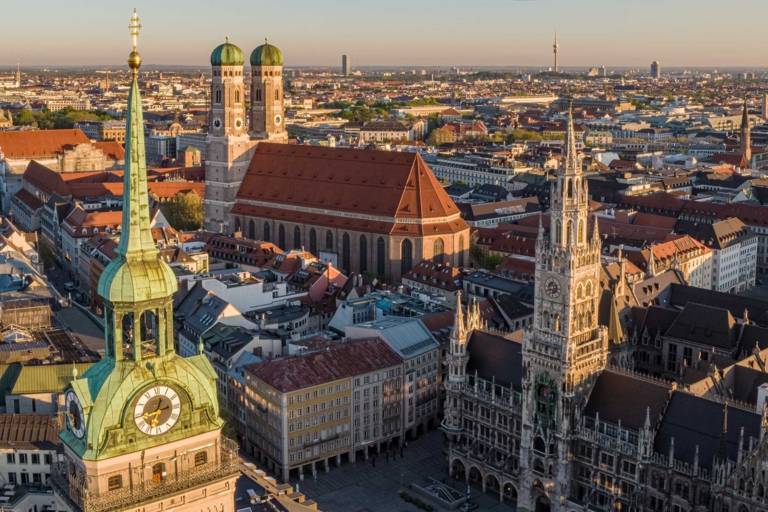
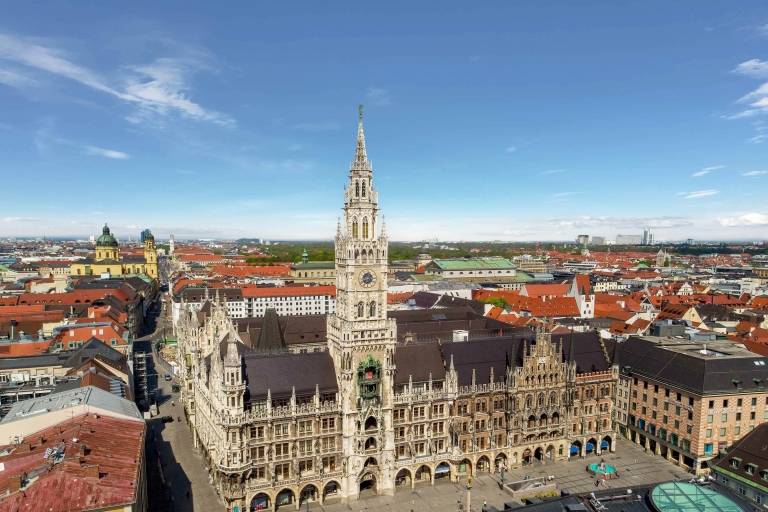
According to legend, the tradition dates back to 1517, during a plague epidemic, when coopers performed a dance to encourage the population to venture back onto the streets. From 6 January to 17 February 2026, the coopers will perform their dance once again – in public places, schools and clubs, at companies and carnival balls (dates and venues for the Schäfflertanz 2026 are listed here). Those who are not in Munich during this time (or the next cycle in spring 2033), can still witness the famous circle dance: it appears in one scene of the Munich Glockenspiel (carillon) in the tower of Neues Rathaus (New Town Hall) on Marienplatz (main square).
Peter Schmid himself has participated twice as a dancer, in 2012 and 2019. “You devote yourself entirely to this task for six weeks,” says Schmid. “You're on the go twelve to fourteen hours a day, seven days a week.” It's very strenuous, but one for which Schmid is nevertheless grateful. “Being part of what defines Munich historically and culturally is a wonderful feeling,” he says.
The cooperage uses only oak wood for the staves – the curved wooden planks from which the barrels are made – from trees that have grown at exactly the right speed in exactly the right soil.
Anyone who might assume that Schmid and his fellow coopers are merely staging a blend of craftsmanship and folklore, would be mistaken. Schmid is rather an authentic representative of a living craft. The company's second production site in Freiham marks a significant expansion for his business, which has been in operation since 1914. Wooden barrels are currently undergoing a renaissance.
“The decline in beer consumption is actually playing into our hands,” says Schmid. “Breweries have to come up with something new.” That is why they are increasingly focusing on higher quality – and on the unique experience offered by beer from wooden barrels. “Breweries that have temporarily abandoned wooden barrels are starting to use them again,” Schmid explains. “Others are taking up wooden barrels anew, starting completely from scratch.” When our conversation turns to the present and future challenges, it leaves folklore completely behind. Instead, it revolves around classic business concerns: coordinating with the employment agency, timber prices and the question of how to lead his team to produce high-quality barrels. After all, that is an art.
The cooperage uses only oak wood for the staves – the curved wooden planks from which the barrels are made – from trees that have grown at exactly the right speed in exactly the right soil. “The wood must meet our requirements for elasticity, hardness and flexibility,” Schmid explains. It must also be flawless, free from knots or cracks.
A properly poured beer from a wooden barrel is therefore two things at once: a kind of living artefact that connects Munich's past and present, bridging the era when the city evolved from a medieval provincial town into a cosmopolitan metropolis.
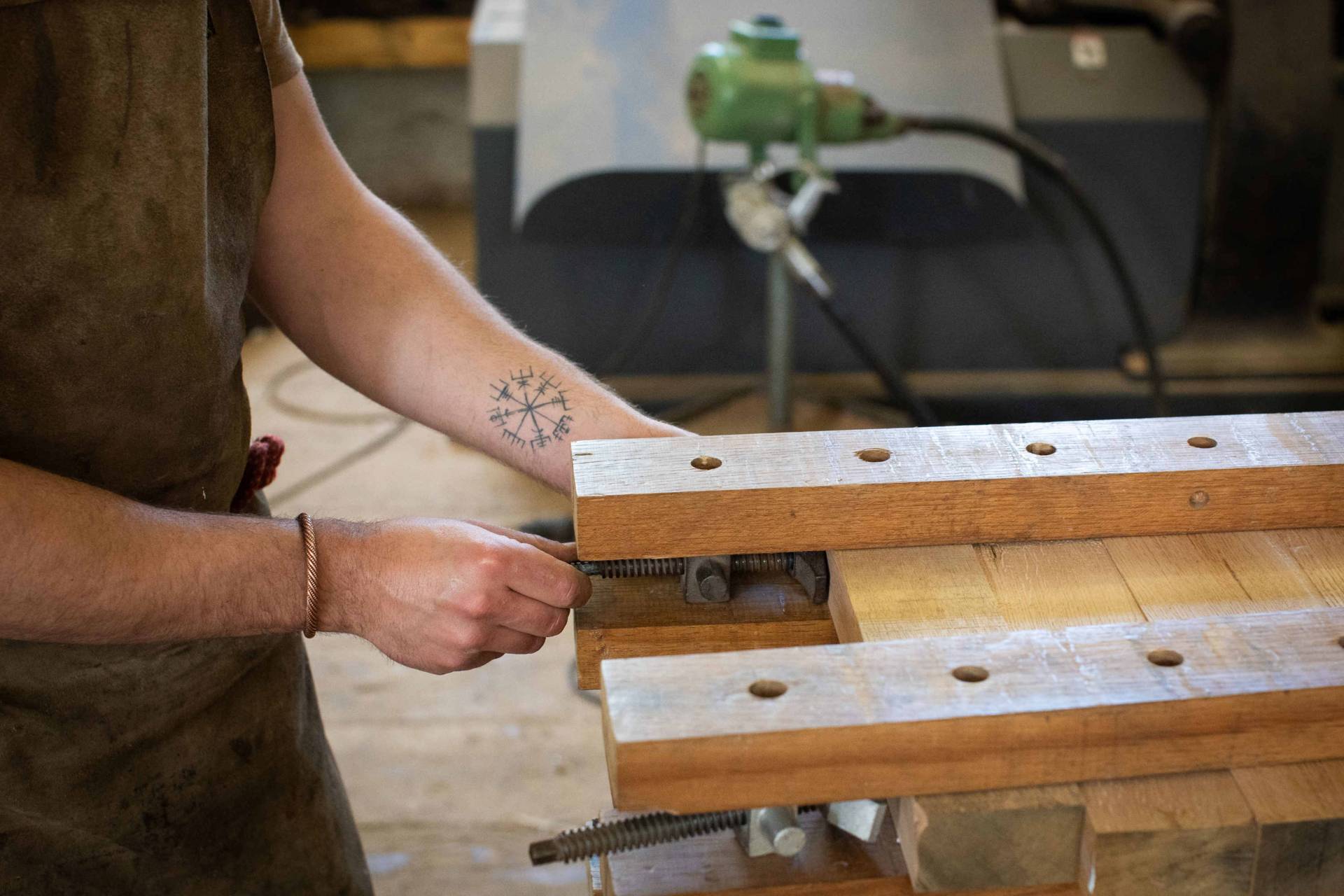
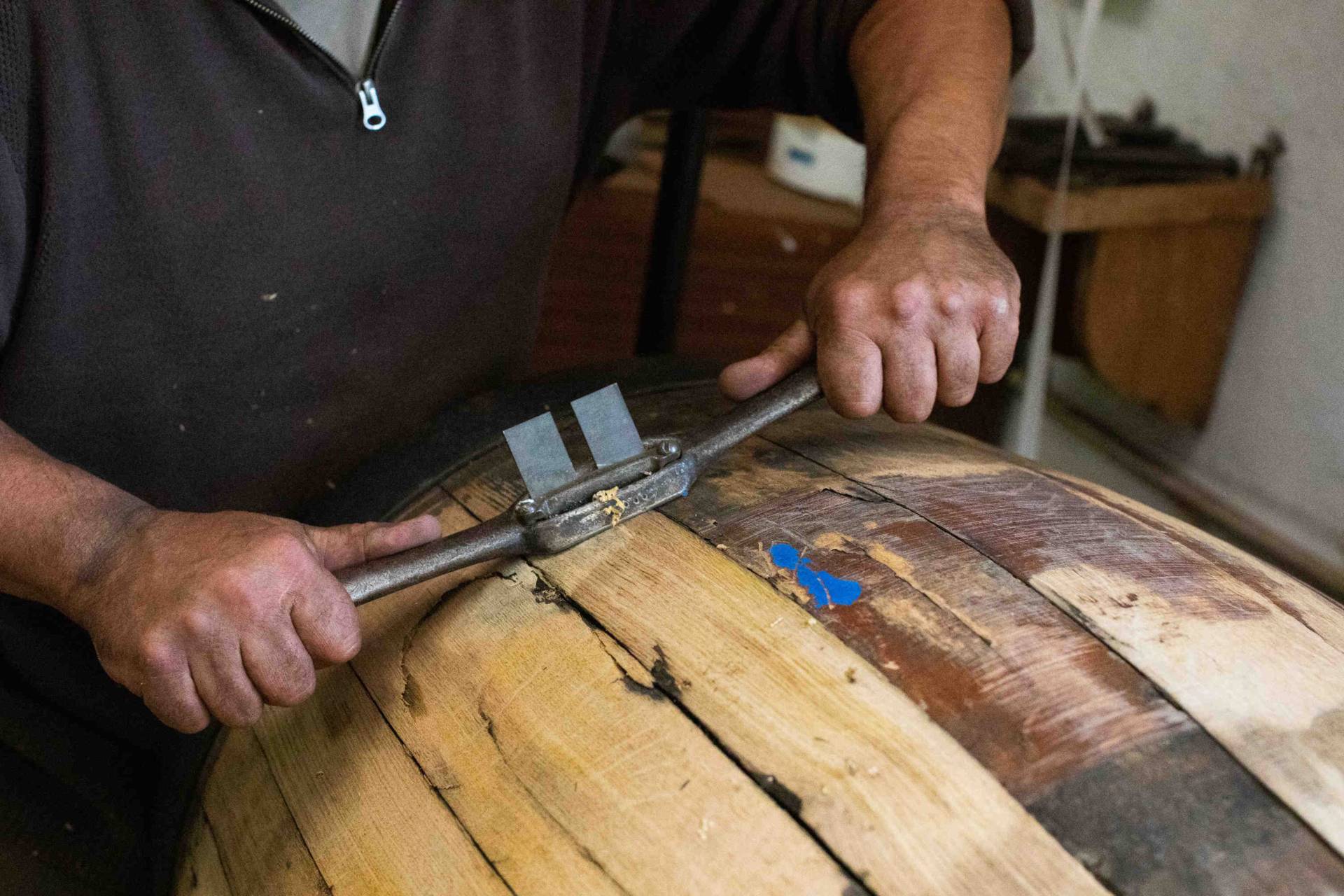
The wood is shaped in countless steps – by hand and with old machines that were probably only built a few times and have since become unique artefacts. Incidentally, the great effort involved – and the associated costs – also explain why it is virtually impossible for private individuals to obtain a genuine, filled wooden barrel. “The breweries have lists of who they deliver barrels to,” says Schmid. Anyone who is not on this list, will not get a barrel.
The reason is simple: A barrel that is handled incorrectly, will be damaged. For example, if it is not returned promptly and instead stored in a garage – a space that is far too dry for a wooden barrel – the wood will contract. “Then we have to tighten the hoops, press them back on with machines and re-pitch the barrel,” Schmid adds. This breaks a cooper's heart. Naturally, as a cooperage, they are on the list of authorised recipients.
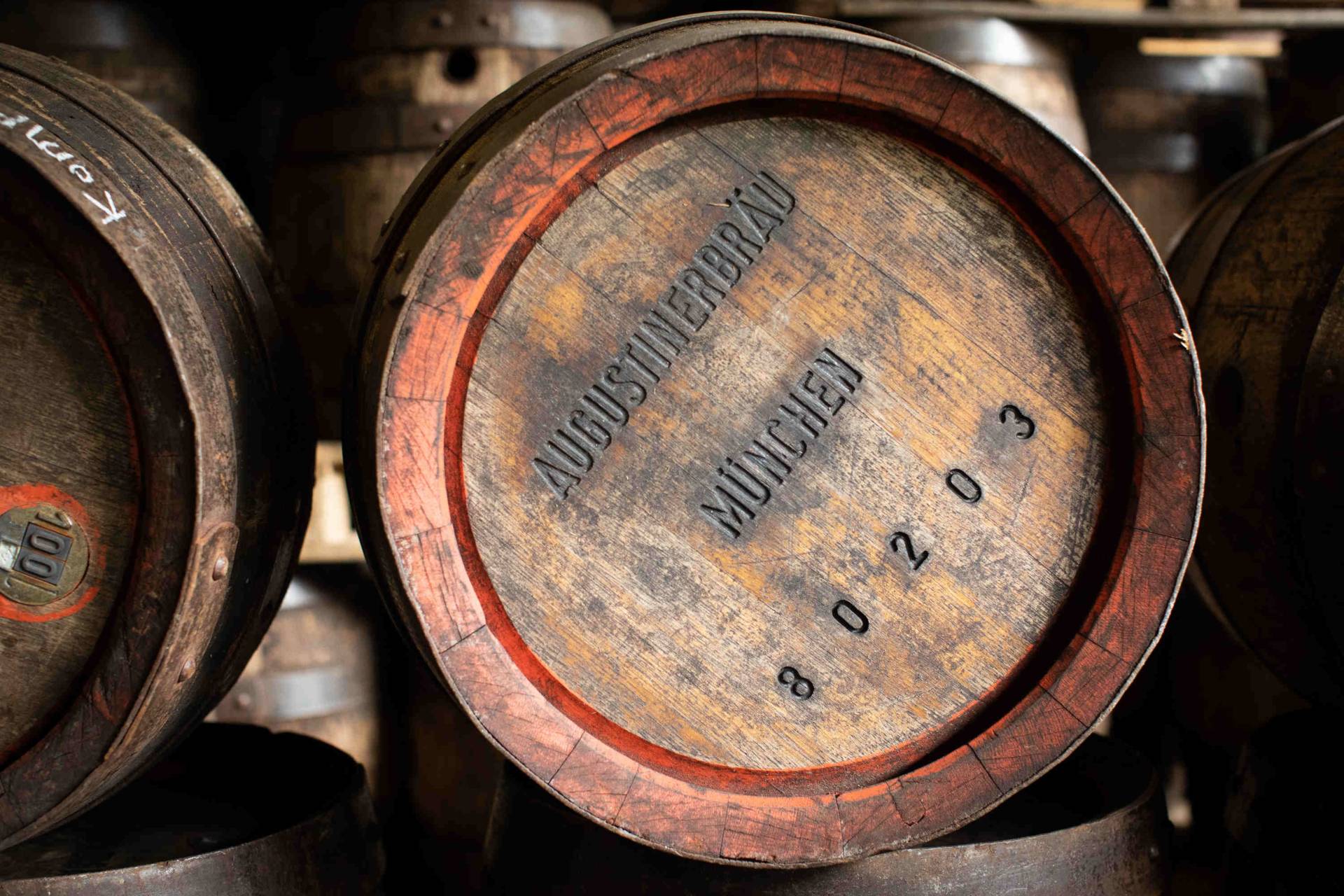
However, Schmid himself has never tapped a “Hirsch” – a 200-litre barrel. Interestingly, the stated filling quantity is only an approximate figure. Since the barrels are handmade, they vary from one to another and may hold up to two dozen litres more or less. Only an official from the calibration office certifies the actual filling volume, which is checked every five years against the barrel's unique number.
For bartenders, the slight variation means that each barrel behaves differently – not only during tapping itself, but also as the barrel empties and the pressure steadily decreases. The finesse required to pour beer correctly under these changing conditions is what makes serving from wooden barrels such a challenging skill.
A properly poured beer from a wooden barrel is therefore two things at once: a kind of living artefact that connects Munich's past and present, bridging the era when the city evolved from a medieval provincial town into a cosmopolitan metropolis – and the definition of genuine craftsmanship – a difference you can taste.