Kimi Schreiber is a professional trail runner who regularly finishes at the top of major races – and lives in the city of Munich. This makes her something of an exception among her peers, most of whom are based in the mountains. Here, the Munich ambassador explains why, for her, there is no better city for trail running than Munich – and what it feels like to finish an 80-kilometre race with cramps.
Trail running is booming. How do you explain the new popularity of your sport?
I think there are two reasons for this: firstly, many young athletes are noticing that the sport is becoming much more professional. Brands are investing money in trail running, which means it's now sometimes possible to make a living from it. That’s not always easy in professional sport.
And the second reason?
It's the desire for self-fulfilment. The desire to embark on a journey of self-discovery and to experience extremes. For me, too, running is above all a way to retreat into my own world. That’s why I can really relate to it when people say: “Running in nature – for as long and as far as I want – is great fun!”
“Running in nature – for as long and as far as I want – is great fun!”
You're on your own in a traditional road race too. So is it the connection with nature that makes trail running so appealing?
Road running is incredibly tough. You run and run – and yet the horizon never seems to get any closer. You're stuck in the same repetitive rhythm the whole time.
You wrote about your participation in “Les Templiers”, France's oldest and most prestigious trail race, covering a distance of over 80 kilometres with 3,500 metres of elevation gain: “The first 40 kilometres went wonderfully, then it did get a bit tough.” That makes running 42 kilometres on flat roads sound comparatively easy.
(laughs) If I remember correctly, the first 50 kilometres went really well. Then, unfortunately, I started getting cramps – and of course it gets tough when you've still got another 30 kilometres to go. At ‘Les Templiers’, you run in the dark for the first two hours, which, strangely enough, makes the time pass even more quickly. So yes: it really can happen – especially in a race – that everything just clicks. And then even very long distances fly by.
So is it easier to achieve that famous ‘flow’ state – the one everyone’s always striving for – when trail running than when road running?
I wouldn't put it quite like that. In fact, people often tend to overlook just how gruelling trail running is as an endurance sport. I'm constantly out on the most beautiful trails – and yet I still find myself wondering what on earth I'm doing here. That’s why it doesn't quite feel right to describe trail running simply as the beautiful, varied big brother of road running. But it's true that there's more to it than that: sometimes you go uphill, sometimes downhill. Sometimes through the woods. Over different surfaces. Many people find that more enjoyable than just pounding away on tarmac.
What does your typical training routine look like?
It depends on which phase of training I'm in and when my next race is coming up. I usually train twice a day, with either one or two running sessions, depending on whether I've got strength training scheduled. At the weekend I do a long run – this week, for example, it was four hours. That brings me to about 15 to 20 hours of training a week.
Where do you go for a run?
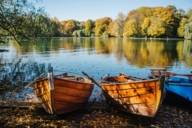
Almost exclusively on the Isar Trails – the narrow paths along the riverbank in the south of Munich. When I mention this in my line of work, everyone always finds it quite remarkable. They ask things like: ‘Isn't that boring?’ Or: ‘Where are the mountains?’ But actually, I rarely go to the mountains, even though they're not far away. I simply love doing the same routes along the Isar every day. That covers 80 per cent of my running training. I do the rest on the treadmill and the StairMaster.
Why do you always run the same routes?
When I know a route inside out, I can completely lose myself in my thoughts. I don't need to think about where I need to run. I know when I need to turn around to reach a certain distance. I don't have to prepare myself for technical or dangerous sections of the route. I really do enjoy getting into a rhythm this way – because it allows me to zone out.
“I really do enjoy getting into a rhythm this way – because it allows me to zone out.“
And do the Isar Trails provide enough training challenges for a professional trail runner?
For me, definitely. I do need a gym where I can train on a treadmill with an incline. But the combination of a treadmill and a StairMaster – a machine that lets you climb stairs endlessly – is all the rage in the fitness scene at the moment anyway. And I don't train without hills either. A few times a year, I head to the mountains for several weeks of training. But for me, other factors are more crucial to success at the very top. My time in Chamonix has shown me that too.
Chamonix is considered a mecca for trail running.
Yes, the training conditions there are perfect. You have a seemingly endless number of ideal trails right on your doorstep. You can always do a few laps on the cinder track. And the rest of the infrastructure is perfectly tailored to runners too. Nevertheless, I had one of my worst seasons when I lived there in 2023.
Why?
I just didn't feel at home there, so I went through a tough time mentally. No matter how great the training conditions are, if you're not happy, your training won't go well either. I feel at home in Munich – and that's why I can train perfectly. That's so much more important to me than the steepest trails.
Is there a particular section of the Isar Trails that you particularly love?
My favourite loop starts in Thalkirchen and follows the Isar towards Schäftlarn Abbey. Then I run back along the other side of the river, which brings the total to just over 40 kilometres. If I include a few flights of stairs, that also adds up to about 700 metres of elevation gain. Nobody ever believes me when I say that, but it's easily achievable if, for example, you run up and down the stairs to Pullach a few times. Even my coach, who lives in Davos and has never visited me here, still underestimates it. I think he believes I live in Berlin and am surrounded by nothing but concrete and buildings.
You now live on Prinz-Ludwigs-Höhe, not far from the Isar, but you have also lived in other parts of Munich.
Yes, I've also lived on Dachauer Strasse, as well as at Rotkreuzplatz and in Westend – each with the Olympiapark, Nymphenburg Palace Park or Westpark nearby. I'd therefore say I know every city park in Munich – and each one has its own charm! In Westpark, for example – something I didn't realise before – there are trails all around. The Olympiapark has the amphitheatre, where you can get a great workout on the large steps. And I haven't even mentioned the huge Englischer Garten (park) yet!
Many professional runners also train on cinder tracks. Is that something you do as well?
Yes, that kind of training is important for speed. My gym has a track on the roof with a fantastic view over Munich. It's pretty cool, but unfortunately the track is only 150 metres long. So I just do a few hundred laps.
What do you think of round six out of 200?
It really depends on the day. Sometimes even a monotonous training session flies by, and other times the time just drags on. But I've been doing this for so long now that I recognise those moments and am prepared for them. Then I try to motivate myself with a podcast or a good playlist, or I mentally break the session down into sections. I've got a whole bag of tricks up my sleeve by now. And at the end of the day, it's my job – and it doesn't always have to be fun.
Might it actually be an advantage for you that you have to engage with these issues a little more closely? Or to put it another way: can you develop your mental strength more effectively because you are more compelled to make the most of the urban training opportunities available?
The huge advantage Munich has for me is its great variety. It allows me to take a complete break from trail running every now and then. Yesterday, for example, was one of those days when I just couldn't really get myself motivated. So I cycled to the gym. Just the ride there – it was still early in the morning and I could watch the city wake up – really lifted my spirits. It really is a blessing for me not to be constantly surrounded by my sport. If I were to ask ten people in Marienplatz what trail running is, four of them would probably say they've never heard of it. I love that. And for that, I don't mind running through a few red lights now and then – and I still have Munich as my safe space.
“It really is a blessing for me not to be constantly surrounded by my sport.“
What advice would you give to aspiring trail runners?
Don't constantly compare yourself to others. It's not exactly easy, because these days every single training session is posted all over social media. But it really doesn't help and just leaves you feeling dissatisfied with your own performance. Everything takes time, and everyone is different. And if you let it drive you crazy and lose sight of yourself, you'll enjoy running much less. That's a shame, because it really is such a lovely thing.
I read that you hated going for walks as a child. Is that true?
(laughs) Yes, I really couldn't get my head around how anyone could enjoy walking up and down a mountain. My sister felt exactly the same. But my mum was very persistent. She packed a good snack, and that was the motivation for both of us: to keep going until it was time to eat. Looking back, I'm of course very grateful to her for that, not least because it gave me a real feel for the mountains.