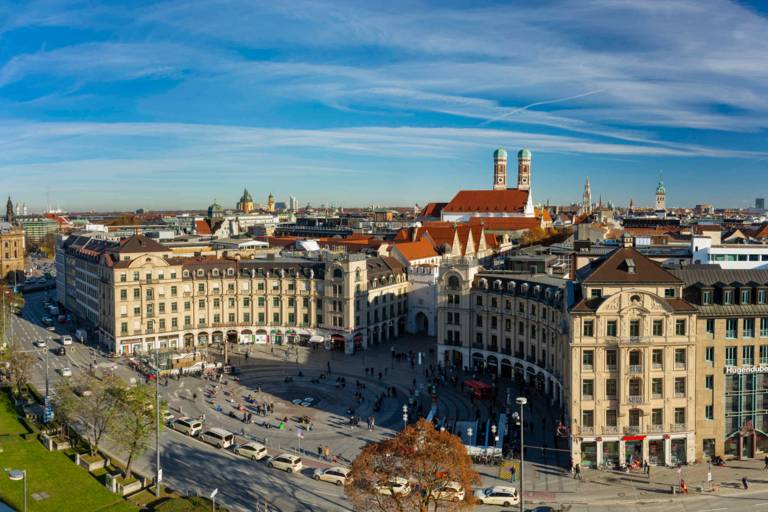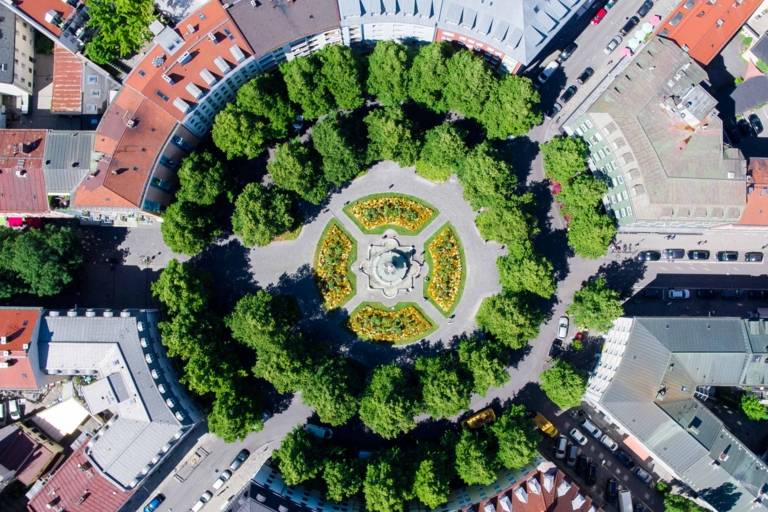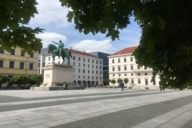
View of the Wittelsbacherplatz in Munich.

Wittelsbacherplatz

A little bit of “Northern German atmosphere” and medieval times

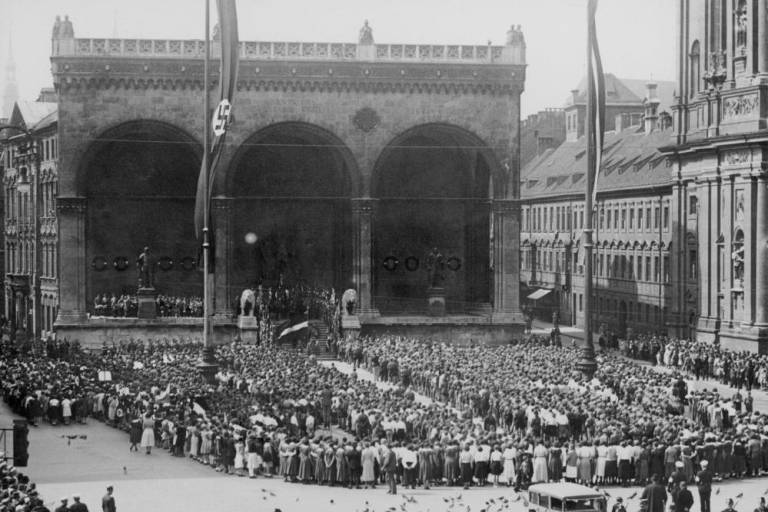
Wittelsbacherplatz with its bronze equestrian monument is situated just a few metres away from Odeonsplatz. It is popular for events. In summer it plays host to the Hamburger Fischmarkt (market) and in winter a medieval Christmas market.

It would be hard to imagine Munich without the Wittelsbach dynasty. Its dukes, electors and kings shaped Bavaria for many centuries. In Munich they left behind stately buildings such as the Residence (city palace), the Alter Hof (Old Court) as well as the Schlösser Nymphenburg and Schleißheim (palaces).

Wittelsbacherplatz in the centre of Munich is also surrounded by imposing buildings: on the eastern side of the square stands the Odeon, a former concert hall, which houses the Bayerisches Innenministerium (Bavarian Ministry of the Interior). The Palais Arco-Zinneberg designed by the architect Leo von Klenze is situated on the western side of the square. The management of the Siemens Group resides in the Palais Ludwig Ferdinand to the north of the square. Other distinctive buildings include the Palais Leuchtenberg and the block housing the famous Café Luitpold which was destroyed in the Second World War and rebuilt in simplified form as a palm garden.

Wittelsbacherplatz came into being at the beginning of the 19th century when the Brienner Strasse was modified to become a boulevard. An equestrian monument made of bronze, representing Elector Maximilian I, has stood at its centre since 1820. Artistic and cultural events are often held around the monument – for example, when the sculpture is covered in foil for social purposes or a bookcase and colourful cushions invite you to while away.

The square is famous for two major events: the Hamburg Fish Market in summer and the medieval Christmas market in winter. Market traders always tout their specialities here in May or June: lobscouse and smoked eels. Citizens of Munich and tourists alike love the Hamburg Fish Market in the city because the bread rolls with pickled herring, the prawn cocktail and plaice with potato salad simply taste wonderful. The traders from Hamburg-St. Pauli are also happy to serve you northern-style beer and a witty saying along with it.

You should visit Wittelsbacherplatz at the latest by December to experience the medieval Christmas market where you can mingle with the knights and jugglers while enjoying a glass of mead. Don’t take fright if you meet men with helmets, shields and swords in the midst of the hustle and bustle! Even women dressed as medieval damsels and sporting birds of prey on their arms are nothing unusual. Even the music is unique here: Medieval rock and folk music blasted from old bagpipes and wind instruments are part and parcel of the atmosphere. And if you are still needing to buy Christmas presents, you will be spoilt for choice – there is gold jewellery, lambskins and handmade drinking horns on offer.

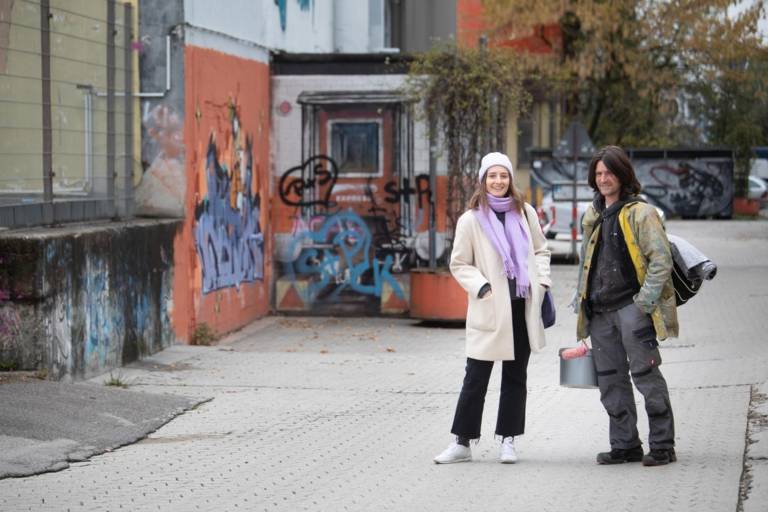


Photo: Eva Hohmann
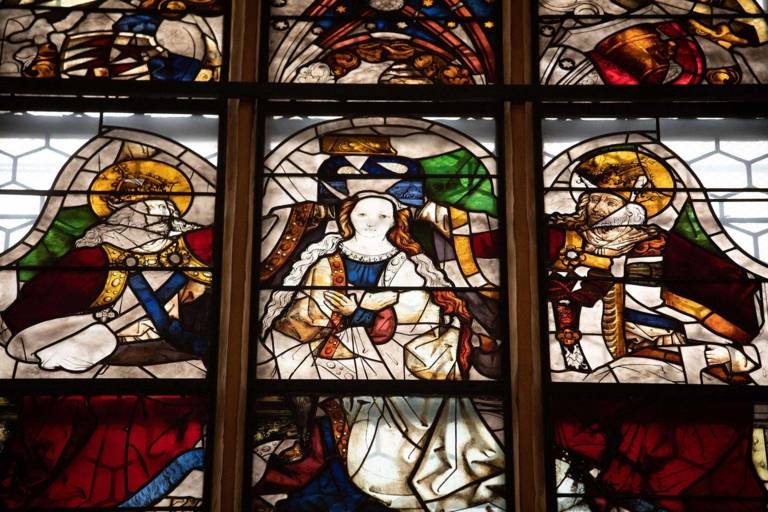
A church window in the Salvatorkirche in Munich

Munich's church windows

The most beautiful windows of the city

Michael Mayer of Mayer’sche Hofkunstanstalt presents the most spectacular church windows.

Fascinating people for centuries: Michael Mayer of Mayer’sche Hofkunstanstalt presents the most spectacular church windows the city has to offer.
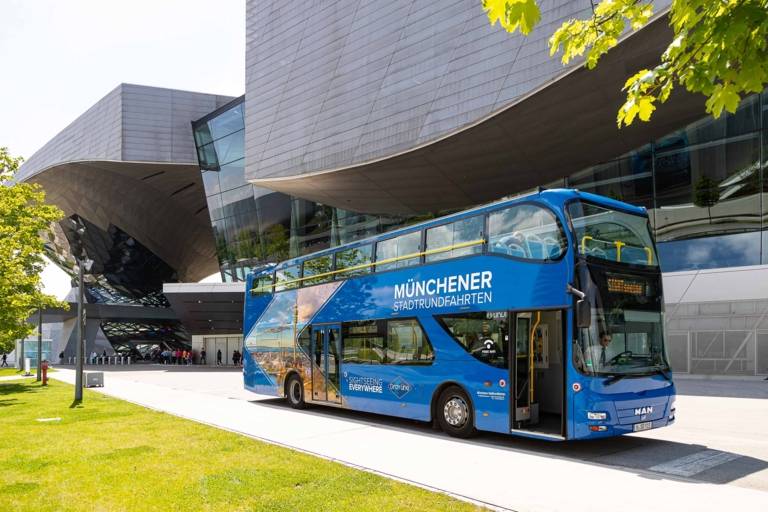
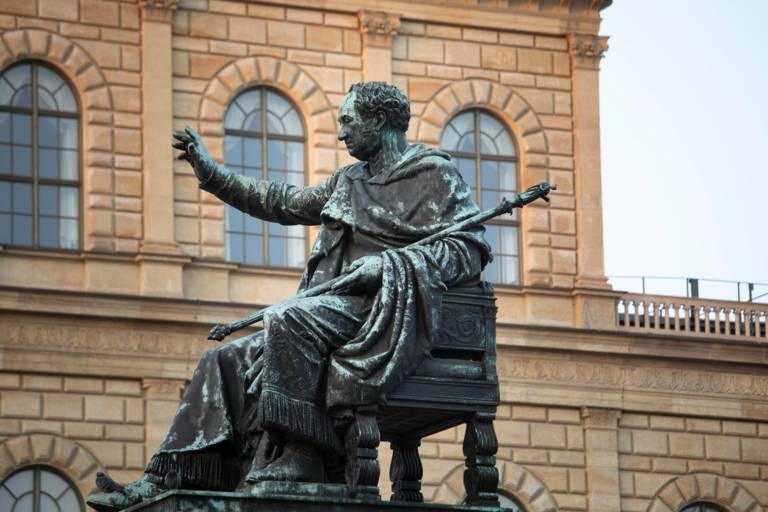
The monument to Max I. Joseph in front of the Residenz

Munich's royal monuments

Four kings and a prince regent

In Munich there are fantastic monuments to admire. Where they are and what makes them so special.

In Munich there are several fantastic monuments to admire. Where they are and what makes them so special: an overview.

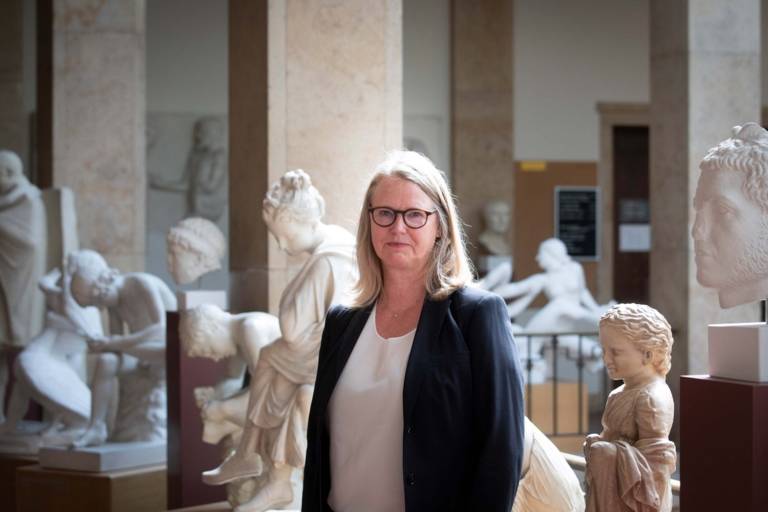
The tour guide Alvestad-Aschenbrenner stands in the Museum for Abgüsse Klassischer Bildwerke Munich

Ludwig I of Bavaria

When Munich became an „Athens on the Isar“

Ludwig I of Bavaria converted Munich into his "„Athens on the Isar“, many buildings still remind us of this today. An interview.

Ludwig I of Bavaria converted Munich into his "„Athens on the Isar“, many buildings still remind us of this today. An interview with a tour guide.

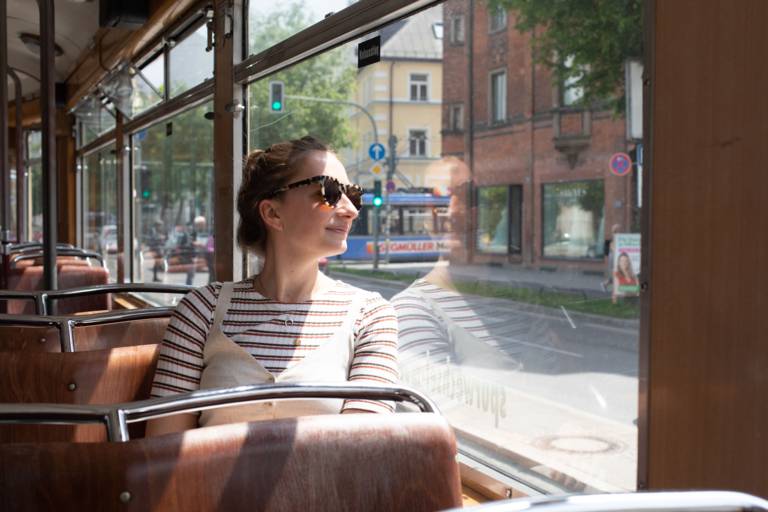
Young woman sitting at a window in a tram in Munich.

Column

A vacation in my own city

Our author used to be a travel blogger. Now she has started to explore her own city: Munich!
Our author used to be a travel blogger. Now she has started to explore her own city: Munich!
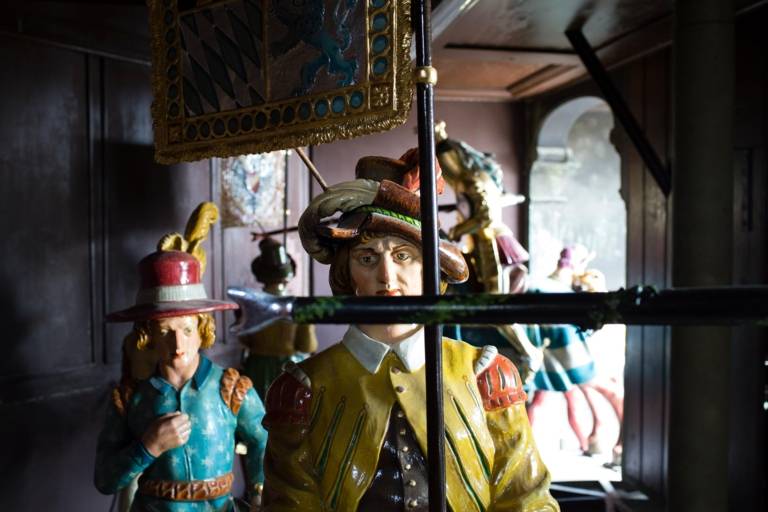
View from the inside of a figure of the carillon in the New Town Hall in Munich.
New Town Hall

The Glockenspiel in ten pictures

An exclusive look behind the scenes.

The Glockenspiel on Marienplatz has been enchanting visitors and locals for over 100 years. An exclusive look behind the scenes.

Panoramic view of Karlsplatz / Stachus in Munich with the Frauenkirche in the background photographed from the air.

Munich's city centre

Classical and curiosities

Numerous Munich stories can be told along the roughly one-kilometer-long route between Karlsplatz-Stachus and Marienplatz square. A city walk.

Numerous interesting Munich stories can be told along the roughly one-kilometer-long route between Karlsplatz-Stachus and Marienplatz square. A city walk.

Weissenburger Platz in Munich photographed from above with a drone.

Haidhausen and Au

A village in the city

Haidhausen and Au have developed from working-class quarters into popular residential areas.

When strolling along the narrow streets of the districts Haidhausen and Au with small shops and green courtyards, it almost feels like being in a village in the middle of the city.

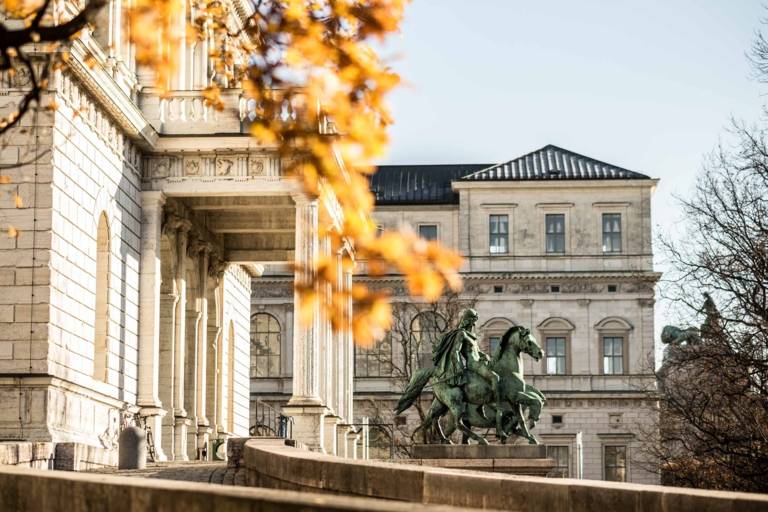
The Academy of Fine Arts in Munich in autumn.

Schwabing

From artists and writers

Around 1900, it was the artists and writers who settled around the university and the art academy and shaped the spirit of Schwabing.

In the heyday of the Schwabinger Bohème around 1900, it was the artists and writers who settled around the university and the art academy and shaped the spirit of Schwabing.

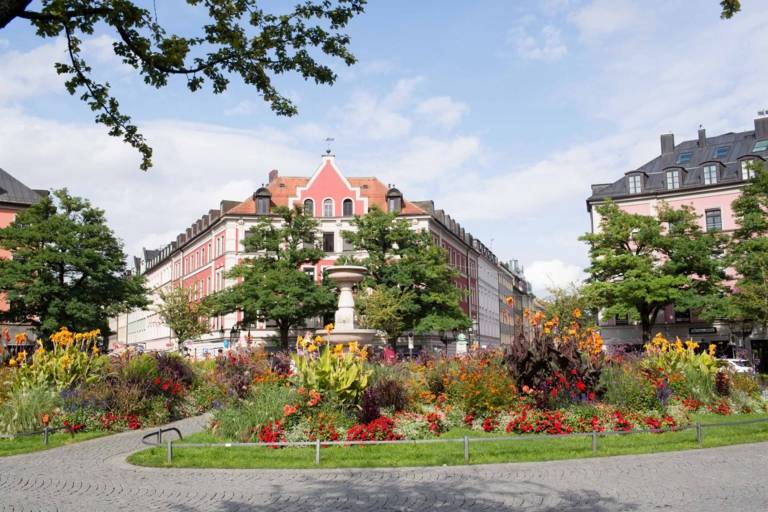
View of flowerbeds at Gärtnerplatz in Munich.

Gärtnerplatz and Glockenbach

Where the night begins

Independent labels, hip bars, pubs and cool inns attract the young and the young-at-heart.

The Gärtnerplatz and Glockenbach neighbourhoods are known as trendy quarters. Their independent labels, hip bars, pubs, cool inns and calm backyards attract the young and the young-at-heart.