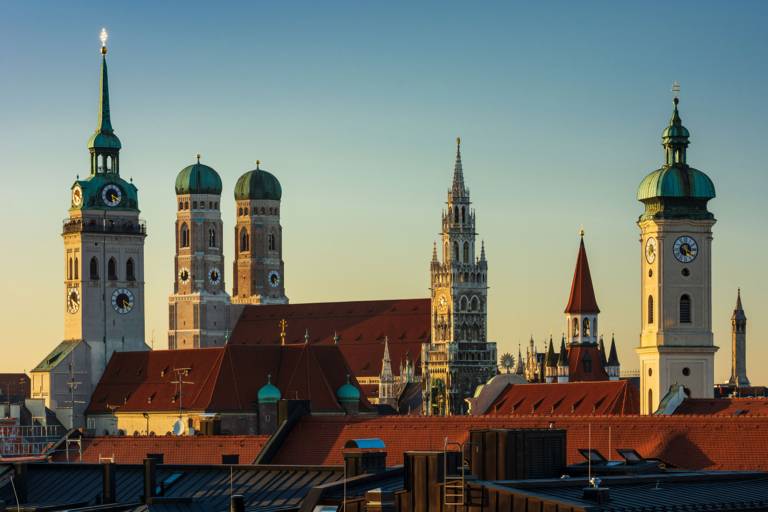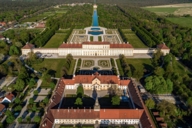
Schleißheim palace complex nearby Munich photographed from above in autumn.

Schleissheim palace complex

Insider tip in the north of Munich

Just a few kilometres north of Munich, you'll find one of Germany's most beautiful examples of Baroque architecture.

Though it may look like a magnificent palace nowadays, the site in fact has very modest origins: Its story began with Wilhelm V., a member of the Wittelsbach dynasty and Duke of Bavaria between 1579 and 1597. During the course of his reign, the Duke found himself in huge financial debt and eventually abdicated in favour of his eldest son Maximilian I.

In around 1598, he commissioned a simple manor house to be built in Schleissheim, an area that, at that point, was still a secluded piece of moorland. His plan was to spend his (many) final years there in a state of contemplation and prayer. Wilhelm’s son had much loftier ambitions and, in 1617, had the entire building torn down right down to the cellar walls and erected the building now known as the Alte Schloss Schleissheim (the Old Palace) in its place.

The late-Renaissance building suffered heavily in the air raids of the Second World War and reconstruction did not start again until 1970. Nowadays, the Alte Schloss houses two collections from the Bayerisches Nationalmuseum (Bavarian National Museum): Gertrud Weinhold’s ecumenical collection “The Religious Year and its Festivals” and an exhibition on culture in Eastern and Western Prussia.


Neues Schloss Schleissheim designed as imperial palace

In the early 1700s, Maximilian's ambitious grandson Elector Max Emanuel had his sights set on becoming emperor. So that he could reside in a place worthy of his intended role, he commissioned the construction of the Neues Schloss (New Palace) in 1701, a magnificent baroque building in the middle of the palace grounds. However, the War of the Spanish Succession soon brought an end to his plans. His defeat saw Max Emanuel sent into exile and work on Schleissheim brought to a halt for the time being. By the time he returned to Bavaria, Max Emanuel was forced to scale down his original four-winged and somewhat ostentatious design.

When he died in 1726, only the main building was complete, where visitors to the palace today are able to enjoy the baroque picture gallery belonging to the Bayerische Staatsgemäldesammlungen (Bavarian State Painting Collections).

Earlier, in 1685, Max Emanuel, who was known for his grand tastes, had also commissioned the construction of Schloss Lustheim (Lustheim Palace) in the late baroque style in honour of his marriage to Maria Antonia, daughter of the Austrian emperor. Nowadays, this smaller palace is home to a magnificent collection of Meissen porcelain from the manufacturer’s golden age of the 1700s.

Tip: Take a dander through the park at Schleissheim just like a true royal. The park is one of the best examples of a baroque garden in Europe, with its main features remaining almost completely unaltered.

The project “Bayern 3D - Heimat Digital“ also gives visitors the opportunity to digitally experience important cultural assets as well as the Schlossanlage Schleißheim.

www.schloesser-schleissheim.de
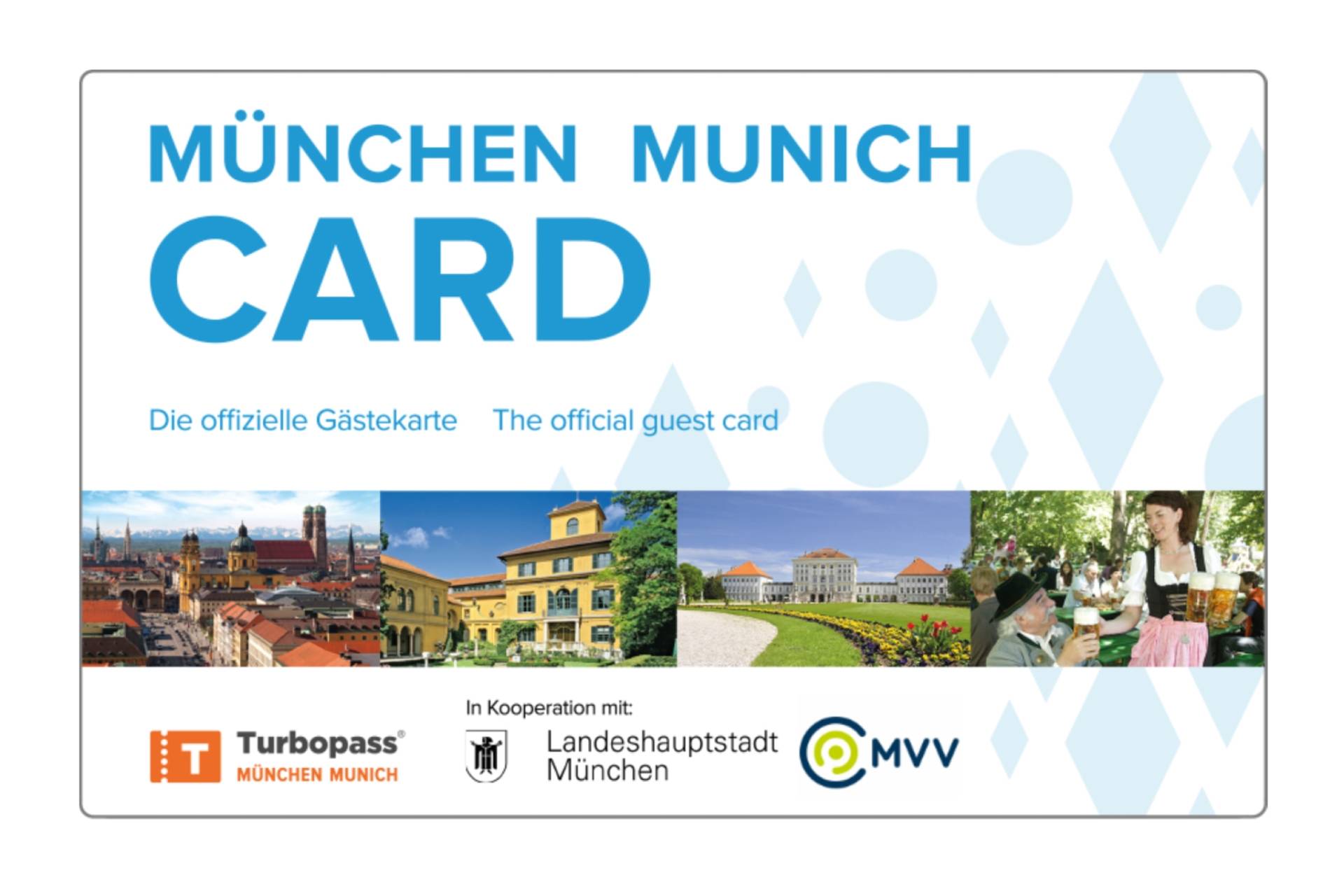
Good to know: Munich Card holders are entitled to a reduced admission fee. If one owns the Munich City Pass, the entrance is free of charge. No matter which card you choose, the public transport is included. Further information can be found here.



Photo: Redline Enterprises
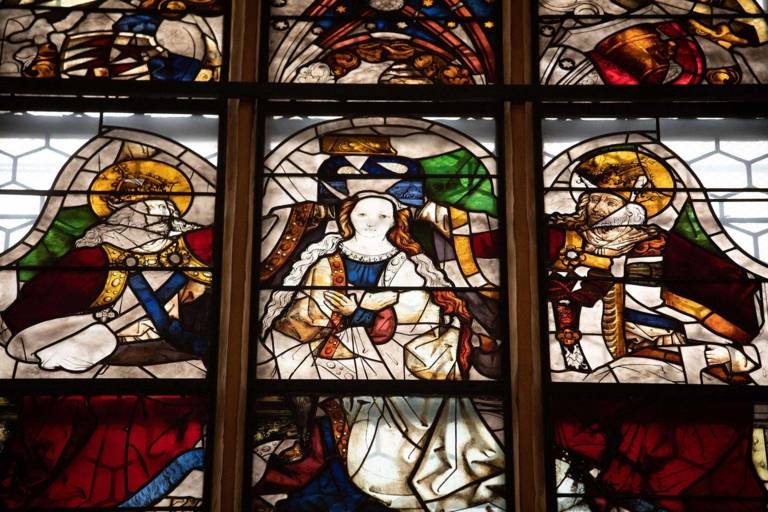
A church window in the Salvatorkirche in Munich

Munich's church windows

The most beautiful windows of the city

Michael Mayer of Mayer’sche Hofkunstanstalt presents the most spectacular church windows.

Fascinating people for centuries: Michael Mayer of Mayer’sche Hofkunstanstalt presents the most spectacular church windows the city has to offer.

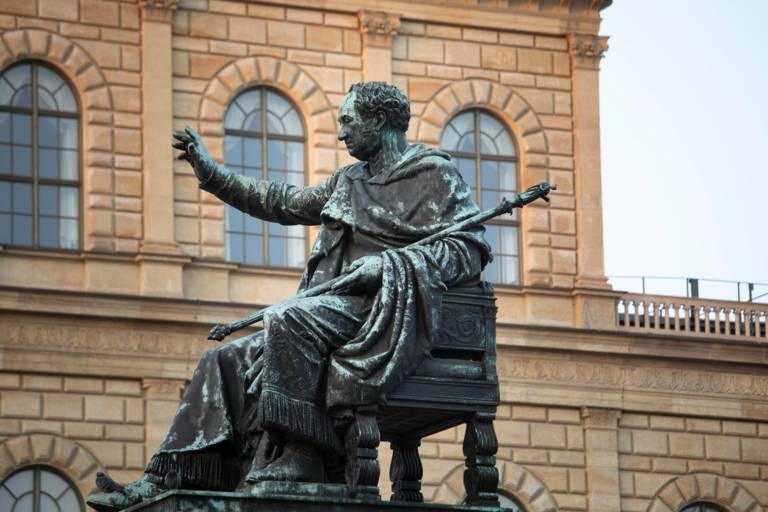
The monument to Max I. Joseph in front of the Residenz

Munich's royal monuments

Four kings and a prince regent

In Munich there are fantastic monuments to admire. Where they are and what makes them so special.
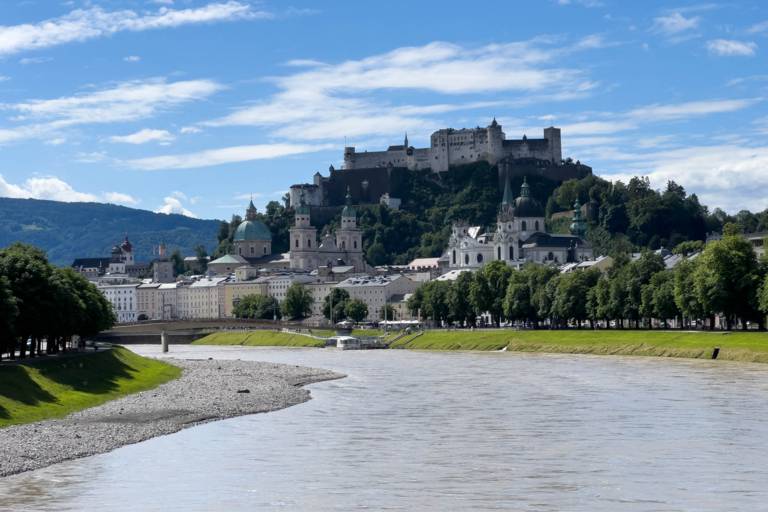
In Munich there are several fantastic monuments to admire. Where they are and what makes them so special: an overview.
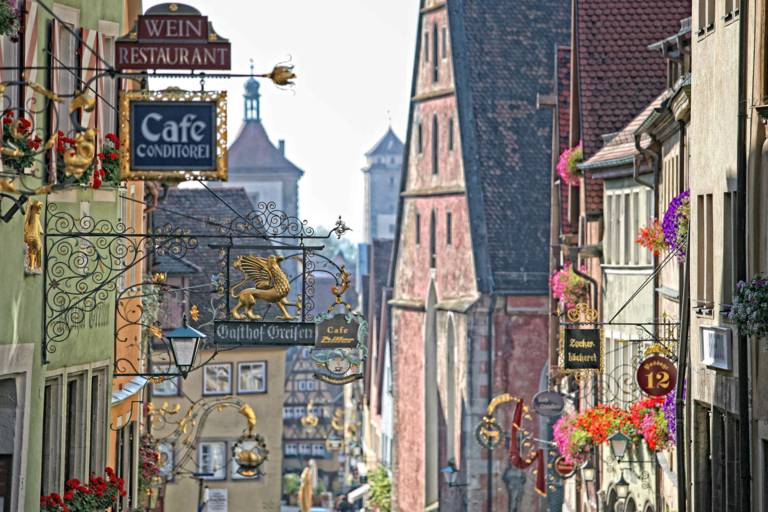
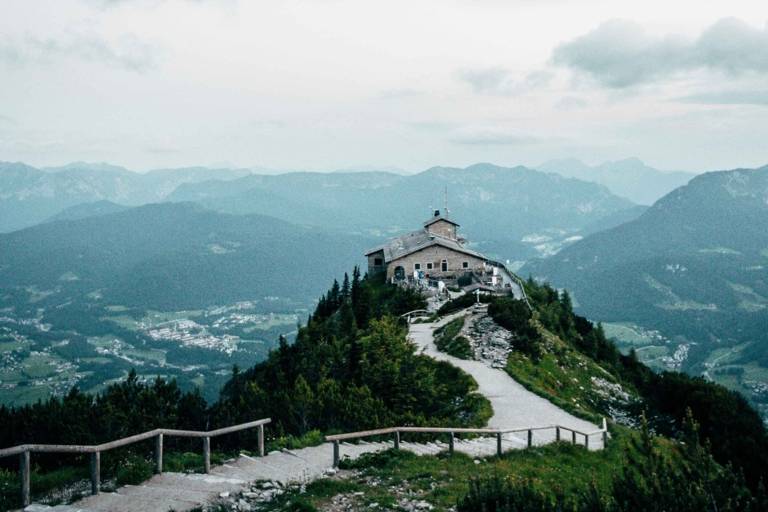
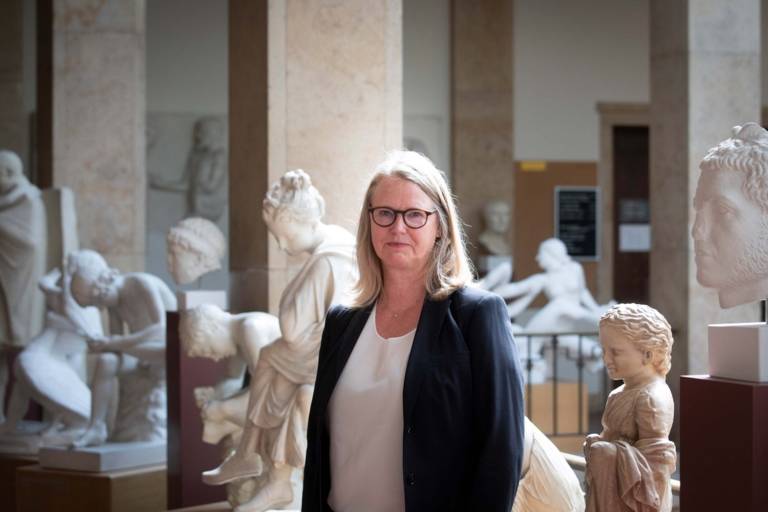
The tour guide Alvestad-Aschenbrenner stands in the Museum for Abgüsse Klassischer Bildwerke Munich

Ludwig I of Bavaria

When Munich became an „Athens on the Isar“

Ludwig I of Bavaria converted Munich into his "„Athens on the Isar“, many buildings still remind us of this today. An interview.

Ludwig I of Bavaria converted Munich into his "„Athens on the Isar“, many buildings still remind us of this today. An interview with a tour guide.

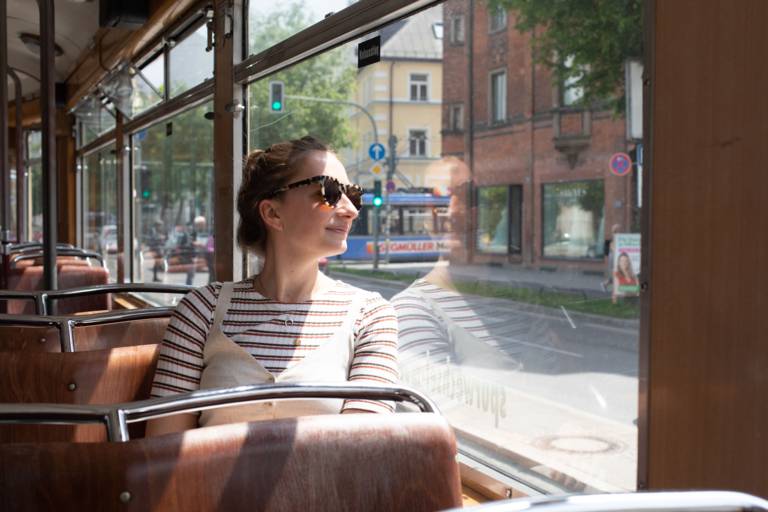
Young woman sitting at a window in a tram in Munich.

Column

A vacation in my own city

Our author used to be a travel blogger. Now she has started to explore her own city: Munich!

Our author used to be a travel blogger. Now she has started to explore her own city: Munich!

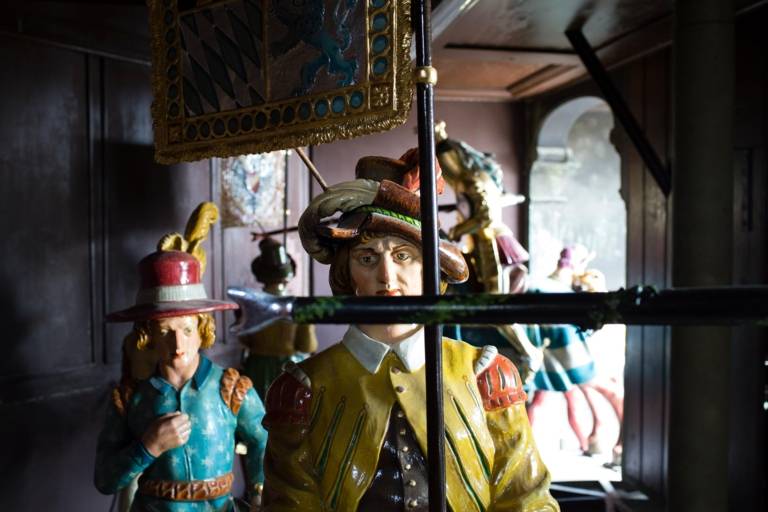
View from the inside of a figure of the carillon in the New Town Hall in Munich.

New Town Hall

The Glockenspiel in ten pictures

An exclusive look behind the scenes.

The Glockenspiel on Marienplatz has been enchanting visitors and locals for over 100 years. An exclusive look behind the scenes.

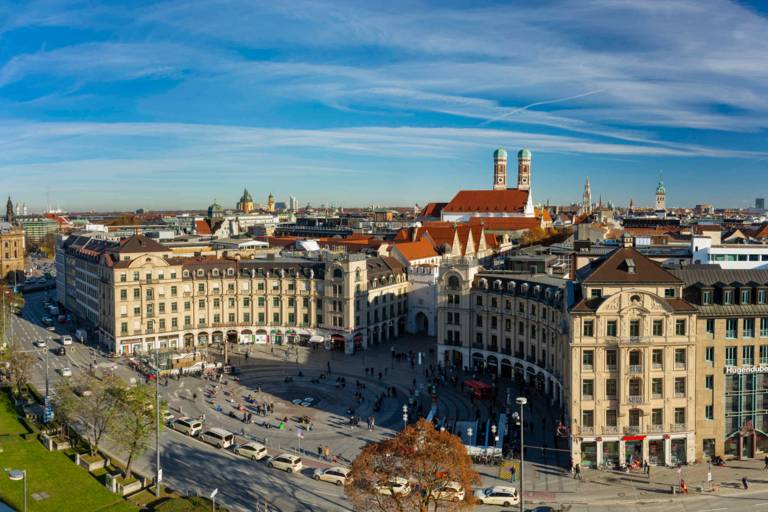
Panoramic view of Karlsplatz / Stachus in Munich with the Frauenkirche in the background photographed from the air.

Munich's city centre

Classical and curiosities

Numerous Munich stories can be told along the roughly one-kilometer-long route between Karlsplatz-Stachus and Marienplatz square. A city walk.

Numerous interesting Munich stories can be told along the roughly one-kilometer-long route between Karlsplatz-Stachus and Marienplatz square. A city walk.

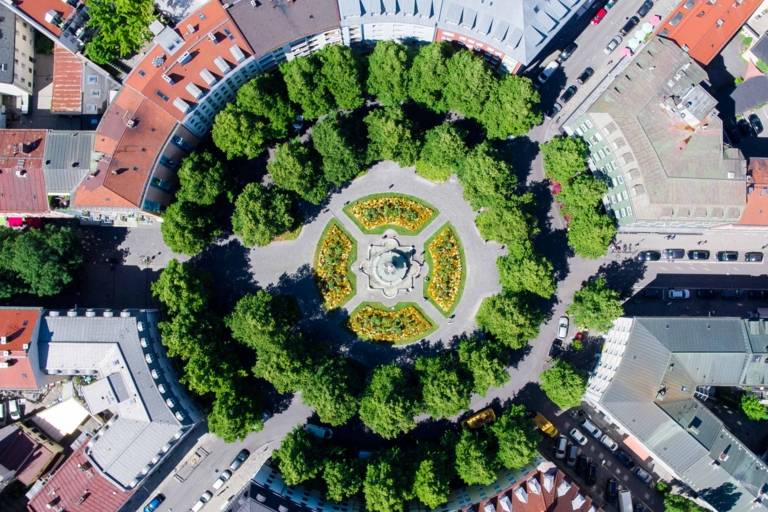
Weissenburger Platz in Munich photographed from above with a drone.

Haidhausen and Au

A village in the city

Haidhausen and Au have developed from working-class quarters into popular residential areas.

When strolling along the narrow streets of the districts Haidhausen and Au with small shops and green courtyards, it almost feels like being in a village in the middle of the city.

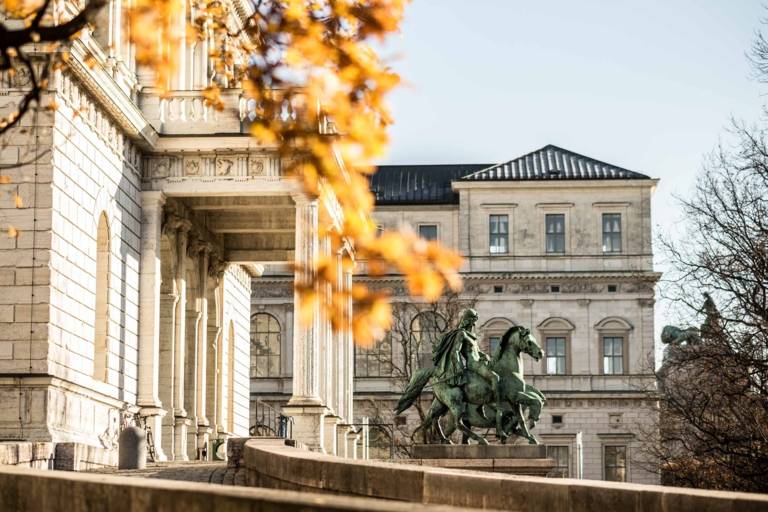
The Academy of Fine Arts in Munich in autumn.

Schwabing

From artists and writers

Around 1900, it was the artists and writers who settled around the university and the art academy and shaped the spirit of Schwabing.

In the heyday of the Schwabinger Bohème around 1900, it was the artists and writers who settled around the university and the art academy and shaped the spirit of Schwabing.

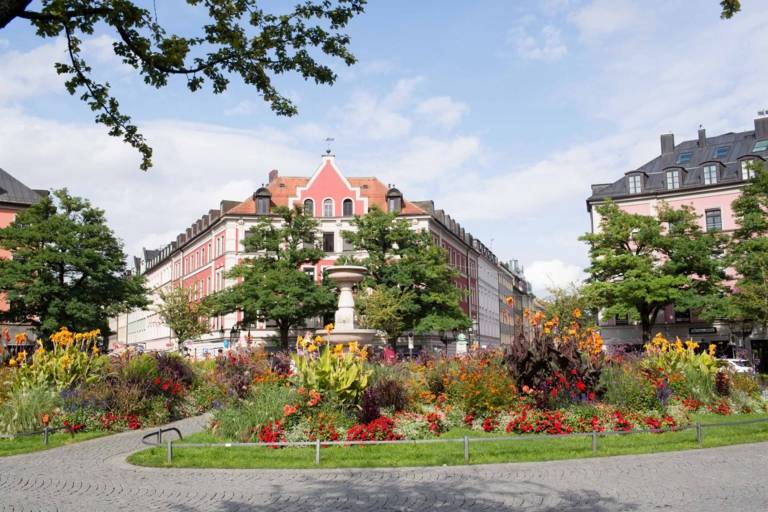
View of flowerbeds at Gärtnerplatz in Munich.

Gärtnerplatz and Glockenbach

Where the night begins

Independent labels, hip bars, pubs and cool inns attract the young and the young-at-heart.

The Gärtnerplatz and Glockenbach neighbourhoods are known as trendy quarters. Their independent labels, hip bars, pubs, cool inns and calm backyards attract the young and the young-at-heart.