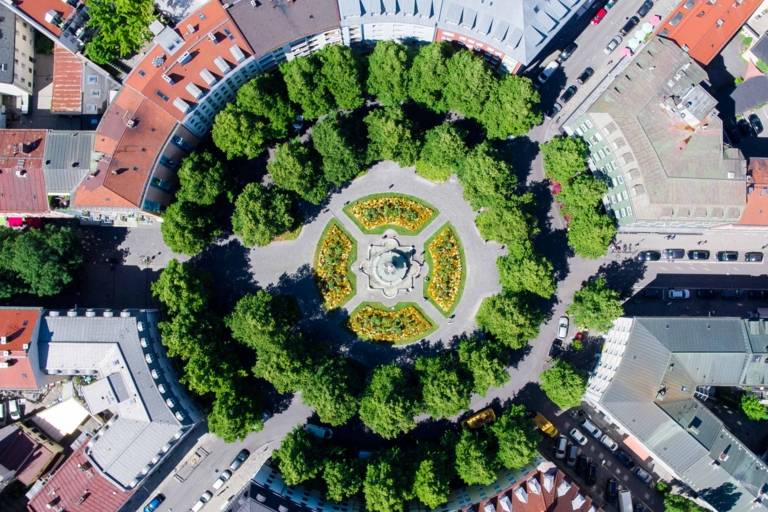
The Karolinenplatz with obelisk from above.

Karolinenplatz

Roundabout Art

If you visit Gärtnerplatz, Effnerplatz and the beautiful Karolinenplatz square in Maxvorstadt, you’ll see just how beautifully designed a roundabout can be. A black obelisk rises up towards the sky from the colourful trees below, representing the very special relationship between France and Bavaria.

Karolinenplatz may seem rather plain compared to the Königsplatz or Odeonsplatz squares, but that’s exactly what defines its special and peaceful charm. People can be seen sunbathing and relaxing throughout the year on a small staircase underneath the obelisk, while cars drive past the surrounding roundabout. Blossoming tulips, lobelias and begonias are planted in neat strips in a huge flowerbed in between. Everything has to be in order here, because things get wild every few minutes when a tram comes screeching round the corner and whistles right over the square, where grass is poking out between the rails. The tram takes tourists and locals along Barer Strasse in the direction of the city centre or Schwabing.

Around the year 1800, Munich had become a little crowded for its 40,000 inhabitants. Crown Prince Max I Joseph decided to expand the city and soon became king. He named the newly founded part of the city after himself: Maxvorstadt. The hub of the quarter was named after his wife, Princess Karoline von Baden: Karolinenplatz.

This was the first square in Munich with Parisian-style radial avenues. Barer Strasse crosses Karolinenplatz in a north-south direction. The magnificent Brienner Strasse with Odeonsplatz and Königsplatz runs to the east and west. Another visual axis is formed by Max-Joseph-Strasse, which leads to Maximiliansplatz.

The king commissioned architect Karl von Fischer to create the new square after designing the Englischer Garten. The 29-metre obelisk was made by Leo von Klenze; it can be seen for miles around and features ram heads on its plinth as symbols of Roman warfare. Its core is made of brick, while its exterior is clad with bronze plates that have become darker over the decades.  

The obelisk was built at the behest of King Ludwig I in memory of the 30,000 Bavarian soldiers killed during Napoleon’s Russian campaign in 1812, when Bavaria sided with France. Brienner Strasse and Barer Strasse are also named after battles in the Wars of Liberation against Napoleon from 1813 to 1815 (the “Battle of Brienne” and the “Battle of Bar-sur-Aube”). Bavarian troops went from fighting alongside France to fighting against the same country in such a short space of time. Both sides of this special relationship are reflected on Karolinenplatz.

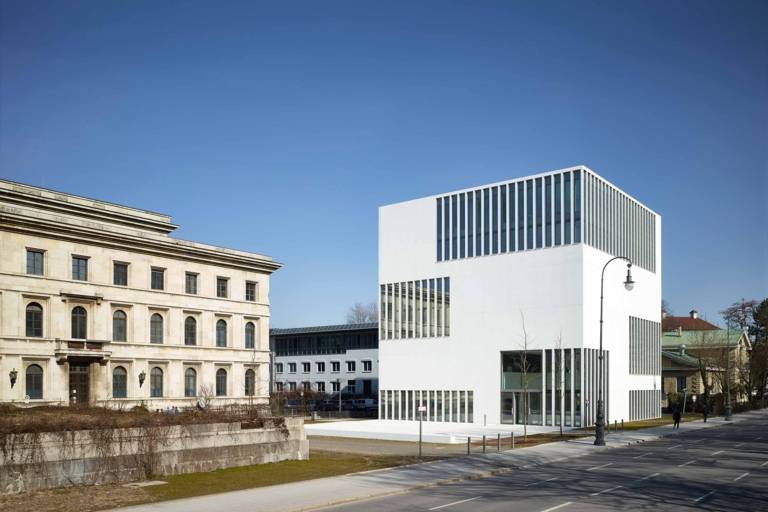
Between 1930 and 1945, the administrative buildings of the Nazi Party were located between Karolinenplatz and Königsplatz. The party was headquartered at the “Brown House”, but the classical buildings were destroyed by bombs in the Second World War. The Amerikahaus (America House) and library were built in 1945. Some of the most beautiful and distinctive buildings on the square include the Prinz-Georg-Palais and the Munich Stock Exchange in the former Hutschenreuther Villa.
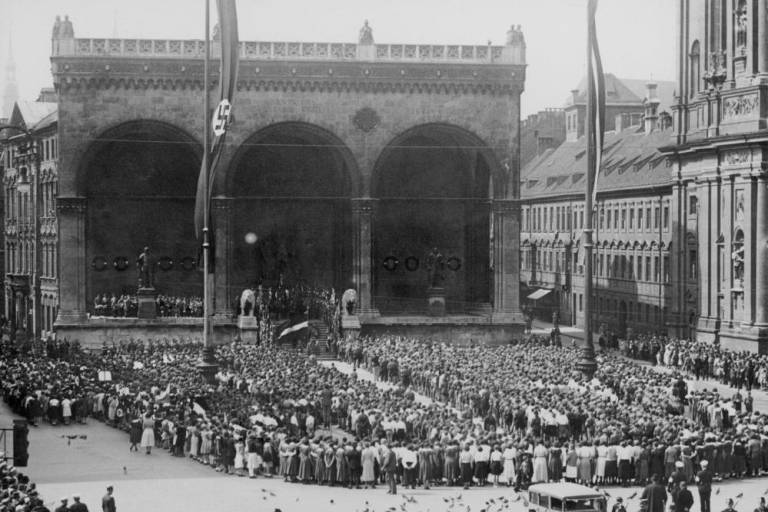



Photo: Redline Enterprises
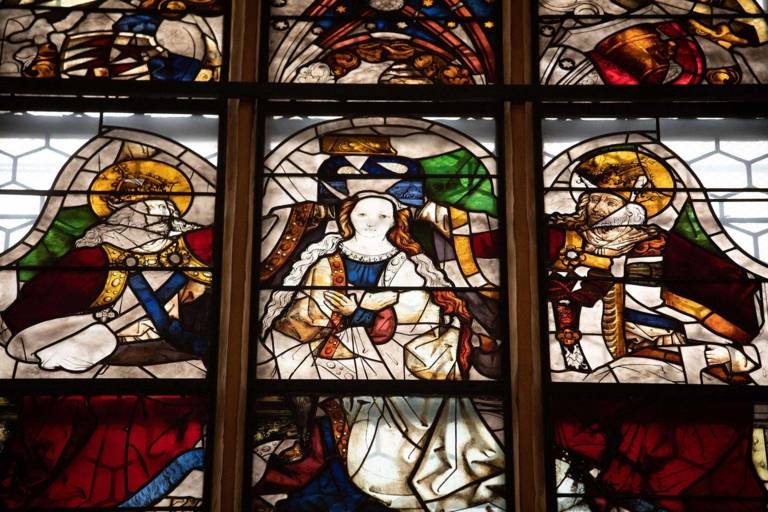
A church window in the Salvatorkirche in Munich

Munich's church windows

The most beautiful windows of the city

Michael Mayer of Mayer’sche Hofkunstanstalt presents the most spectacular church windows.
Fascinating people for centuries: Michael Mayer of Mayer’sche Hofkunstanstalt presents the most spectacular church windows the city has to offer.

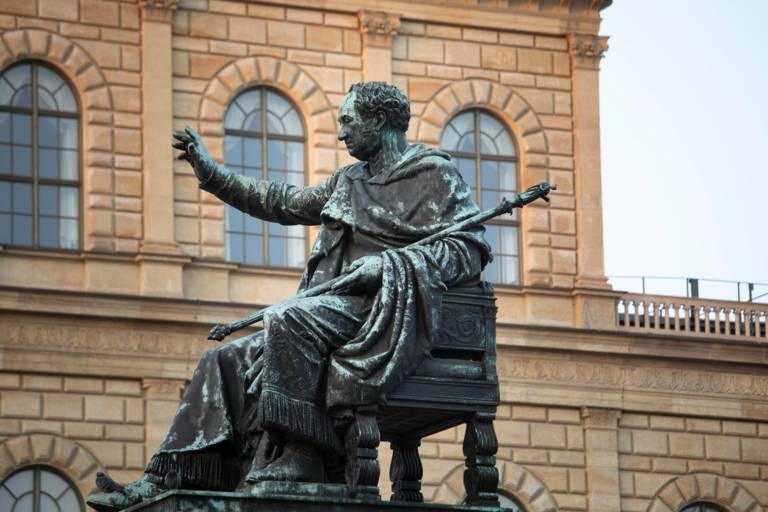
The monument to Max I. Joseph in front of the Residenz

Munich's royal monuments

Four kings and a prince regent

In Munich there are fantastic monuments to admire. Where they are and what makes them so special.

In Munich there are several fantastic monuments to admire. Where they are and what makes them so special: an overview.

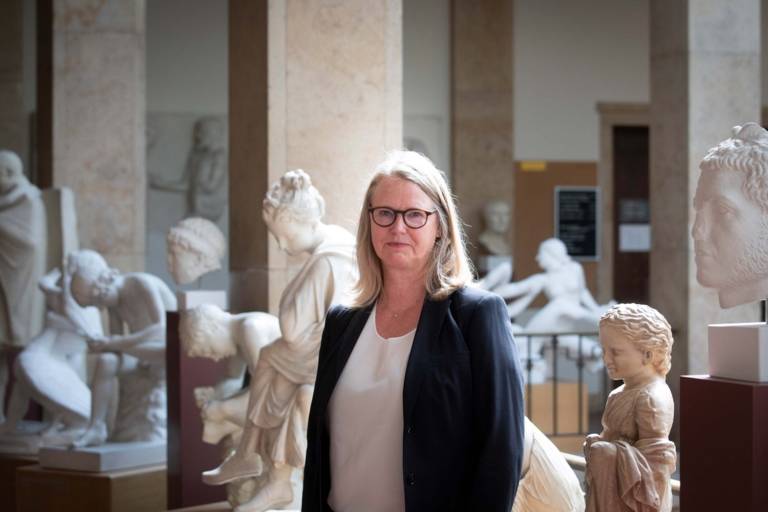
The tour guide Alvestad-Aschenbrenner stands in the Museum for Abgüsse Klassischer Bildwerke Munich

Ludwig I of Bavaria

When Munich became an „Athens on the Isar“

Ludwig I of Bavaria converted Munich into his "„Athens on the Isar“, many buildings still remind us of this today. An interview.

Ludwig I of Bavaria converted Munich into his "„Athens on the Isar“, many buildings still remind us of this today. An interview with a tour guide.

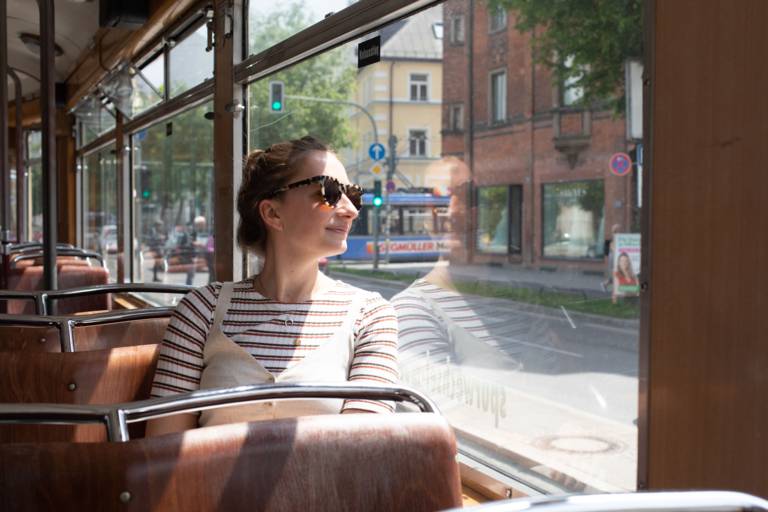
Young woman sitting at a window in a tram in Munich.

Column

A vacation in my own city

Our author used to be a travel blogger. Now she has started to explore her own city: Munich!

Our author used to be a travel blogger. Now she has started to explore her own city: Munich!

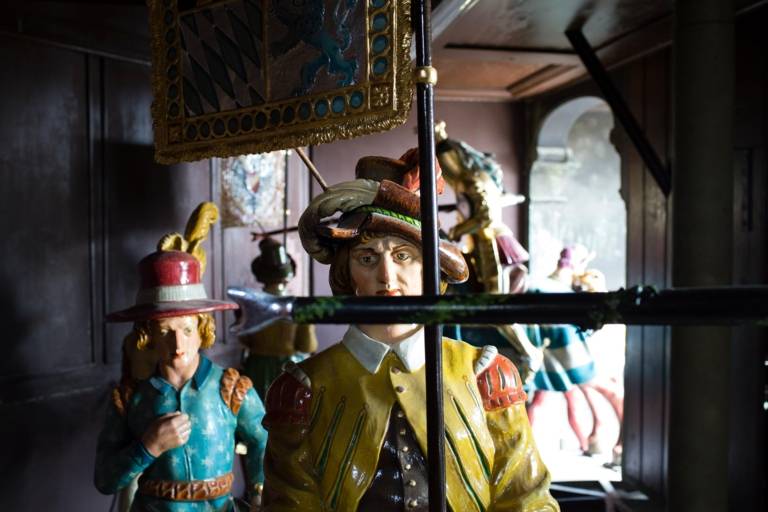
View from the inside of a figure of the carillon in the New Town Hall in Munich.

New Town Hall

The Glockenspiel in ten pictures

An exclusive look behind the scenes.

The Glockenspiel on Marienplatz has been enchanting visitors and locals for over 100 years. An exclusive look behind the scenes.

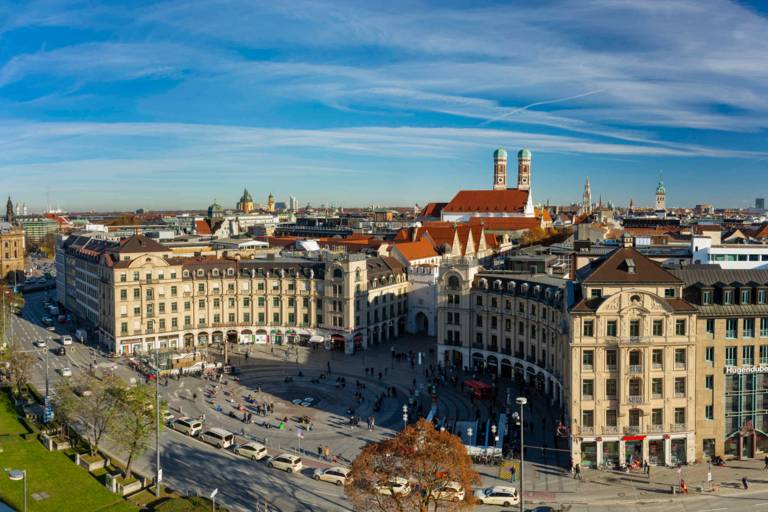
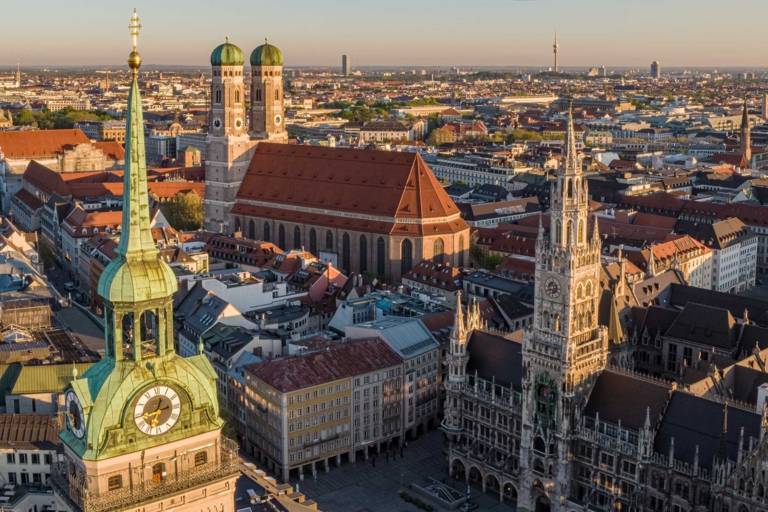
Panoramic view of Karlsplatz / Stachus in Munich with the Frauenkirche in the background photographed from the air.

Munich's city centre

Classical and curiosities

Numerous Munich stories can be told along the roughly one-kilometer-long route between Karlsplatz-Stachus and Marienplatz square. A city walk.

Numerous interesting Munich stories can be told along the roughly one-kilometer-long route between Karlsplatz-Stachus and Marienplatz square. A city walk.

Weissenburger Platz in Munich photographed from above with a drone.

Haidhausen and Au

A village in the city

Haidhausen and Au have developed from working-class quarters into popular residential areas.

When strolling along the narrow streets of the districts Haidhausen and Au with small shops and green courtyards, it almost feels like being in a village in the middle of the city.

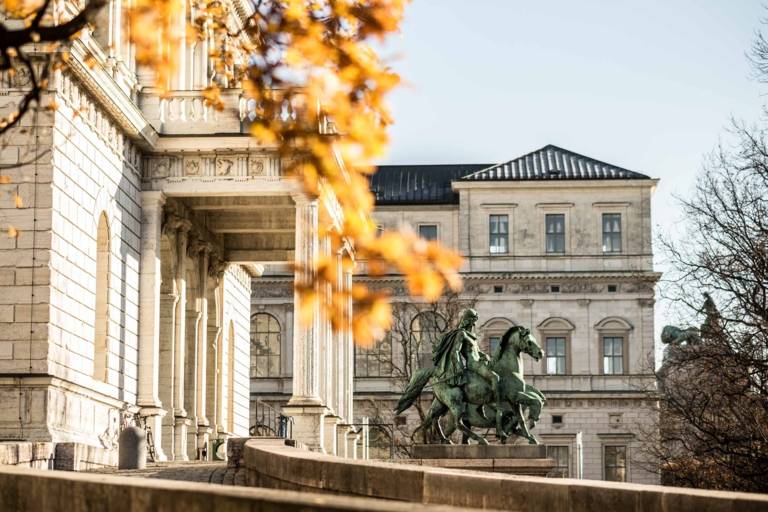
The Academy of Fine Arts in Munich in autumn.

Schwabing

From artists and writers

Around 1900, it was the artists and writers who settled around the university and the art academy and shaped the spirit of Schwabing.

In the heyday of the Schwabinger Bohème around 1900, it was the artists and writers who settled around the university and the art academy and shaped the spirit of Schwabing.

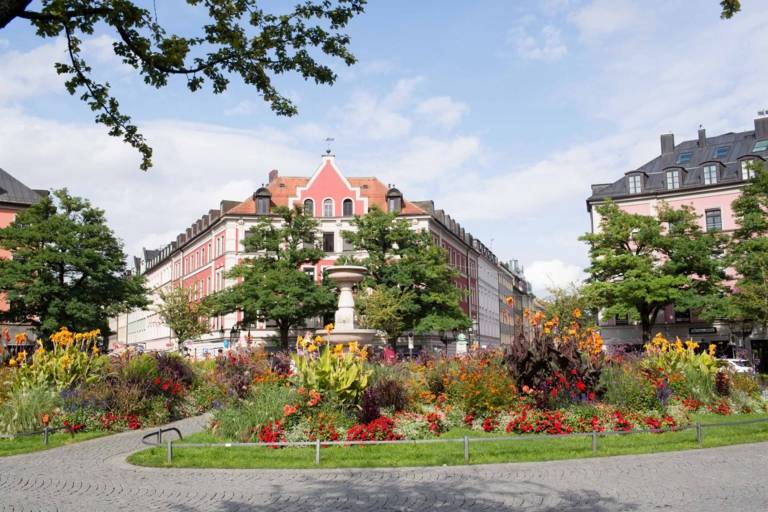
View of flowerbeds at Gärtnerplatz in Munich.

Gärtnerplatz and Glockenbach

Where the night begins

Independent labels, hip bars, pubs and cool inns attract the young and the young-at-heart.

The Gärtnerplatz and Glockenbach neighbourhoods are known as trendy quarters. Their independent labels, hip bars, pubs, cool inns and calm backyards attract the young and the young-at-heart.