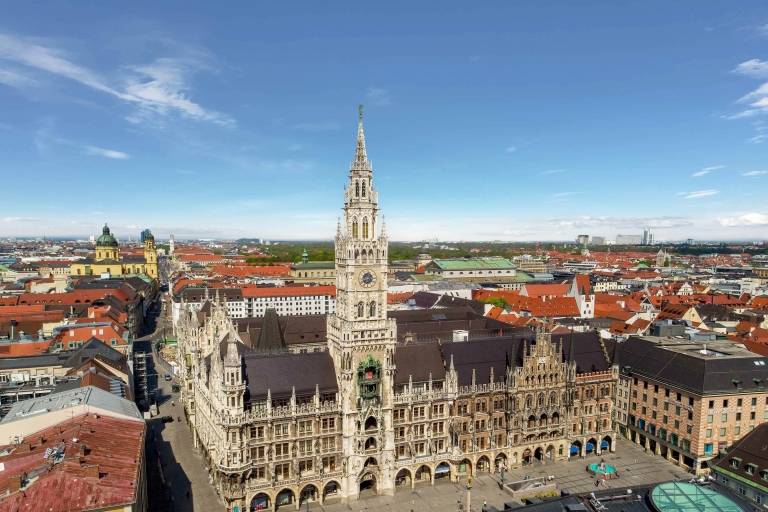
The Justizpalast or Palace of Justice in Munich photographed from above with a drone.

Justizpalast Munich

A Piece of Bavarian Judicial History

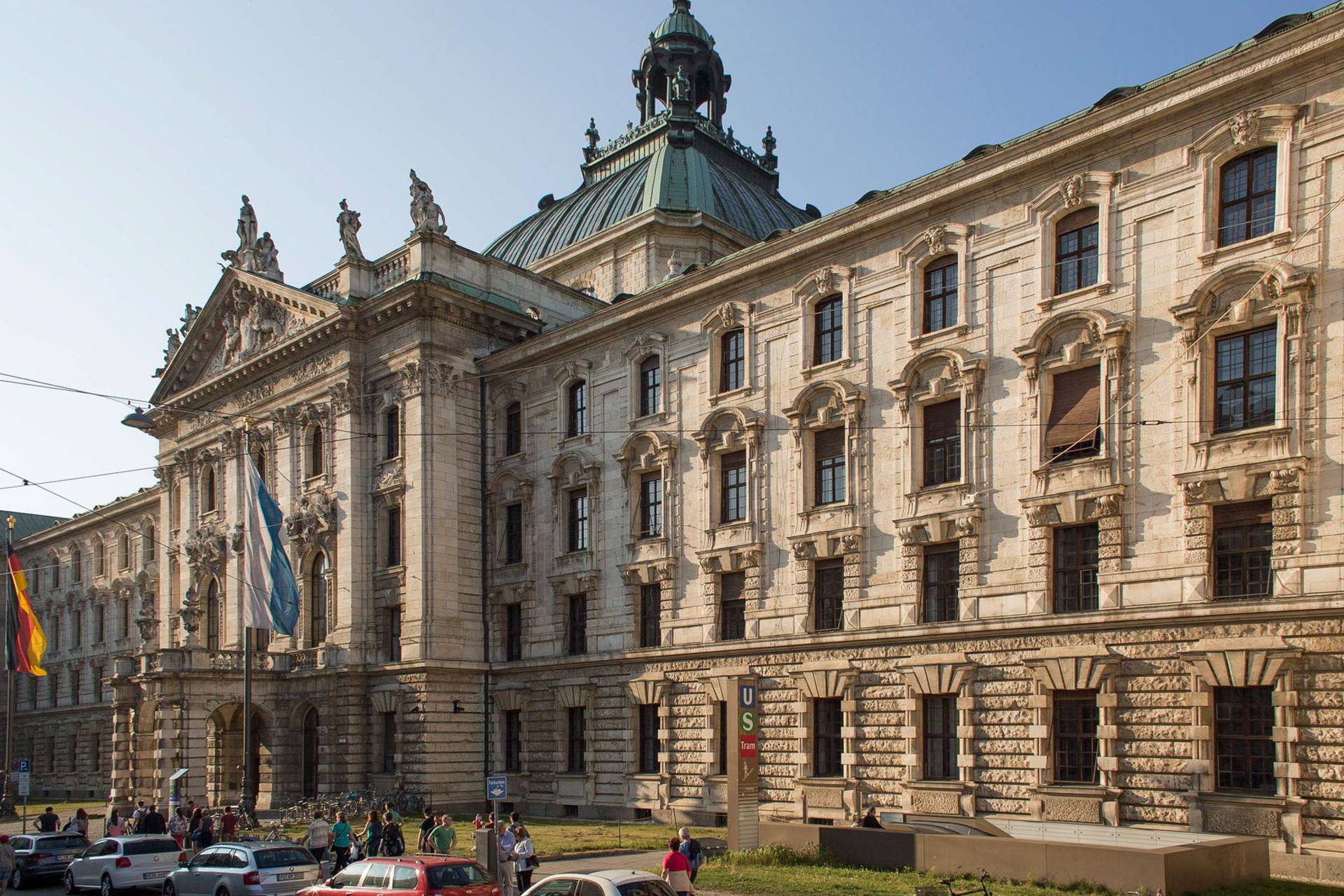
The Justizpalast (Palace of Justice) on Karlsplatz-Stachus (square) has always been the seat of the Bavarian judiciary. This neo-baroque building is not only an architectural marvel, but has also hosted numerous high-profile legal trials that attracted widespread attention beyond Munich.

Architecture and Construction of the Justizpalast

The Justizpalast was built between 1891 and 1897 on behalf of Prince Regent Luitpold according to plans by architect Friedrich von Thiersch. It stands on the edge of the Old Botanical Gardens, close to Munich's Hauptbahnhof (main station). In keeping with the taste of the time, the judicial and administrative building was built in neo-baroque style. The Justizpalast is located just outside the historic city centre in Maxvorstadt, the first district of Munich to be built after the expansion of the city in the late 18th century.

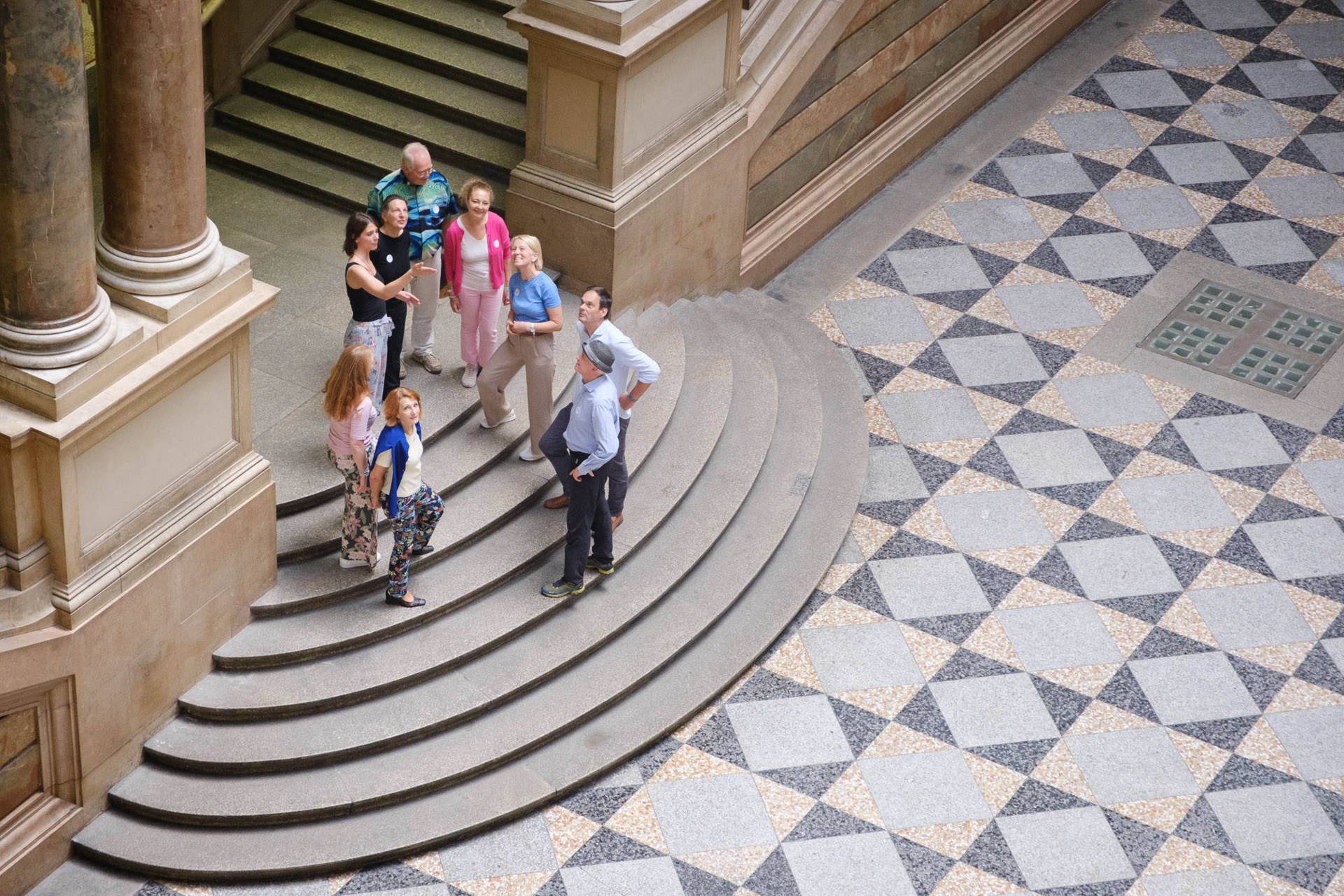
The gable of the central building features a prominent figure of Justizia, flanked by two other female figures symbolising Innocence and Vice. The interior of the building is equally striking, with a grand hall, topped by a 60-metre-high glass dome. Two open staircases on either side of the ground floor lead to the three upper corridors. The upper floors house the offices of the Bavarian State Ministry of Justice, while the lower floors contain the civil chambers of Munich Regional Court I.


The Justizpalast – Scene of the Show Trials Against the Weiße Rose Resistance Movement

On 18 February 1943, Hans and Sophie Scholl dropped flyers into the atrium of Ludwig-Maximilians-University in Munich. These flyers condemned the senseless loss of life at the Battle of Stalingrad and called for resistance against the tyranny of the National Socialist dictatorship. The siblings were arrested, subjected to a short show trial before the notorious “Volksgerichtshof” (People's Court) in the Justizpalast. Just four days later, they were executed along with their fellow student Christoph Probst.

Today, a courtroom in the Justizpalast has been designed as a memorial to the members of the Weiße Rose resistance group. This space is part of the permanent exhibition “Political caprice in the Name of the German People: The Destruction of the Constitutional State under National Socialism – The Weiße Rose Trials at Munich's Justizpalast”. Visitors can explore the exhibition individually or as part of a guided tour.

Celebrities in the Dock

In the early years of the Federal Republic of Germany, shortly after the construction of the Berlin Wall in 1962, a double murder on Starnberger See (lake) caused quite a stir. Vera Brühne stood in the dock at the Justizpalast in Munich and continued to maintain her innocence, even after her conviction in what became a sensational circumstantial trial. The trial sparked media uproar. Prejudices and disrespectful reporting, particularly towards women, continued into the 1970s, as seen in the trial of Ingrid van Bergen for the murder of her lover. More recently, in 2014, the criminal trial of Uli Hoeneß for tax evasion also took place at the Justizpalast.
 

Frequently asked questions about the Justizpalast


The Justizpalast in Munich was built by the architect Friedrich von Thiersch between 1891 and 1897.

The Justizpalast is the official building of the Bavarian Ministry of Justice. It also houses most of the civil divisions of Munich Regional Court I. Currently, the permanent exhibition ‘Arbitrariness in the Name of the German People. The Destruction of the Rule of Law under National Socialism: The White Rose Trials in the Munich Palace of Justice’ is also on display in the building.

The Justizpalast is situated between Stachus and the main railway station, and is therefore outside the historic old town in the Maxvorstadt district. The exact address is Prielmayerstraße 7, 80335 Munich.
Interested visitors are warmly invited to this exhibition! Admission is free. Opening hours are Monday to Thursday from 8.30 am to 3.00 pm and Friday from 8.00 am to 2.00 pm. Guided tours are available for school groups.


Text: München Tourismus, Photos: Frank Stolle
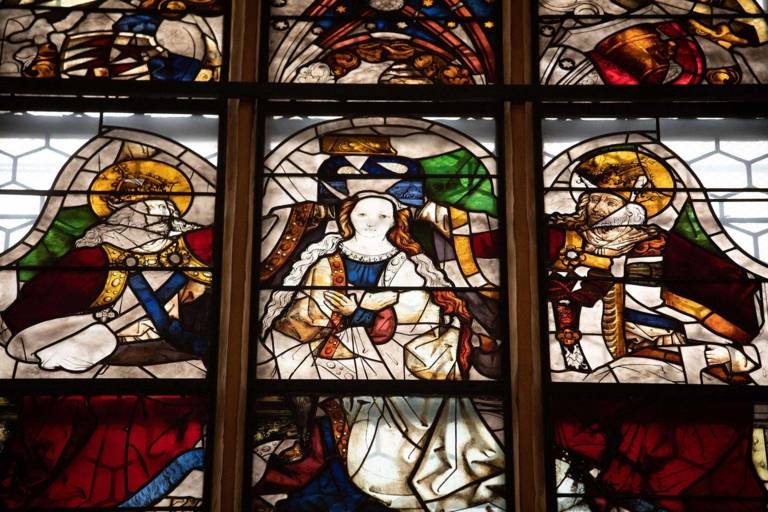
A church window in the Salvatorkirche in Munich

Munich's church windows

The most beautiful windows of the city

Michael Mayer of Mayer’sche Hofkunstanstalt presents the most spectacular church windows.

Fascinating people for centuries: Michael Mayer of Mayer’sche Hofkunstanstalt presents the most spectacular church windows the city has to offer.

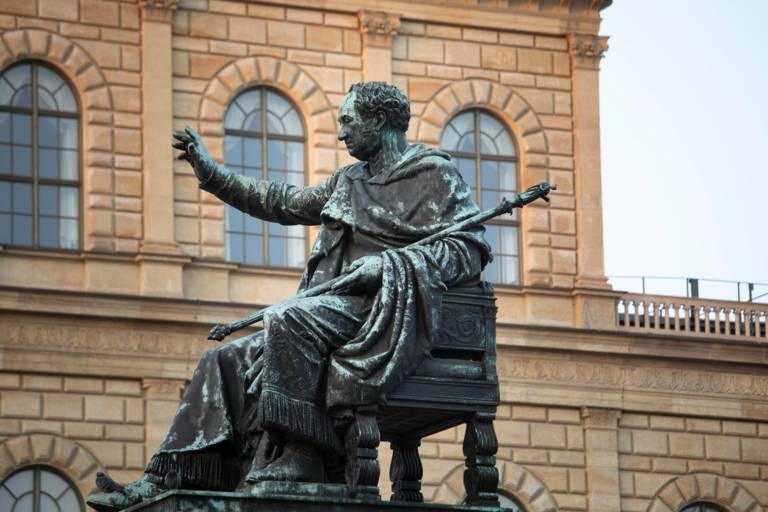
The monument to Max I. Joseph in front of the Residenz

Munich's royal monuments

Four kings and a prince regent

In Munich there are fantastic monuments to admire. Where they are and what makes them so special.

In Munich there are several fantastic monuments to admire. Where they are and what makes them so special: an overview.

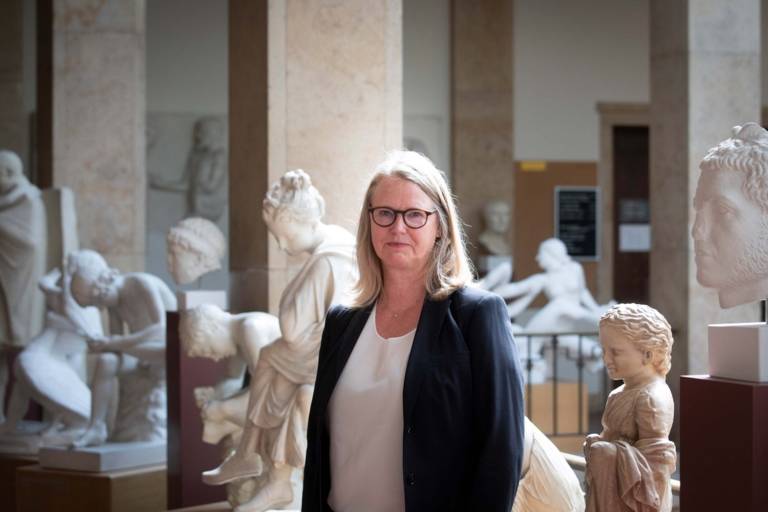
The tour guide Alvestad-Aschenbrenner stands in the Museum for Abgüsse Klassischer Bildwerke Munich

Ludwig I of Bavaria

When Munich became an „Athens on the Isar“

Ludwig I of Bavaria converted Munich into his "„Athens on the Isar“, many buildings still remind us of this today. An interview.

Ludwig I of Bavaria converted Munich into his "„Athens on the Isar“, many buildings still remind us of this today. An interview with a tour guide.

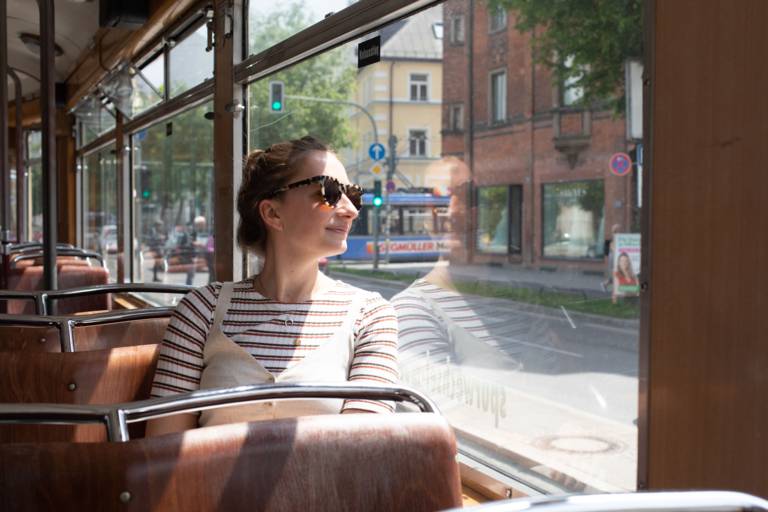
Young woman sitting at a window in a tram in Munich.

Column

A vacation in my own city

Our author used to be a travel blogger. Now she has started to explore her own city: Munich!

Our author used to be a travel blogger. Now she has started to explore her own city: Munich!

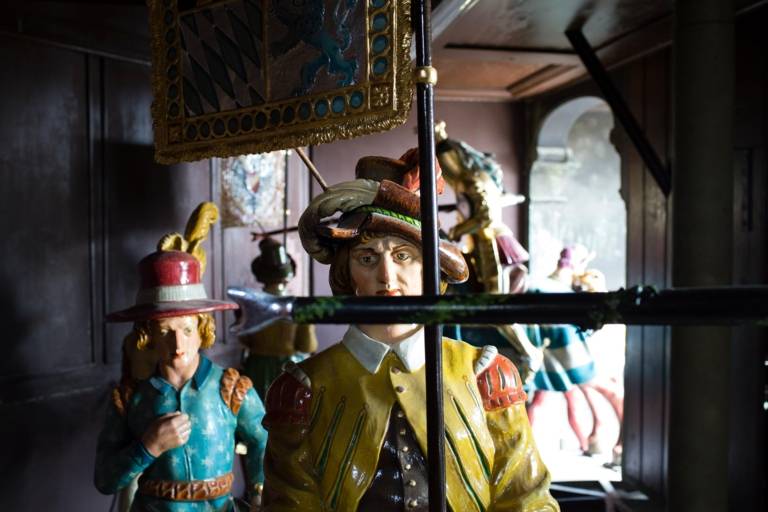
View from the inside of a figure of the carillon in the New Town Hall in Munich.

New Town Hall

The Glockenspiel in ten pictures

An exclusive look behind the scenes.

The Glockenspiel on Marienplatz has been enchanting visitors and locals for over 100 years. An exclusive look behind the scenes.

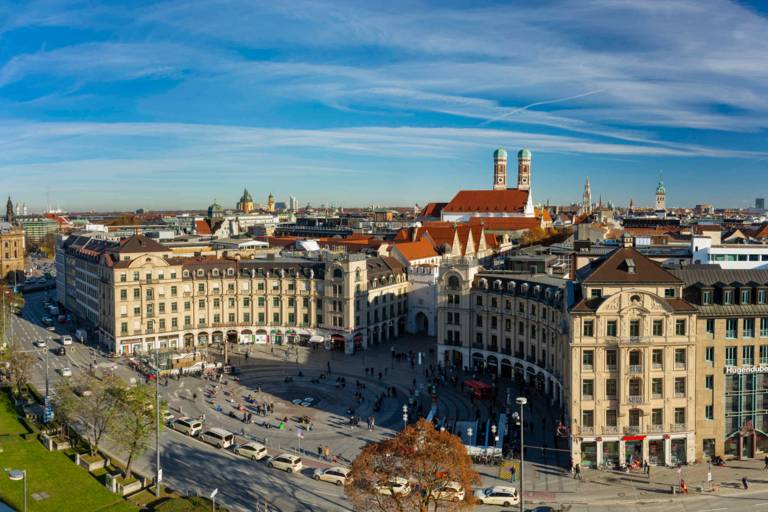
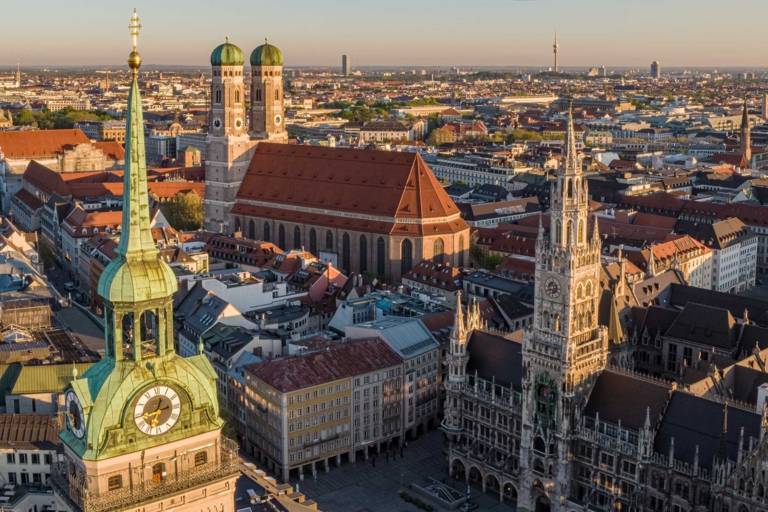
Panoramic view of Karlsplatz / Stachus in Munich with the Frauenkirche in the background photographed from the air.

Munich's city centre

Classical and curiosities

Numerous Munich stories can be told along the roughly one-kilometer-long route between Karlsplatz-Stachus and Marienplatz square. A city walk.

Numerous interesting Munich stories can be told along the roughly one-kilometer-long route between Karlsplatz-Stachus and Marienplatz square. A city walk.

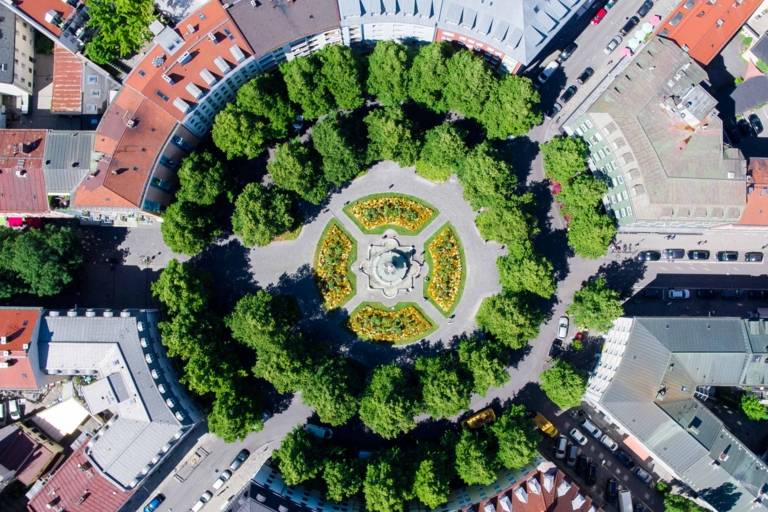
Weissenburger Platz in Munich photographed from above with a drone.

Haidhausen and Au

A village in the city

Haidhausen and Au have developed from working-class quarters into popular residential areas.

When strolling along the narrow streets of the districts Haidhausen and Au with small shops and green courtyards, it almost feels like being in a village in the middle of the city.

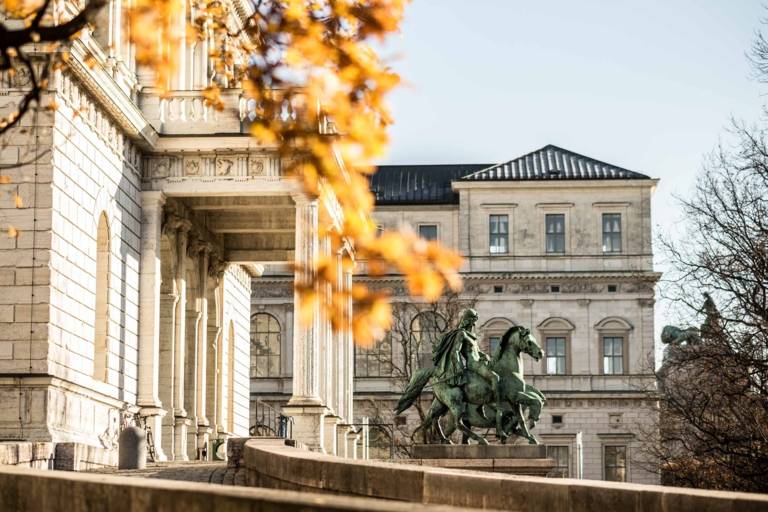
The Academy of Fine Arts in Munich in autumn.

Schwabing

From artists and writers

Around 1900, it was the artists and writers who settled around the university and the art academy and shaped the spirit of Schwabing.

In the heyday of the Schwabinger Bohème around 1900, it was the artists and writers who settled around the university and the art academy and shaped the spirit of Schwabing.

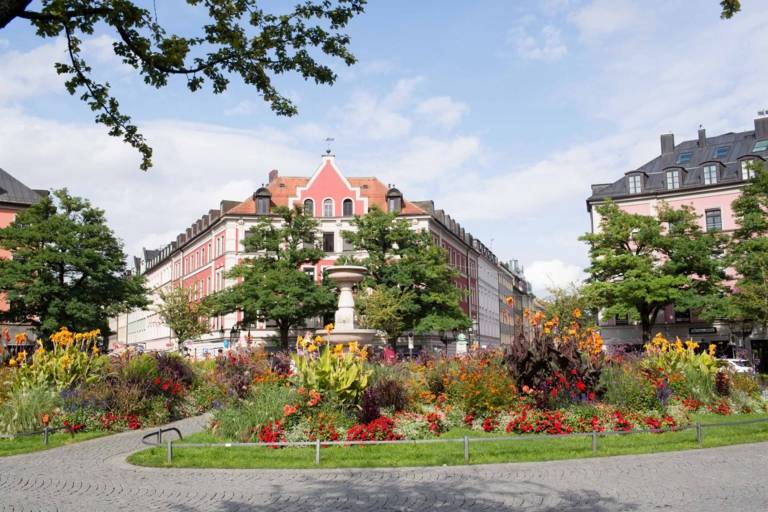
View of flowerbeds at Gärtnerplatz in Munich.

Gärtnerplatz and Glockenbach

Where the night begins

Independent labels, hip bars, pubs and cool inns attract the young and the young-at-heart.

The Gärtnerplatz and Glockenbach neighbourhoods are known as trendy quarters. Their independent labels, hip bars, pubs, cool inns and calm backyards attract the young and the young-at-heart.