The spa town of Bad Reichenhall is situated in the Bavarian district of Berchtesgadener Land, around an hour and a half from Munich. The name Reichenhall comes from “reich an Salz” – “rich in salt” – and the salt trade is why the town is closely linked with the founding of Munich in the Middle Ages. The tunnels of the now-defunct Alte Saline (old salt works) and the adjoining salt museum are a great attraction for visitors to the town.
- Salt extraction in Bad Reichenhall
- The Alte Saline (old salt works) in Bad Reichenhall
- The founding of Munich: it started with the salt
- The Alte Saline: How to get there from Munich
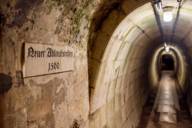
Records show that salt has been mined in Bad Reichenhall since at least the 7th century. Brine was delivered through a pipeline from Berchtesgaden to Reichenhall from 1816, with differences in gradient overcome with the aid of a pump mechanism. The historical system was a masterstroke of engineering in its era, and can now be admired in Bad Reichenhall’s Alte Saline and in Salzbergwerk Berchtesgaden (Berchtesgaden salt mine).
The salt works was completely rebuilt under King Ludwig I following a fire in 1834. The main fountain house of the Alte Saline, a magnificent industrial building, now houses the historic salt springs and the salt museum. A guided tour of the salt mine takes around an hour and will teach you all there is to know about salt, including the history behind the old walls and how this can be a very romantic spot for lovers – the historic building can actually be used as a wedding venue.
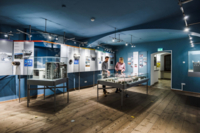
One of the biggest highlights of the tour greets guests at the very beginning: the imposing water wheels, which are still in operation today. From there, the branching network of underground tunnels is also an impressive sight. The tour finishes in the salt museum, where even more information about salt is presented in an engaging way for visitors to enjoy. The Alte Saline has its own Salzshop (salt shop) where visitors can buy all manner of souvenirs.
We recommend purchasing a ticket online before visiting the Alte Saline to be sure of a place on the guided tour.
Munich owes its very founding to the “white gold” of the Middle Ages. Heinrich der Löwe (Henry the Lion) decided to divert the lucrative salt trade from the mountains over the Isar river and into Munich. To this end he built a bridge where the Deutsches Museum now stands, as well as destroying another bridge further north – as this was in the territory presided over by Bishop Otto of Freising, the action led to a dispute in the region. This was settled by means of a certificate of arbitration, issued by Emperor Barbarossa on 14 June 1158 – and that document is now considered to be the birth certificate of the city of Munich.
Train connection: about 2 hours. More information under bahn.de
Car: about 2 hours via the A8 motorway