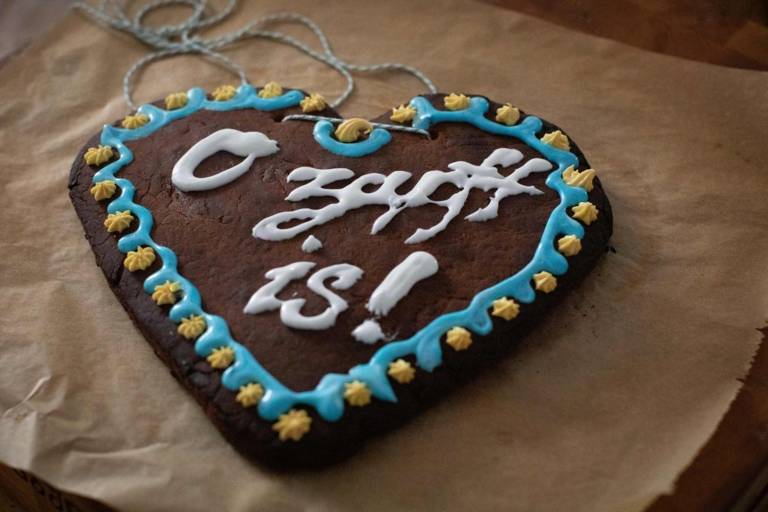
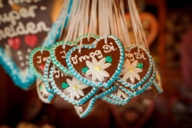
There are lots of gingerbread hearts on sale at a stall at the Munich Oktoberfest

Munich Guides: Oktoberfest

Oktoberfest in Munich: Tips, times & frequently asked questions

Are you planning a visit to the Oktoberfest in Munich? We'll answer your most important questions about visiting the Wiesn – from best times to visit and bookings to getting there, traditional dress and family activities. You'll also find practical tips to help you plan your visit with ease and ensure you have a wonderful time at the world's biggest folk festival. Discover our tips for the Munich Oktoberfest.

Oktoberfest in Munich: Tips, times & frequently asked questions

- Best times to visit and tips for avoiding the crowds
- Admission, bookings and beer tents
- Getting there and finding your way around
- Oktoberfest with children and the family
- Food, drinks and costs
- Attractions, rides and highlights
- Clothing, rules and practical advice
- The history and interesting facts about Oktoberfest


Best times to visit and tips for avoiding the crowds

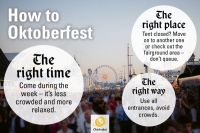
The best time to visit the Oktoberfest is in the mornings and early afternoons on the weekdays Monday to Thursday. At these times, the festival grounds are usually less crowded, and your chances of finding a free seat in the beer tents are significantly higher. If you want to experience the particularly lively atmosphere of the Wiesn, you should come in the evening or at the weekend – but you should expect larger crowds then, and it can be difficult to get into a beer tent without a booking.

The Oktoberfest is generally quietest on weekdays in the mornings and early afternoons, as well as in the afternoons on the last day of the Wiesn. From Monday to Thursday in particular, visitor numbers are significantly lower than at the weekends or in the evenings. Anyone wishing to enjoy the Wiesn at a more leisurely pace should plan their visit for these times.

The Oktoberfest is particularly busy at weekends and in the evenings. Public holidays and days with particularly fine weather also regularly attract large numbers of visitors. Anyone visiting at these times should expect the festival tents to be full or, in some cases, even closed.

The Oktoberfest is occasionally closed for safety reasons if there are too many people on the festival grounds. In this case, it is advisable to head to the pubs in the surrounding area or in the city centre. At the same time, you can check the official information channels, such as Instagram, for the latest visitor numbers and return if necessary. For guests with confirmed bookings, there is usually a separate entrance to the festival grounds, details of which will be announced.

You can always find the latest information on all the key dates for Oktoberfest here.

Admission, bookings and beer tents

Entry to the festival grounds is generally free of charge. An admission charge applies to the Oide Wiesn, a nostalgic festival area in the southern part of the Theresienwiese (Oktoberfest fairground).

No, a table reservation is not strictly necessary. In fact, reservations in the festival marquees are in high demand and are often fully booked months in advance. Even if you don't have a reservation, you can still make use of many areas of the festival marquees that are kept free for walk-in guests – particularly on weekdays and in the early hours, your chances of finding a free seat are usually good. And when the weather is fine, it's also worth visiting the festival marquee beer gardens.

Yes, you can visit the marquees even without a booking. Some of the seats are reserved for walk-in guests and are allocated on a “first come, first served” basis. You're more likely to find a seat on weekdays, as well as in the mornings and early afternoons.

Your best chance of getting a seat in the beer tent is on weekdays (Monday to Thursday) in the morning and early afternoon. It's best to arrive as early as possible and keep an eye out for the areas reserved for walk-in guests. At weekends and in the evenings, many tents are already full quite early on and are sometimes closed due to overcrowding.

If the beer tents are full, it's worth trying out some of the other smaller tents, looking for a spot in the beer garden, checking out the numerous fairground rides, attractions and food and drink stalls on the festival grounds, or heading over to the Oide Wiesn.

Getting there and finding your way around

The best way to get to the festival site is by public transport:

U-Bahn (underground)/S-Bahn (suburban train):

U-Bahn (underground): U4/U5 – Theresienwiese (Oktoberfest fairground) station (often very busy) or Schwanthalerhöhe
U-Bahn (underground): U3/U6 – Goetheplatz or Poccistrasse stations
S-Bahn (suburban train): Hackerbrücke station (S1 to S8) – approx. 10 minutes' walk to the main entrance (Hackerbrücke is occasionally closed when there is a large influx of visitors!)
S-Bahn (suburban train): Hauptbahnhof station (S1 to S8) – walk for about 10–15 minutes towards Festwiese, or change to the U4/U5 to Theresienwiese or Schwanthalerhöhe
S-Bahn (suburban train): Heimeranplatz station (S7/S20) walk for about 15–20 minutes

Bus services:

Bus route 53 to the Schwanthalerhöhe stop
Bus routes 58/68 to the Georg-Hirth-Platz, Beethovenplatz or Goetheplatz stops
Bus route 62 to the Hans-Fischer-Strasse, Poccistrasse or Herzog-Ernst-Platz stops
Bus route 134 to the Schwanthalerhöhe stop

Tram:

Lines 18/19/29 to the Holzapfelstrasse or Hermann-Lingg-Strasse stops
Lines 16/17 to the Hackerbrücke stop – approx. 10 minutes' walk to the main entrance (the Hackerbrücke is occasionally closed during periods of high visitor numbers!)

The Theresienwiese (Oktoberfest fairground) U-Bahn station (U4/U5) is situated right next to the festival site, but is often very busy. It is advisable to also use Schwanthalerhöhe (U4/U5) or the Goetheplatz and Poccistrasse underground stations (U3/U6).

Site maps are available at the service centre and at the information points around the site. Oktoberfest leaflets containing the site map and further information are also available there. You can find it online here.

There are two main streets on the festival grounds, running parallel to one another and leading across the site from the main entrance and the Theresienwiese (Oktoberfest fairground) U-Bahn station respectively: Wirtsbudenstrasse is lined on both sides with large and small festival tents. Schaustellerstrasse is home to numerous fairground rides and attractions. Food and drink outlets can be found throughout the festival grounds. The Oide Wiesn takes place in a fenced-off area in the southern part of the Theresienwiese (Oktoberfest fairground), at the end of Wirtsbudenstrasse.

Yes, even at the Oktoberfest there are quieter areas away from the large festival tents and the main paths. The atmosphere is often more relaxed, particularly during the day and in the outlying areas of the festival grounds. Anyone looking for a more traditional and slightly quieter atmosphere should also visit the Oide Wiesn.


Oktoberfest with children and the family

Yes, children are very welcome at the Oktoberfest. There are plenty of activities for families, particularly during the day and on the family days (both Tuesdays).

The morning and early afternoon hours (except on Saturdays) are particularly suitable for families, as the Oktoberfest is even quieter then. At these times, the fairground rides, beer gardens and festival tents are usually less crowded and the atmosphere is more relaxed. Getting there and back is also more pleasant. The Family Days (both Tuesdays) in particular offer additional discounts and special deals for children.

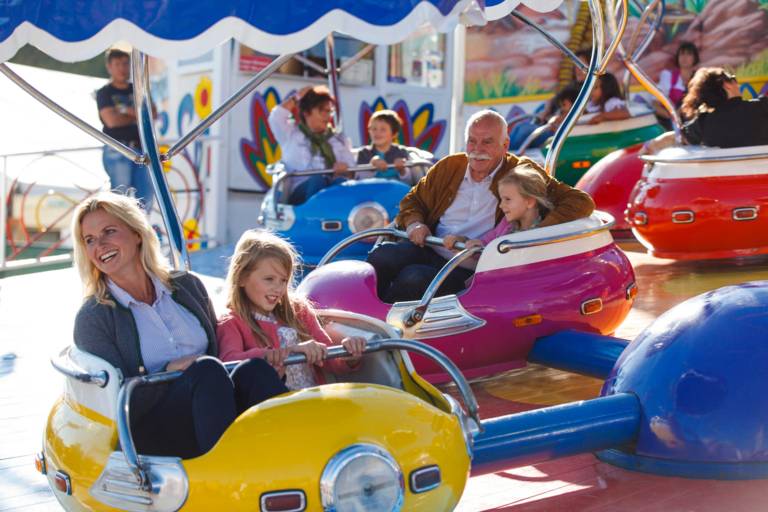
There are numerous children's rides at the Oktoberfest. Popular classics include the Kettenflieger, the fairy-tale railway, the traditional children's carousels and the ride on the Ferris wheel. But the Teufelsrad, the small Ferris wheel from 1925, the Toboggan, the bird-calling performers and the flea circus also provide plenty of fun. The Oide Wiesn, which takes place in the southern part of the festival grounds, is also a children's paradise; the Munich Marionette Theatre in particular is always very popular there.

On both Tuesdays, Family Days take place, featuring special discounts and offers for children. Another top tip is the “Familienplatzl”, located in a side street off Schaustellerstrasse at the Wiesn. In this particularly child-friendly area, families can enjoy fun rides, food and drink options, and seating where they can relax and unwind. There are also spaces for pushchairs, a nappy-changing table, a children's toilet and a microwave for heating up baby food and food you've brought with you. The lovely beer garden at the “Familienplatzl” serves family-friendly meals, and you're also allowed to eat food you've brought with you.

In the larger festival tents, you'll often find a discounted menu at lunchtime until 3 pm. A visit to the festival tent beer gardens is particularly worthwhile when the weather is fine.

There are now ten fountains providing free drinking water on the site. These are located, amongst other places, at the Oidn Wiesn, by the toilet facilities, at the entrance to the Familienplatzl and at the entrance to Esperantoplatz.

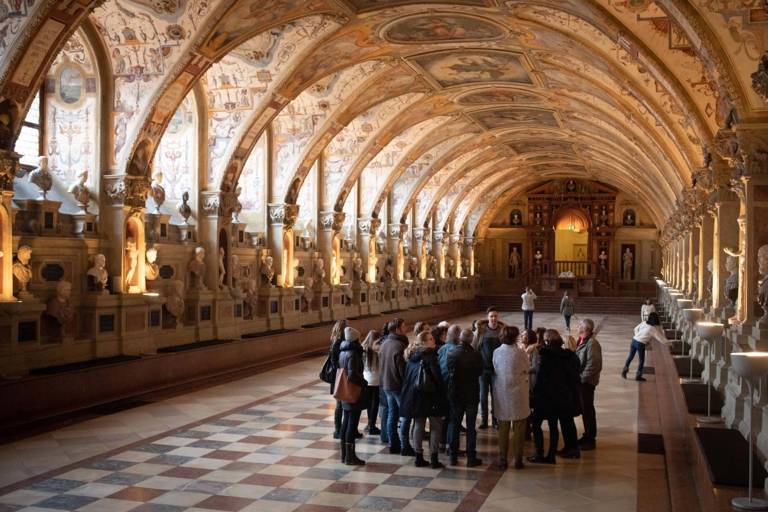
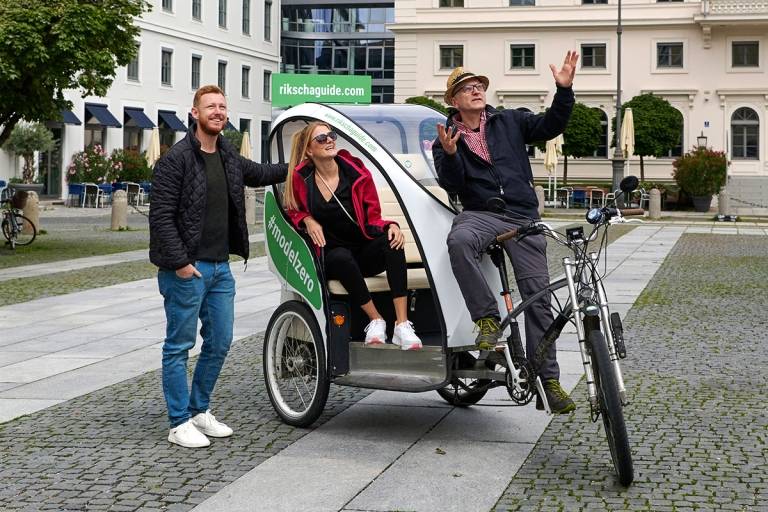
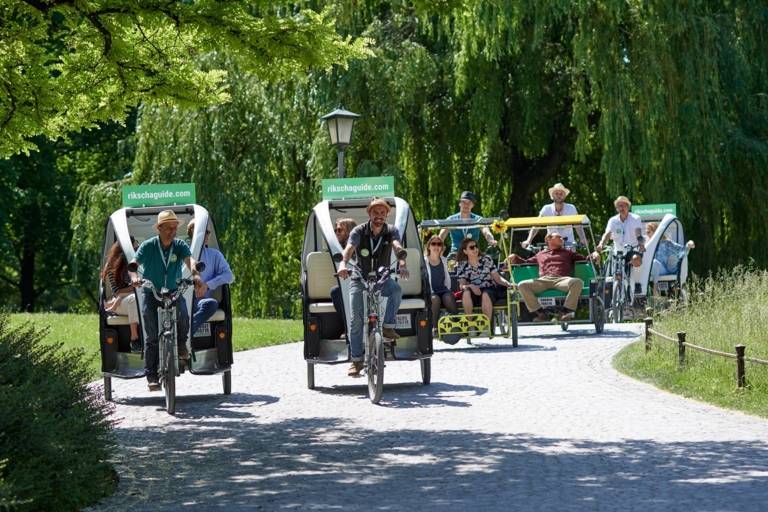
There are also great guided tours of the Oktoberfest for young and old alike.

Strollers and similar items are permitted on the festival grounds from Sunday to Friday until 6 pm. On Saturdays and public holidays, pushchairs are generally prohibited at the Wiesn. You can leave your pushchair at the luggage storage points, which are located around the Theresienwiese near the entrances, for 5 euros each.

The maximum dimensions for bags that you are allowed to bring onto the Wiesn also apply to nappy bags, which must have a volume of up to three litres or be no larger than 20 x 15 x 10 centimetres (3-litre volume).

At the entrances to the Theresienwiese, steward staff hand out “Kinderfinder” wristbands to families, on which a telephone number can be written so that young guests do not get lost.

Children under the age of 6 are not permitted in beer tents or catering establishments after 8 pm, even when accompanied by a parent or guardian.

Children and young people under the age of 16 are only permitted on the festival grounds (and therefore also in the beer tents) from 8 pm if accompanied by a parent or guardian. They may then remain until the end of the Wiesn.

It’s not just children who love the colourful helium balloons that are on sale everywhere at the Oktoberfest. However, if you’re travelling to and from the festival by (S)-Bahn, a balloon isn’t a good choice as a souvenir. This is because balloons of any kind are prohibited at stations and on trains.

Young people aged 16 and over may remain on the festival grounds until closing time even without an adult, but in the tents (Weinzelt, Käfer) only until 12 am.

You can find this and lots of other important information for families here.
Food, drinks and costs

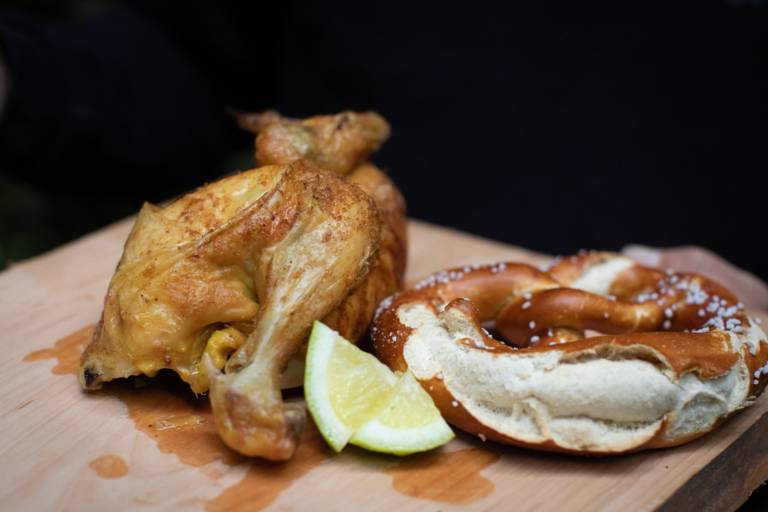
At the Oktoberfest, traditional Bavarian specialities are among the most popular dishes. Typical examples include Hendl (roast chicken), pork knuckle, Käsespätzle, Weißwürste, pretzels and various snacks. Sweet classics such as Kaiserschmarrn, caramelised almonds and apple strudel are also popular.

Vegetarian dishes such as the famous Käsespätzle, Obazda, Brezn or Radi, as well as Rahmschwammerl and Schupfnudeln, have long featured on the menus in the festival marquees. The range of vegan options in the festival marquees – such as soya steak, pan-fried vegetables and similar dishes – is also growing. At the food stalls, you can find, for example, vegan Leberkäse or pea cutlets.

You can pay by card or smartphone at many stalls, stands and attractions. However, it's still worth carrying enough cash with you, as there are exceptions. Cash payments are usually the norm, particularly in the large marquees. ATMs from various banks and savings banks can be found at the entrances to the festival grounds.

Tipping is common at the Oktoberfest, but not compulsory. Many guests round up the bill or add a few euros extra, depending on their order and the service received. A reasonable tip is greatly appreciated by the waiting staff.

There are now ten fountains providing free drinking water on the site. These are located, amongst other places, on the Oidn Wiesn, by the toilet blocks, at the entrance to the Familienplatzl and at the entrance to Esperantoplatz.


Attractions, rides and highlights

At the Oktoberfest, there is a wide range of rides on offer – from traditional carousels and the Ferris wheel to modern rollercoasters and spectacular high-tech attractions. Families with children will also find plenty of age-appropriate rides and play areas. The Wiesn therefore offers entertainment for guests of all ages.

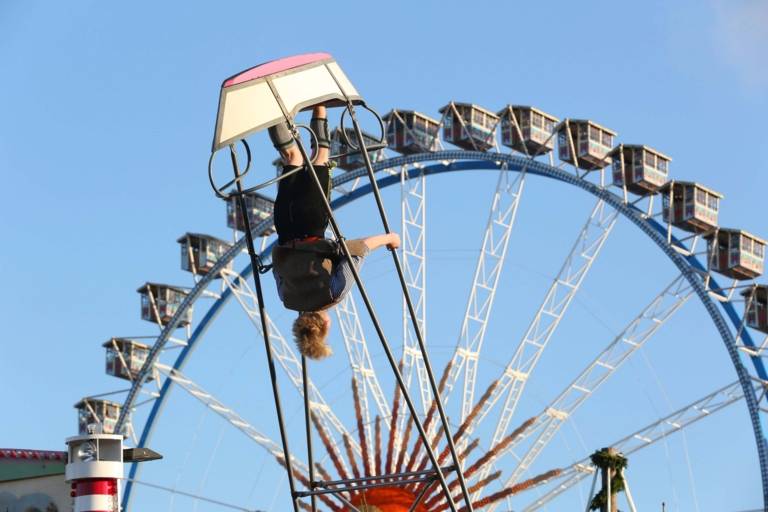
Among the highlights of the Oktoberfest are the large festival tents with their unique atmosphere and live music, the Ferris wheel offering views across the Theresienwiese, and numerous fairground rides and traditional fairground attractions. The Oide Wiesn, with its historical attractions and traditional music, is also a special experience for many visitors. Anyone wishing to discover the diversity of the Wiesn should take the time to walk around the entire festival grounds.

Even without beer, the Oktoberfest offers plenty to do. You can enjoy traditional Bavarian specialities, have a go on the fairground rides, visit the festival tents and beer gardens, or soak up the special atmosphere on the festival grounds. In addition, a variety of non-alcoholic drinks are available in the tents and at the food and drink outlets.

Clothing, rules and practical advice

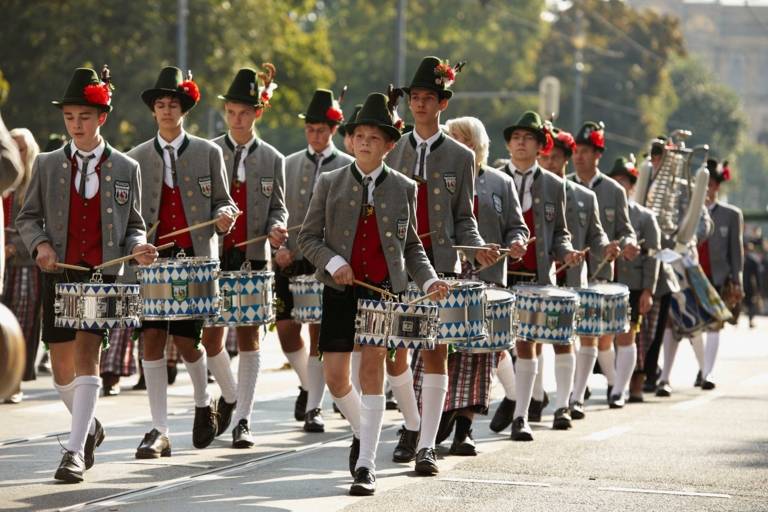
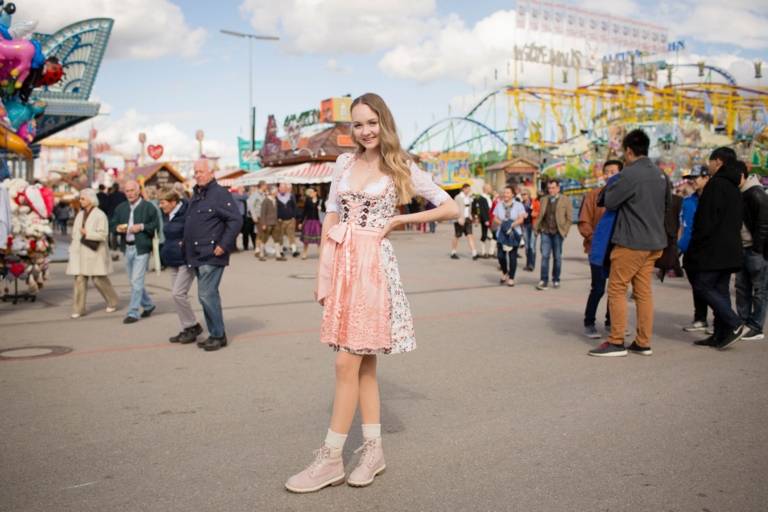
Traditional dress, such as a dirndl or lederhosen, is very popular at the Oktoberfest, but by no means compulsory. Above all, it's important to wear comfortable clothes and shoes, as you'll be doing a lot of walking. As the weather can be changeable in September and October, it's also a good idea to bring a jacket or an extra jumper.

No, wearing a dirndl or lederhosen is not compulsory at the Oktoberfest. Many visitors choose to wear traditional costume, but everyday clothing is just as welcome. The most important thing is that you feel comfortable and are dressed for the weather. If you don't have your own traditional costume, you can also hire one for your visit to the festival.

Bags and rucksacks must not exceed a volume of three litres 20 x 15 x 10 centimetres. Larger items of luggage can be left at the entrances for a fee of 5 euros.

In particular, the rules regarding bags and personal belongings should be observed. Aerosol cans containing harmful substances, corrosive or staining substances, and items that could be used as bladed, blunt or stabbing weapons are not permitted on the festival grounds. Drinks may be brought onto the festival grounds, but not in glass bottles.

You should also always keep an eye on your valuables and, if visiting with a group, always agree on a meeting point in case you get separated. And should anything go missing, it is best to visit the lost property office in the transport centre above the festival grounds (entrance to the right of the main entrance) one or two days later.

On Saturdays and public holidays, pushchairs are not permitted at any time of day. Bicycles, scooters, skateboards and similar items are also not permitted on the festival grounds. Animals are not allowed on the Wiesn at any time (with the exception of assistance dogs).

A detailed overview of the safety measures at the Wiesn can be found here.
 

The history and interesting facts about Oktoberfest

The Oktoberfest owes its name to the first festival, held in October 1810 to celebrate the wedding of Crown Prince Ludwig and Princess Therese. Since 1872, the start of the festival has been brought forward to September because the weather is usually better then. However, the name “Oktoberfest” has remained to this day.


The first Oktoberfest was celebrated on October 17, 1810. It began as a horse race organised to mark the wedding of Ludwig of Bavaria – later King Ludwig I – and Princess Therese of Saxony-Hildburghausen.

The Oktoberfest takes place at the Theresienwiese because that is where the celebrations for the wedding of Crown Prince Ludwig I and Princess Therese of Saxony-Hildburghausen were held in 1810. The large open space was ideal for the horse races and festivities of the time. The site was later named “Theresienwiese” in honour of the bride.


Text: Tanja Olszak / München Tourismus; Photos: Christian Kasper, Dominik Morbitzer
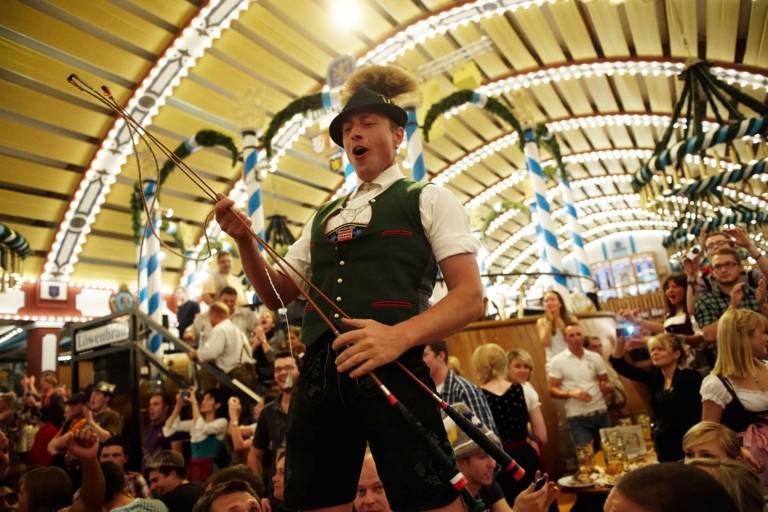
A man dressed in a traditional costume is celebrating and dancing on a table in a beer tent at the Oktoberfest in Munich.

Oktoberfest

Which beer tent is the right one for me?

Getting in is tough; but once you're in, the fun never stops. A brief typology of the different beer tents at Oktoberfest – and the people inside.

Getting in is tough; but once you’re in, the fun never stops. A brief typology of the different beer tents at Oktoberfest.

Getting in is tough; but once you're in, the fun never stops. A brief typology of the different beer tents at Oktoberfest – and the people inside.

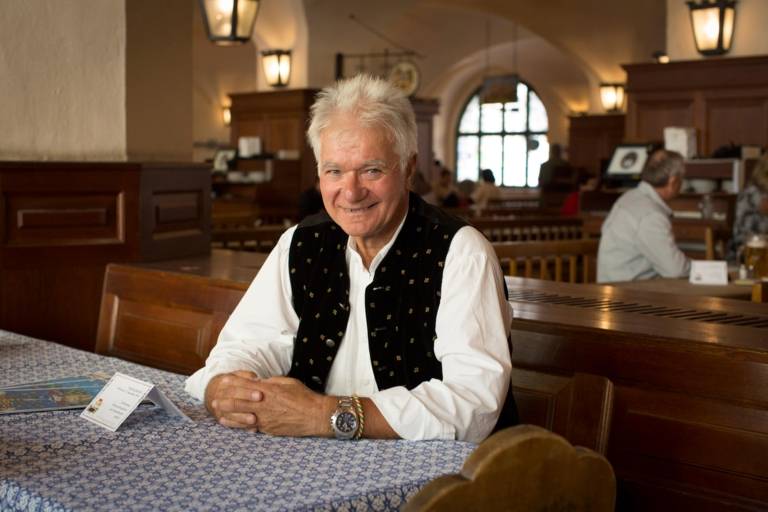
Günter Werner sits in a garden near Munich

Interview

Let's stick together!

For sixty years Günter Werner has not missed a single day at the Oktoberfest. Yes, you read that right: sixty years! A conversation.

For sixty years Günter Werner has not missed a single day at the Oktoberfest. Yes, you read that right: sixty years! A conversation.

Drummers at the Oktoberfest Costume and Riflemen's Parade in Munich.

Traditional Munich

Customs are in!

From fresh approaches in fashion to exciting experiments in the kitchen: an overview.

Tradition and customs in Munich are more fashionable than ever before. From fresh approaches in fashion to exciting experiments in the kitchen: an overview.
A woman who is wearing a dirndl is smiling at the Oktoberfest in Munich.

Oktoberfest

Munich’s Dirndl Idol

Tradition or trash? We photographed nine visitors to the Oktoberfest – and asked a panel of experts to judge their traditional outfits.

Tradition or trash? We photographed nine visitors to the Oktoberfest – and asked a panel of experts to judge their traditional outfits.

Bag on green background
Vouchers

Give the gift of a special Munich voucher: we also offer vouchers for our guided tours. Here you can book unique Munich experiences directly online, print them out and give them as a gift voucher to friends or family.

Buy from 7 €

Give the gift of a special Munich voucher: we also offer vouchers for our guided tours. Here you can book unique Munich experiences directly online, print them out and give them as a gift voucher to friends or family.