From July 28-31, 2026, the Bavarian capital became the centre of inclusion research. The 7th European Congress of the International Association for the Scientific Study of Intellectual and Developmental Disabilities (IASSIDD), held under the motto ‘real.time – Shaping the Future Together’, attracted international delegates and academics, and impressively demonstrated how Munich excels as a host city for congresses. The successful staging of this high-profile event once again underlines the city’s role as a leading metropolis for world-class academic exchange.
Professor Dr Peter Zentel, holder of the Chair in Education for People with Intellectual Disabilities at Ludwig Maximilian University, played an active role in bringing this significant congress to Munich. In this interview, he takes stock of a groundbreaking event: he discusses the scientific findings of the congress, his experiences as a local host, and why Munich offers the ideal infrastructure and the perfect environment for sustainable international networks.
The IASSIDD – International Association for the Scientific Study of Intellectual and Developmental Disabilities – is one of the world’s leading scientific associations in the field of intellectual and developmental disabilities. Its congresses address the key issues in the field and bring together researchers, professionals and, increasingly, people with intellectual disabilities from many countries.
In recent years, participation – that is, the active involvement of people with intellectual disabilities in research and scientific exchange – has become increasingly important. To make the conference as accessible and inclusive as possible, we have implemented numerous measures, some of which are supported by technology, both in the pre-congress programme and during the main congress.
My personal highlight was the inclusive dance performance on the first evening. Under the direction of choreographer Alan Brooks, around 30 people with and without disabilities took to the stage together. The performance was artistically very impressive and, at the same time, a moving example of how naturally inclusion can be put into practice.
The generous funding provided by the Bavarian Congress Initiative has given us considerable additional flexibility in shaping the event. Together with the support from the City of Munich, we were able to host an international scientific conference that met high standards in terms of technical implementation, as well as accessibility, participation and inclusive design. This also enabled us to demonstrate that LMU, the City of Munich and the Free State of Bavaria offer excellent conditions for hosting innovative and internationally oriented scientific congresses.
Many participants told us that Munich as a city and southern Germany as a region were important factors in their decision to attend. Although this was a European regional congress, we were able to welcome guests from every continent.
The timing at the end of July also proved to be very convenient, as numerous international participants combined their attendance at the congress with a private stay in Munich, Germany or other parts of Europe. Other factors include the city’s excellent international accessibility, its scientific infrastructure and its strong appeal.
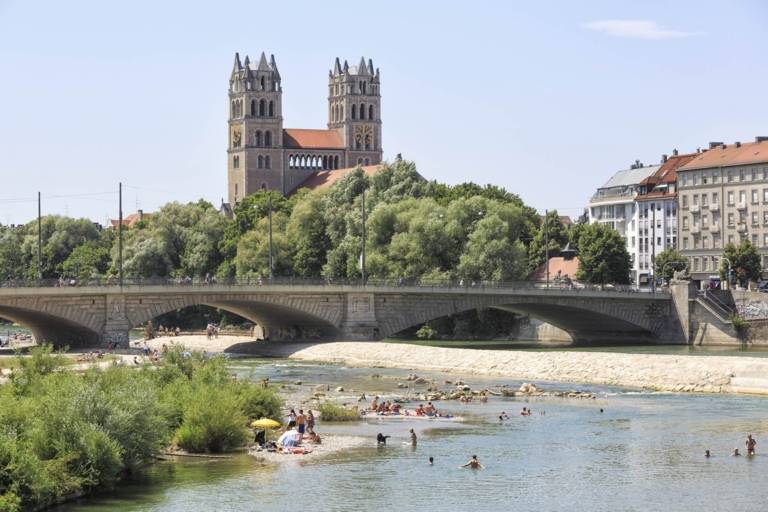
For me, the route from Marienplatz (main square) via Odeonsplatz (square) to the southern part of the English Garden is among the most beautiful attractions in Munich. Over a relatively short distance, visitors can experience the historic city centre, important cultural attractions and the unique interplay between the city and nature. For me, this area is a must-see on any visit to Munich.
I really enjoy taking international guests to the Georgenhof. It offers many of the things visitors associate with Munich and Bavaria: regional cuisine, a pleasant atmosphere and warm hospitality. I particularly appreciate the friendly and flexible service, which naturally caters to guests from different backgrounds and with different needs.
My personal recommendation takes you a little beyond the city’s immediate surroundings: Salzburg can easily be reached from Munich by regional train and offers a unique atmosphere of its own. For many of our international guests, it was a special experience to be able to travel to another European country in such a short time and discover another important cultural city.