The Siegestor at Ludwigstrasse in Munich at sunset.

Siegestor

Copied from the Romans

The triumphal arch situated at the beginning of the city’s picturesque Leopoldstrasse boulevard is a larger-than-life testament to Munich's love for Italy, while also acting as an important memorial to peace.

The Siegestor – atop which sits the statue of Bavaria with a lion-quadriga – marks the end of Ludwigstrasse and the beginning of Munich's Schwabing district.

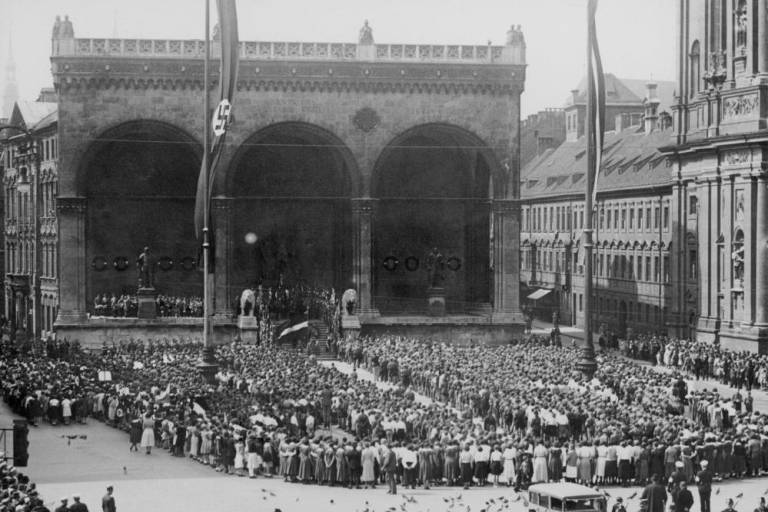
When construction work began on the new boulevard – named after its patron and King, Ludwig I – in the mid-19th century, Schwabing was still a village. Fields and meadows lay strewn beyond the fortified gate. The Triumphal Arch is the equivalent of the Feldherrnhalle monument located on Odeonsplatz, both of which were commissioned by the King and brought to life by the architect Friedrich von Gärtner.

Inspiration for the gate was drawn from the Arch of Constantine in Rome. Just as with the Feldherrnhalle, Ludwig I also commissioned the Siegestor to be built in honour of the Bavarian army.

What is on the Siegestor in Munich?

The inscription on the side facing towards Schwabing is an enduring witness to this dedication, as well as the motifs depicting the battle scenes.

On the other hand, the inscription on the south-facing side, which was added after 1945, speaks a very different language. "Dedicated to victory - Destroyed by war - An admonishment for peace," it says. During the Second World War, the gate was badly damaged. In view of the severe destruction caused by the War and the associated guilt, reconstruction efforts deliberately avoided any kind of fuss and transformed the gate into a memorial for peace.

At the 1972 Summer Olympics in Munich, the lovingly-restored lion-quadriga was returned to its place atop the gate. Since the reign of Ludwig I, Munich has grown strongly northwards. Behind the Siegestor itself, Schwabing's Leopoldstrasse boulevard begins with all its cafés and shops. On a visual axis from Odeonsplatz and stretching to the north, modern city buildings such as the 123-metre-high Langenscheidt skyscraper tower above the Siegestor, situated at the end of Ludwigstrasse.



Photo: Peter Hutzler
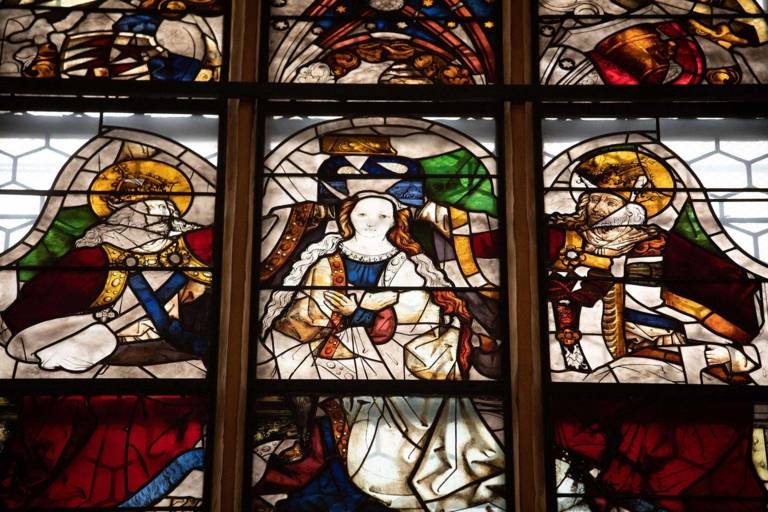
A church window in the Salvatorkirche in Munich

Munich's church windows

The most beautiful windows of the city

Michael Mayer of Mayer’sche Hofkunstanstalt presents the most spectacular church windows.

Fascinating people for centuries: Michael Mayer of Mayer’sche Hofkunstanstalt presents the most spectacular church windows the city has to offer.

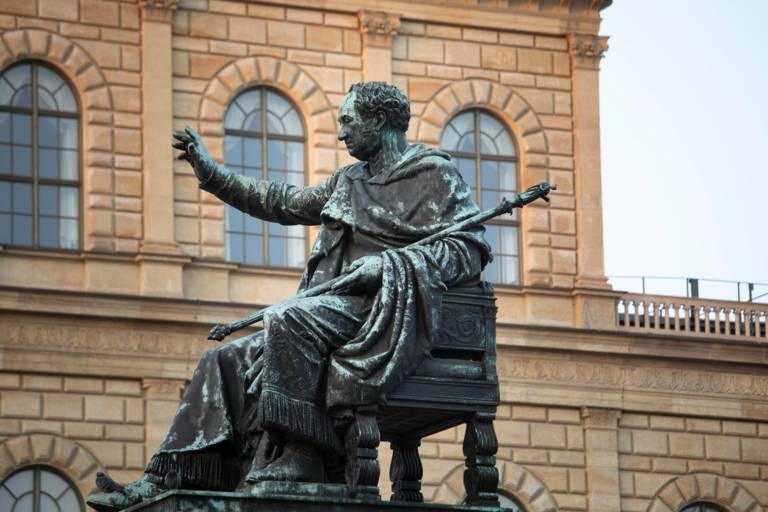
The monument to Max I. Joseph in front of the Residenz

Munich's royal monuments

Four kings and a prince regent

In Munich there are fantastic monuments to admire. Where they are and what makes them so special.
In Munich there are several fantastic monuments to admire. Where they are and what makes them so special: an overview.

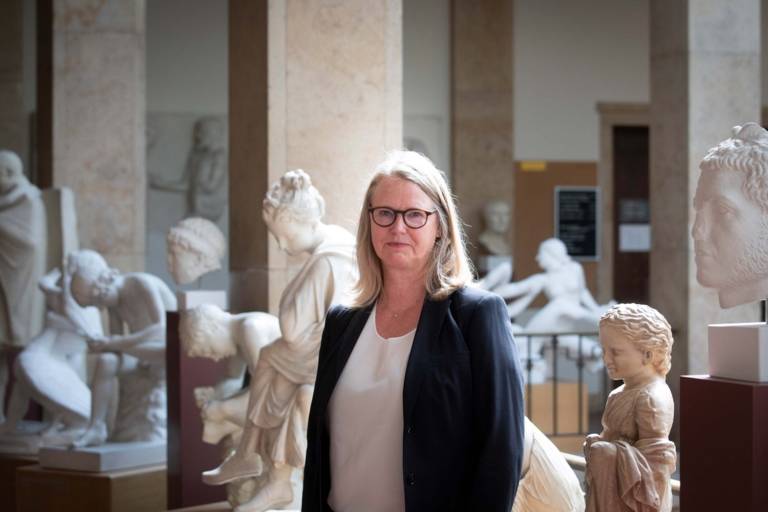
The tour guide Alvestad-Aschenbrenner stands in the Museum for Abgüsse Klassischer Bildwerke Munich

Ludwig I of Bavaria

When Munich became an „Athens on the Isar“

Ludwig I of Bavaria converted Munich into his "„Athens on the Isar“, many buildings still remind us of this today. An interview.

Ludwig I of Bavaria converted Munich into his "„Athens on the Isar“, many buildings still remind us of this today. An interview with a tour guide.

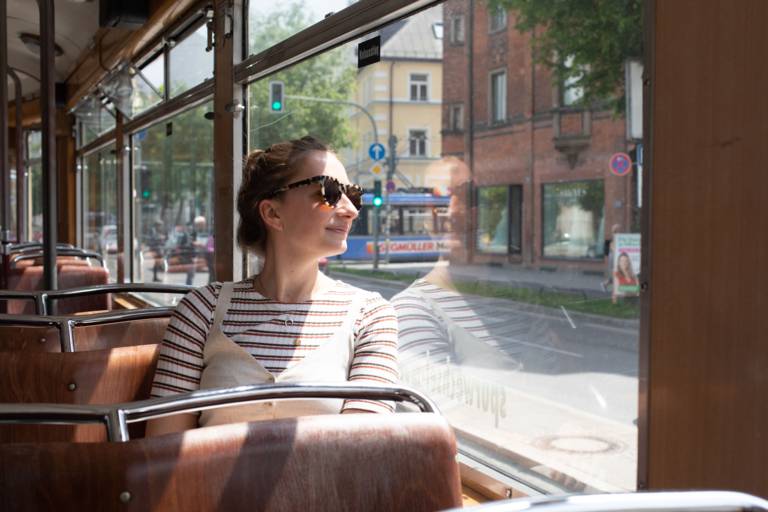
Young woman sitting at a window in a tram in Munich.

Column

A vacation in my own city

Our author used to be a travel blogger. Now she has started to explore her own city: Munich!

Our author used to be a travel blogger. Now she has started to explore her own city: Munich!

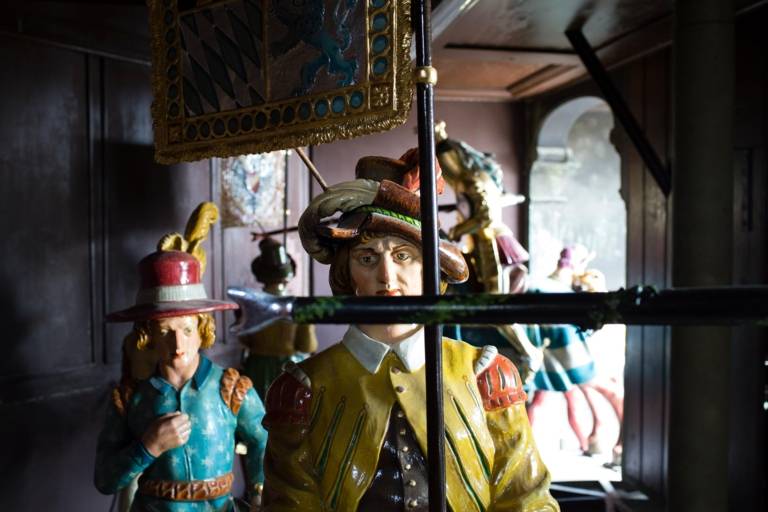
View from the inside of a figure of the carillon in the New Town Hall in Munich.

New Town Hall

The Glockenspiel in ten pictures

An exclusive look behind the scenes.

The Glockenspiel on Marienplatz has been enchanting visitors and locals for over 100 years. An exclusive look behind the scenes.

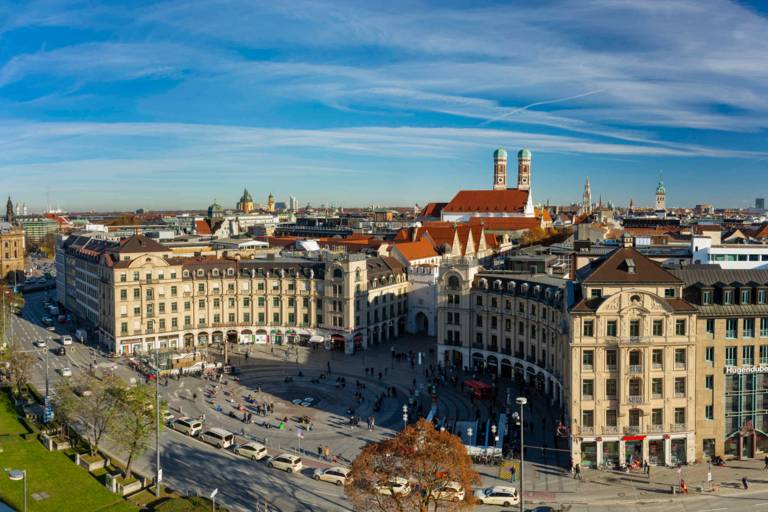
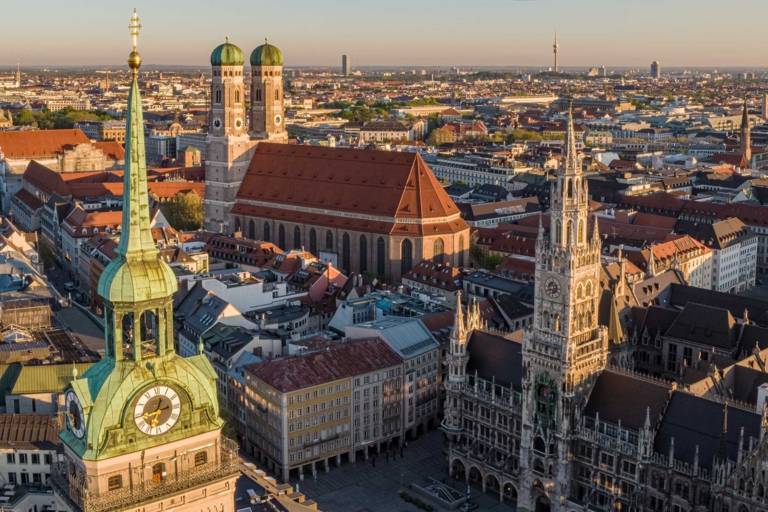
Panoramic view of Karlsplatz / Stachus in Munich with the Frauenkirche in the background photographed from the air.

Munich's city centre

Classical and curiosities

Numerous Munich stories can be told along the roughly one-kilometer-long route between Karlsplatz-Stachus and Marienplatz square. A city walk.

Numerous interesting Munich stories can be told along the roughly one-kilometer-long route between Karlsplatz-Stachus and Marienplatz square. A city walk.

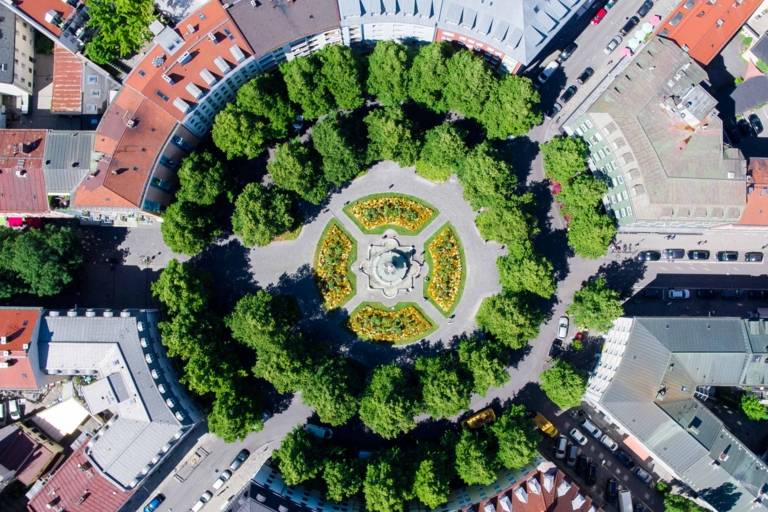
Weissenburger Platz in Munich photographed from above with a drone.

Haidhausen and Au

A village in the city

Haidhausen and Au have developed from working-class quarters into popular residential areas.

When strolling along the narrow streets of the districts Haidhausen and Au with small shops and green courtyards, it almost feels like being in a village in the middle of the city.

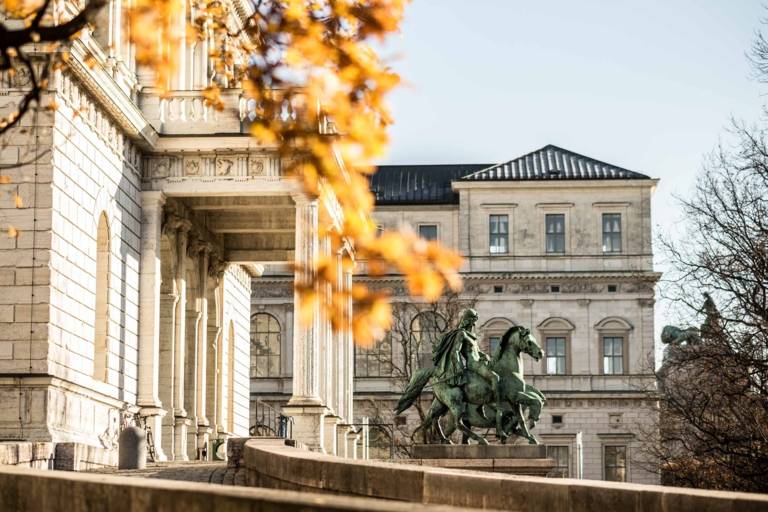
The Academy of Fine Arts in Munich in autumn.

Schwabing

From artists and writers

Around 1900, it was the artists and writers who settled around the university and the art academy and shaped the spirit of Schwabing.

In the heyday of the Schwabinger Bohème around 1900, it was the artists and writers who settled around the university and the art academy and shaped the spirit of Schwabing.

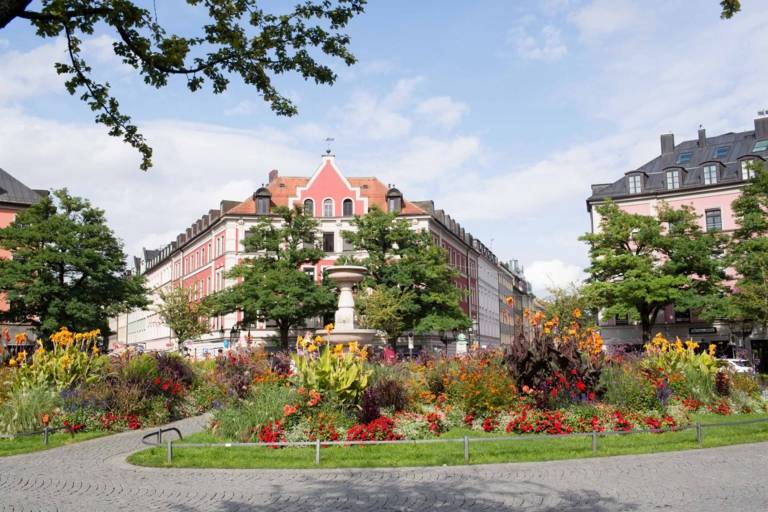
View of flowerbeds at Gärtnerplatz in Munich.

Gärtnerplatz and Glockenbach

Where the night begins

Independent labels, hip bars, pubs and cool inns attract the young and the young-at-heart.

The Gärtnerplatz and Glockenbach neighbourhoods are known as trendy quarters. Their independent labels, hip bars, pubs, cool inns and calm backyards attract the young and the young-at-heart.